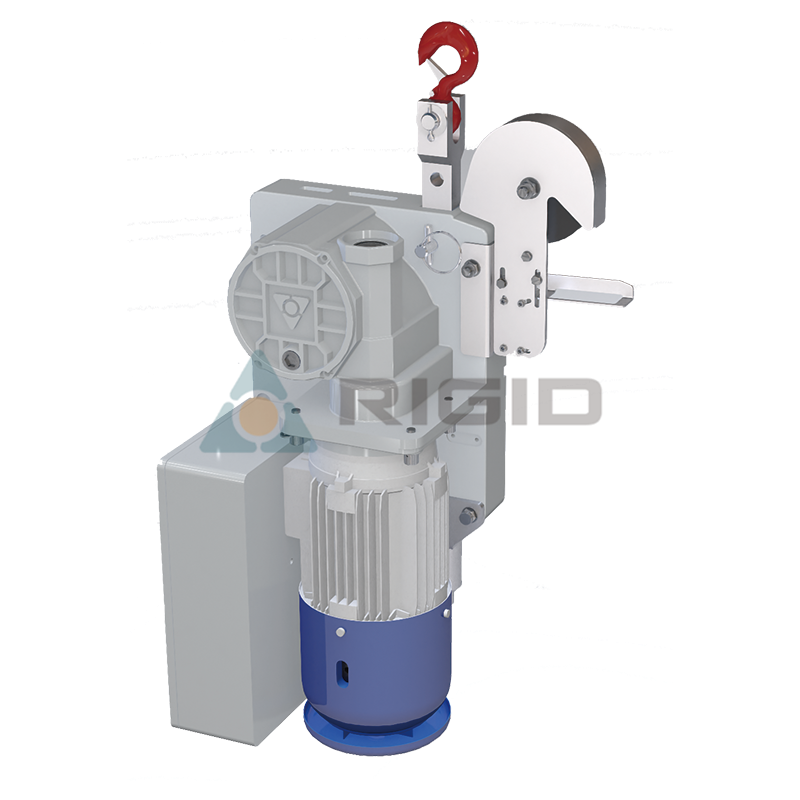
Electric Hoists: A Comprehensive Analysis Of Types, Operating Principles, And Safe Buying Guidelines
1. Introduction
In the process of industrial production and logistics transportation, material lifting and handling is a key link that affects production efficiency, operational safety, and cost control. Traditional manual hoists (such as chain hoists, wire rope hoists) have inherent limitations: low lifting efficiency, high labor intensity, limited load-bearing capacity, and poor safety, which cannot meet the needs of large-scale, high-frequency, and high-efficiency material handling. With the popularization of electrification and automation technology, electric hoists have been continuously optimized and upgraded, forming a diversified product system to adapt to different working environments and load requirements.
Electric hoists integrate mechanical, electrical, and hydraulic technologies, realizing the automatic control of material lifting and movement, which greatly improves handling efficiency and reduces labor intensity. They can be divided into various types according to the structural form, driving mode, load-bearing capacity, and use scenario, and can be customized according to the specific needs of users, adapting to the material handling needs of different industries and working conditions. However, with the increasing number of electric hoist manufacturers and the uneven quality of products, the problem of unsafe and unreasonable selection has become increasingly prominent, which not only affects the efficiency of material handling but also brings potential safety hazards to the operation process.
Against this background, it is of great practical significance to conduct in-depth and comprehensive analysis of electric hoists and formulate scientific safe buying guidelines. This paper takes the core demand of ""safe, efficient, and suitable material handling"" as the starting point, systematically combs the classification characteristics and operating principles of electric hoists, parses their core structural components and key technical parameters, and puts forward professional safe buying guidelines from the aspects of demand analysis, parameter selection, quality inspection, and after-sales service. It is hoped that this paper can provide valuable reference for relevant enterprises and users, help them better understand and select electric hoists, and promote the safe and efficient development of material handling work.
2. Classification and Core Characteristics of Electric Hoists
Electric hoists are classified according to multiple criteria, including structural form, driving mode, load-bearing capacity, lifting speed, and use scenario. Different types of electric hoists have unique structural characteristics, operating performance, and applicable ranges, which are the basis for scientific selection and rational application. The following is a detailed analysis of the mainstream types of electric hoists and their core characteristics:
2.1 Classification by Structural Form
- Wire Rope
Electric Hoist: The most widely used type of electric hoist, with a wire rope as the core lifting component. It is composed of a motor, reducer, brake, wire rope drum, wire rope, hook, and control system. The motor drives the reducer to rotate, which drives the wire rope drum to wind or release the wire rope, thereby realizing the lifting and lowering of materials. The wire rope electric hoist has the advantages of large load-bearing capacity, high lifting height, strong durability, and suitable for heavy-load lifting operations, and is widely used in industrial workshops, warehouses, and construction sites.
- Chain Electric Hoist: Using a high-strength alloy chain as the lifting component, it is composed of a motor, reducer, brake, chain wheel, chain, hook, and control system. The motor drives the chain wheel to rotate, which drives the chain to move up and down, realizing the lifting of materials. The chain electric hoist has the advantages of compact structure, light weight, flexible operation, small space occupation, and suitable for light and medium-load lifting operations in narrow spaces, such as small workshops, warehouses, and maintenance sites.
- Electric Chain Hoist with Trolley: On the basis of the chain electric hoist, a trolley is added, which can move horizontally along the I-beam track, realizing the horizontal movement of materials while lifting. It has the advantages of flexible movement, high work efficiency, and suitable for material handling in large-span spaces, such as large warehouses, assembly workshops, and logistics centers.
- Explosion-Proof Electric Hoist: A special electric hoist designed for flammable, explosive, and other dangerous environments (such as chemical plants, oil depots, and coal mines). It adopts explosion-proof motors, explosion-proof electrical components, and sealed structural design to prevent sparks from igniting flammable and explosive gases or dust. The explosion-proof electric hoist has the advantages of safe and reliable operation, strong adaptability to harsh environments, and meets the safety standards of dangerous areas.
- Stainless Steel Electric Hoist: Made of stainless steel materials, it has good corrosion resistance, rust resistance, and hygiene performance. It is suitable for environments with high corrosion and hygiene requirements, such as food processing plants, pharmaceutical factories, and chemical plants with corrosive media.
2.2 Classification by Driving Mode
- AC Electric Hoist: Driven by an AC motor, which is the most common driving mode for electric hoists. It has the advantages of simple structure, reliable operation, low maintenance cost, wide power supply range, and strong load-bearing capacity. AC electric hoists are divided into single-speed and double-speed types, among which double-speed electric hoists can adjust the lifting speed according to the needs, improving the flexibility of operation.
- DC Electric Hoist: Driven by a DC motor, which has the advantages of smooth speed regulation, large starting torque, stable operation, and high control precision. It is suitable for scenarios with unstable AC power supply or high control requirements, such as mobile lifting equipment, field operations, and precision lifting operations. However, due to the need for a DC power supply, the application range is relatively limited.
- Hydraulic Electric Hoist: Integrating hydraulic and electric technologies, the motor drives the hydraulic pump to generate hydraulic pressure, and the hydraulic cylinder drives the lifting component to move up and down. It has the advantages of stable lifting, strong load-bearing capacity, low noise, and good shock absorption performance, and is suitable for heavy-load and high-precision lifting operations, such as large equipment installation and maintenance.
2.3 Classification by Load-Bearing Capacity
- Light-Duty Electric Hoist: Load-bearing capacity ranging from 0.1t to 1t, with compact structure, light weight, and flexible operation. It is suitable for light-load lifting operations, such as small parts handling, tool lifting, and small equipment maintenance.
- Medium-Duty Electric Hoist: Load-bearing capacity ranging from 1t to 10t, with balanced performance, high efficiency, and strong adaptability. It is the most widely used type of electric hoist, suitable for material handling in general industrial workshops, warehouses, and construction sites.
- Heavy-Duty Electric Hoist: Load-bearing capacity above 10t, with strong load-bearing capacity, high structural strength, and reliable operation. It is suitable for heavy-load lifting operations, such as large equipment handling, port loading and unloading, and large-scale construction projects.
2.4 Core Performance Characteristics
- Load-Bearing Capacity: The core performance index of electric hoists, ranging from 0.1t to 50t or more, which determines the scope of application of the hoist. The load-bearing capacity must match the actual lifting needs, and overloading is strictly prohibited to avoid safety accidents.
- Lifting Speed: Generally ranging from 0.5m/min to 30m/min, which is divided into single-speed and double-speed. The lifting speed should be selected according to the urgency of the operation and the fragility of the materials. For fragile materials, a slow lifting speed should be selected to avoid damage.
- Lifting Height: The maximum height that the hoist can lift, generally ranging from 3m to 30m, and can be customized according to the actual working needs. The lifting height must match the height of the working space to ensure the normal operation of the hoist.
- Operation Flexibility: Including lifting, lowering, and horizontal movement (for hoists with trolleys), which is related to the operation efficiency and convenience. The control system should be simple and intuitive, and the operation should be smooth and stable.
- Safety Performance: Equipped with multiple safety protection devices (such as overload protection, limit switch, brake device, and emergency stop button), which can effectively prevent overloading, over-lifting, and other safety hazards, ensuring the safety of operators and materials.
- Durability and Maintenance: The core components (such as motor, reducer, wire rope, and chain) should have good wear resistance and corrosion resistance, and the maintenance should be simple and convenient, reducing the maintenance cost and downtime.
3. Core Structural Components and Operating Principles of Electric Hoists
The performance and safety of electric hoists are directly determined by their core structural components and operating principles. Understanding the functions and working mechanisms of each component is crucial for the selection, operation, maintenance, and fault handling of electric hoists. The following is a detailed analysis of the core structural components and operating principles of mainstream electric hoists:
3.1 Core Structural Components
- Motor: The power source of the electric hoist, which provides power for the lifting and movement of the hoist. The motor is usually an AC motor (single-phase or three-phase) or a DC motor, with characteristics such as high efficiency, large starting torque, and reliable operation. The power of the motor is matched with the load-bearing capacity of the hoist, ensuring that the hoist can lift the rated load stably.
- Reducer: Connected to the motor, it is used to reduce the speed of the motor and increase the torque, driving the lifting component (wire rope drum or chain wheel) to rotate. The reducer is usually a worm gear reducer or a gear reducer, with the advantages of compact structure, large transmission ratio, and low noise.
- Brake Device: A key safety component that is used to stop the hoist quickly when the motor stops working, preventing the lifted materials from falling accidentally. The brake device is usually an electromagnetic brake or a mechanical brake, which has the advantages of quick response, reliable braking, and long service life.
- Lifting Component: Including wire rope, chain, hook, and drum (or chain wheel). The wire rope is made of high-strength steel wire, with good tensile strength and durability; the chain is made of high-strength alloy steel, with strong wear resistance and load-bearing capacity; the hook is used to hang materials, with a safety latch to prevent the materials from falling off; the drum (or chain wheel) is used to wind the wire rope (or chain), driving the materials to lift and lower.
- Control System: The command center of the electric hoist, including a control panel, remote control, and electrical components. The control system can realize the lifting, lowering, and horizontal movement (for hoists with trolleys) of the hoist, and is equipped with emergency stop buttons, limit switches, and other safety devices to ensure the safe operation of the hoist. Modern electric hoists are equipped with intelligent control systems, which can realize remote monitoring and fault early warning.
- Safety Protection Devices: Including overload protection device, limit switch, emergency stop button, and safety latch. The overload protection device can cut off the power supply when the hoist is overloaded, preventing damage to the equipment and safety accidents; the limit switch can limit the maximum lifting height and minimum lowering position, preventing over-lifting and over-lowering; the emergency stop button can stop the hoist immediately in case of emergency; the safety latch can prevent the hook from falling off, ensuring the safety of materials.
- Trolley (Optional): Installed on the top of the electric hoist, it can move horizontally along the I-beam track, realizing the horizontal movement of materials while lifting. The trolley is driven by a motor or manually, with flexible movement and high work efficiency.
3.2 Operating Principles of Mainstream Electric Hoists
3.2.1 Wire Rope Electric Hoist
The operating principle of the wire rope electric hoist is as follows: When the motor is started, the motor drives the reducer to rotate, and the reducer reduces the speed and increases the torque, driving the wire rope drum to rotate. When the drum rotates clockwise, the wire rope is wound on the drum, driving the hook and the lifted materials to rise; when the drum rotates counterclockwise, the wire rope is released from the drum, driving the hook and the materials to fall. The brake device is closely connected to the motor. When the motor stops working, the brake device is activated immediately, locking the drum and preventing the materials from falling accidentally. The control system controls the start, stop, and direction of the motor, realizing the accurate control of the lifting height and speed.
3.2.2 Chain Electric Hoist
The operating principle of the chain electric hoist is similar to that of the wire rope electric hoist, but the lifting component is replaced by a chain and a chain wheel. When the motor is started, the motor drives the reducer to rotate, which drives the chain wheel to rotate. The chain wheel is meshed with the chain, and when the chain wheel rotates clockwise, the chain is wound on the chain wheel, driving the hook and the materials to rise; when the chain wheel rotates counterclockwise, the chain is released from the chain wheel, driving the hook and the materials to fall. The brake device ensures that the chain and the materials stay stably when the motor stops working. The chain electric hoist has a compact structure and is suitable for narrow spaces.
3.2.3 Electric Chain Hoist with Trolley
The operating principle of the electric chain hoist with trolley is based on the chain electric hoist, adding a trolley driving mechanism. The trolley is installed on the I-beam track, and the motor drives the trolley wheel to rotate, realizing the horizontal movement of the entire hoist along the track. The lifting movement of the hoist is the same as that of the chain electric hoist. The control system can independently control the lifting and horizontal movement of the hoist, realizing the three-dimensional movement of materials, improving the handling efficiency.
3.2.4 Explosion-Proof Electric Hoist
The operating principle of the explosion-proof electric hoist is basically the same as that of the ordinary electric hoist, but the motor, electrical components, and structural design are specially treated to meet the explosion-proof requirements. The explosion-proof motor adopts a sealed structure to prevent sparks from escaping; the electrical components are explosion-proof type, which can work normally in flammable and explosive environments; the structural gaps are designed according to the explosion-proof standard to prevent the spread of flame. The explosion-proof electric hoist ensures safe operation in dangerous environments through these special designs.
4. Key Technical Parameters Affecting Electric Hoist Performance
When selecting an electric hoist, it is necessary to focus on the key technical parameters, which directly determine the performance, applicability, and safety of the hoist. Grasping these key technical parameters is crucial for scientific selection and safe use. The following is a detailed analysis of the key technical parameters of electric hoists:
4.1 Load-Bearing Capacity (Rated Load)
The load-bearing capacity is the maximum weight that the electric hoist can lift safely, which is the core parameter for selecting the hoist. When selecting, it is necessary to determine the rated load according to the maximum weight of the materials to be lifted, and reserve a certain safety margin (usually 10%-20%) to avoid overloading. It should be noted that the load-bearing capacity of the hoist is related to the lifting height and lifting speed; the higher the lifting height, the lower the actual load-bearing capacity, and the faster the lifting speed, the greater the impact on the load-bearing capacity.
4.2 Lifting Height
The lifting height is the vertical distance from the lowest position of the hook to the highest position of the hook, which is determined according to the height of the working space (such as the height of the workshop, the height of the warehouse). When selecting, it is necessary to ensure that the lifting height of the hoist is greater than or equal to the actual required lifting height, and reserve a certain margin to avoid insufficient lifting height affecting the operation. At the same time, the lifting height will affect the length of the wire rope or chain, and the longer the lifting height, the higher the requirements for the strength and durability of the wire rope or chain.
4.3 Lifting Speed
The lifting speed is the speed at which the hoist lifts or lowers materials, which is divided into single-speed and double-speed. Single-speed hoists have a fixed lifting speed, which is suitable for general lifting operations; double-speed hoists have two lifting speeds (fast and slow), which can adjust the speed according to the needs, improving the flexibility of operation. When selecting, it is necessary to determine the lifting speed according to the urgency of the operation and the fragility of the materials. For fragile, precision materials, a slow lifting speed should be selected to avoid damage; for general materials, a fast lifting speed can be selected to improve efficiency.
4.4 Power Supply Parameters
The power supply parameters include voltage, frequency, and phase, which must match the on-site power supply conditions. AC electric hoists usually use 220V (single-phase) or 380V (three-phase) voltage, 50Hz frequency; DC electric hoists use 12V, 24V, or 48V DC voltage. When selecting, it is necessary to confirm the on-site power supply parameters to avoid the hoist being unable to work normally due to inconsistent power supply parameters.
4.5 Working Class
The working class is an important parameter reflecting the service life and reliability of the electric hoist, which is divided into light duty (A1-A3), medium duty (A4-A5), heavy duty (A6-A7), and extra-heavy duty (A8). The working class is determined according to the working frequency, working time, and load condition of the hoist. For example, hoists used in high-frequency, long-time, and heavy-load operations should select a high working class (A6-A8); hoists used in low-frequency, short-time, and light-load operations can select a low working class (A1-A3).
4.6 Safety Protection Parameters
The safety protection parameters include the type and performance of the safety protection devices, such as overload protection, limit switch, brake device, and emergency stop button. The overload protection device should have high sensitivity, which can quickly cut off the power supply when overloaded; the limit switch should be accurate and reliable, which can effectively limit the lifting height; the brake device should have strong braking force, which can stop the hoist quickly and stably; the emergency stop button should be easy to operate, which can stop the hoist immediately in case of emergency.
5. Safe Buying Guidelines for Electric Hoists
Selecting a suitable electric hoist that meets safety standards and actual operation needs is the premise of ensuring safe and efficient material handling. The safe buying guidelines should be based on the actual needs, combined with the classification, technical parameters, and quality of the hoist, and follow the principles of safety, applicability, reliability, and economy. The following are professional safe buying guidelines for electric hoists:
5.1 Clarify the Actual Operation Needs
1. Determine the Load-Bearing Requirement: First, clarify the maximum weight of the materials to be lifted, and reserve a 10%-20% safety margin to determine the rated load of the electric hoist. It is strictly prohibited to select a hoist with a rated load less than the actual required load to avoid overloading and safety accidents.
2. Confirm the Lifting Height: Measure the actual required lifting height (the vertical distance from the material placement position to the lifting target position), and select a hoist with a lifting height greater than or equal to the actual required height, and reserve a 5%-10% margin to ensure that the hoist can lift the materials to the target position smoothly.
3. Determine the Operation Scenario: Clarify the operation environment (indoor/outdoor, normal environment/dangerous environment), operation frequency (high/low), and operation space (narrow/large-span). For example, outdoor operations should select a hoist with good waterproof, dustproof performance; dangerous environments (flammable, explosive) should select an explosion-proof electric hoist; narrow spaces should select a chain electric hoist with a compact structure; large-span spaces should select an electric hoist with a trolley.
4. Clarify the Operation Requirements: Determine whether horizontal movement is needed (select a hoist with a trolley if needed), whether speed adjustment is needed (select a double-speed hoist if needed), and whether remote operation is needed (select a hoist with a remote control if needed).
5.2 Scientifically Select Technical Parameters
1. Match the Load-Bearing Capacity and Working Class: According to the operation frequency and load condition, select the appropriate working class. For high-frequency, heavy-load operations, select a high working class (A6-A8) hoist to ensure the service life and reliability of the equipment; for low-frequency, light-load operations, select a low working class (A1-A3) hoist to save costs.
2. Select the Appropriate Lifting Speed: According to the fragility of the materials and the urgency of the operation, select the single-speed or double-speed hoist. For fragile, precision materials, select a slow lifting speed; for general materials, select a fast lifting speed to improve efficiency. At the same time, pay attention to the matching between the lifting speed and the load-bearing capacity; the faster the lifting speed, the lower the actual load-bearing capacity.
3. Match the Power Supply Parameters: Confirm the on-site power supply voltage, frequency, and phase, and select a hoist with consistent power supply parameters to avoid the hoist being unable to work normally. For scenarios with unstable power supply, select a DC electric hoist or a hoist with a voltage stabilization function.
4. Focus on Safety Protection Parameters: Prioritize the selection of hoists equipped with complete safety protection devices (overload protection, limit switch, brake device, emergency stop button, safety latch). Check the performance of the safety protection devices to ensure they are sensitive, reliable, and meet national safety standards.
5.3 Strictly Inspect Product Quality and Certification
1. Select Qualified Manufacturers: Choose manufacturers with strong technical strength, complete production equipment, and good after-sales service. Check the manufacturer's qualification certificate, production license, and product test report to ensure that the manufacturer has the ability to produce qualified electric hoists.
2. Check Product Quality: Inspect the appearance of the hoist (whether there is damage, deformation, rust), the quality of the core components (motor, reducer, wire rope, chain, hook), and the tightness of the connections. The core components should be made of high-quality materials, with clear signs and qualified certificates.
3. Verify Product Certification: Ensure that the electric hoist has passed national safety certification (such as China's GB standard, EU's CE certification, US's UL certification) and meets the relevant safety standards. The product should be accompanied by a product manual, test report, and certificate of conformity.
4. Test the Operation Performance: Before purchasing, conduct a trial operation of the hoist to check whether the lifting, lowering, and horizontal movement (if any) are smooth, whether the brake device is reliable, whether the control system is sensitive, and whether there is abnormal noise or vibration.
5.4 Pay Attention to After-Sales Service and Maintenance
1. Understand After-Sales Service Commitment: Clarify the manufacturer's after-sales service scope, service cycle, and maintenance team. The manufacturer should provide timely after-sales service (such as on-site maintenance, replacement of vulnerable parts) and a certain warranty period (usually 1-2 years).
2. Check the Availability of Vulnerable Parts: Confirm whether the manufacturer can provide vulnerable parts (such as wire rope, chain, brake pad) in a timely manner, to avoid affecting the normal operation of the hoist due to the lack of vulnerable parts.
3. Obtain Maintenance Guidelines: The manufacturer should provide a detailed product manual and maintenance guidelines, including the maintenance cycle, maintenance content, and fault handling methods, to help users conduct regular maintenance and fault handling.
5.5 Avoid Blindly Pursuing Low Prices
When purchasing electric hoists, it is not advisable to blindly pursue low prices and ignore product quality and safety. Low-price hoists often have problems such as inferior materials, poor manufacturing processes, and incomplete safety protection devices, which are prone to failure and safety accidents, increasing the maintenance cost and safety risk in the later period. It is necessary to choose a hoist with reasonable price, reliable quality, and complete after-sales service, achieving the balance between economy and safety.
6. Common Buying Mistakes and Prevention Measures
In the process of purchasing electric hoists, many users often make some mistakes due to insufficient understanding of the product, which affects the selection effect and even brings potential safety hazards. The following are common buying mistakes and corresponding prevention measures:
- Mistake 1: Overlooking the Safety Margin of Load-Bearing Capacity: Some users select the hoist according to the actual load, without reserving a safety margin, which is prone to overloading and safety accidents. Prevention Measures: Reserve a 10%-20% safety margin when determining the rated load, and strictly prohibit overloading.
- Mistake 2: Ignoring the Working Class: Some users only pay attention to the load-bearing capacity and ignore the working class, resulting in the hoist being overused and damaged quickly. Prevention Measures: According to the operation frequency and load condition, select the appropriate working class to ensure the service life of the hoist.
- Mistake 3: Neglecting the Operation Environment: Some users select ordinary electric hoists in dangerous environments (flammable, explosive, corrosive), which is prone to safety accidents. Prevention Measures: According to the operation environment, select the corresponding special electric hoist (such as explosion-proof, stainless steel electric hoist).
- Mistake 4: Blindly Pursuing High Speed: Some users pursue high lifting speed regardless of the fragility of the materials, resulting in material damage. Prevention Measures: According to the fragility of the materials, select the appropriate lifting speed, and prioritize safety and stability.
- Mistake 5: Ignoring After-Sales Service: Some users only pay attention to the product price and ignore after-sales service, resulting in inability to get timely maintenance when the hoist fails. Prevention Measures: Choose manufacturers with good after-sales service, and clarify the after-sales service commitment before purchasing.
7. Development Trend of Electric Hoist Technology
With the continuous progress of industrial automation, intelligent technology, and material science, electric hoist technology is developing in the direction of intelligence, automation, energy saving, and safety. The main development trends are as follows:
- Intelligent and Digital Development: The integration of electric hoists with intelligent technologies such as Internet of Things, big data, and artificial intelligence will become the mainstream. Intelligent electric hoists can realize real-time monitoring of operating status (such as load, lifting height, speed), fault early warning, remote control, and data analysis. Through big data analysis, the operation mode can be optimized, and the maintenance plan can be formulated, improving the operation efficiency and reliability.
- Automation and Integration: Electric hoists will be integrated with automated production lines and logistics systems, realizing automatic material lifting, handling, and stacking, reducing manual intervention. The integration of electric hoists with robots, conveyors, and other equipment will form a complete automated material handling system, improving the efficiency of the entire production and logistics process.
- Energy Saving and Environmental Protection Upgrading: Further optimize the structural design of electric hoists, adopt new energy-saving motors, reducers, and lightweight materials, reducing energy consumption and environmental pollution. For example, the use of permanent magnet synchronous motors can reduce energy consumption by 20%~30% compared with traditional motors; the use of lightweight high-strength materials can reduce the weight of the hoist, improving energy efficiency and reducing wear.
- Safety Technology Upgrading: The development and application of new safety protection technologies will further improve the safety performance of electric hoists. For example, the use of intelligent overload protection devices and anti-collision devices can effectively prevent safety accidents; the use of video monitoring and alarm systems can realize real-time monitoring of the operation process, ensuring the safety of operators and materials. The use of fault self-diagnosis technology can quickly find and solve faults, reducing downtime.
- Customization and Multi-Functional Integration: According to the specific needs of different industries and users, customized electric hoists will be developed. For example, for the aerospace industry, a high-precision, light-load electric hoist will be developed; for the port industry, a heavy-duty, high-speed electric hoist will be developed. Multi-functional integration will become a trend, and electric hoists will be integrated with functions such as weighing, positioning, and anti-sway, improving the comprehensive performance of the hoist.
8. Conclusion
As essential light and medium-duty lifting equipment, electric hoists play a crucial role in industrial production and logistics transportation, with the advantages of compact structure, flexible operation, high efficiency, and strong adaptability. With the continuous development of industrial automation and intelligent technology, electric hoists have been continuously optimized and upgraded, forming a diversified product system to adapt to different application scenarios.
This paper systematically analyzes the classification characteristics, core structural components, and operating principles of electric hoists, elaborates on the key technical parameters affecting product performance, and puts forward scientific and standardized safe buying guidelines, as well as common buying mistakes and prevention measures. It also looks forward to the future development trend of electric hoist technology, providing a comprehensive reference for the selection, purchase, and use of electric hoists.










 +86 51068080177


 Current location:Home
>News
>Industry news
Electric Hoists: A Comprehensive Analysis Of Types, Operating Principles, And Safe Buying Guidelines
Current location:Home
>News
>Industry news
Electric Hoists: A Comprehensive Analysis Of Types, Operating Principles, And Safe Buying Guidelines