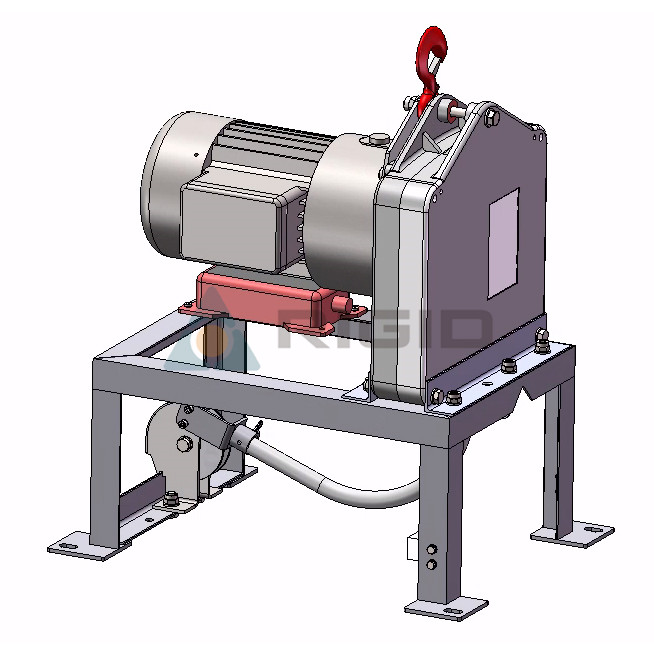
Electric Lifts: A Comprehensive Professional Guide To Types, Working Principles, And Selection Criteria
1. Introduction
In modern industrial and civil fields, vertical transportation and lifting of personnel, materials, and equipment are essential links that directly affect work efficiency, operational safety, and project progress. Traditional manual lifting and simple mechanical lifting methods have inherent limitations, such as low efficiency, high labor intensity, limited lifting capacity, poor stability, and high safety risks, which cannot meet the needs of large-scale, high-precision, and high-frequency lifting operations. Electric lifts, relying on electrical energy as the power source, integrate mechanical structure, electrical control, and safety protection systems, realizing stable, efficient, and safe vertical lifting and transportation, and have become the core equipment in vertical transportation and lifting scenarios.
With the rapid development of urbanization, industrialization, and intelligent manufacturing, the demand for electric lifts is increasing, and the types and functions of electric lifts are constantly enriched and optimized. From small portable electric lifts used in indoor maintenance to large-scale industrial electric lifts used in heavy-duty lifting, from passenger-carrying electric lifts in commercial buildings to material-carrying electric lifts in logistics warehouses, electric lifts have been widely applied in various fields. However, due to the diversity of electric lift types, the complexity of working principles, and the differences in technical parameters, many enterprises and users often face problems such as improper type selection, insufficient understanding of working principles, and non-compliance with selection criteria in practical applications, which not only affects work efficiency but also brings potential safety hazards and increases maintenance costs.
Against this background, it is of great practical significance to conduct in-depth research on the types, working principles, and selection criteria of electric lifts. Taking the core demand of ""safe, efficient, and adaptive vertical lifting"" as the starting point, this paper systematically sorts out the classification of electric lifts, parses the working mechanisms of different types of electric lifts, and puts forward targeted selection strategies based on application scenarios, technical parameters, and safety requirements. It is hoped that this paper can provide valuable references for relevant enterprises and users, helping them better understand and select electric lifts, and promoting the healthy development of the electric lift industry.
2. Classification of Electric Lifts
Electric lifts are a diverse category of equipment, and their classification can be carried out from multiple dimensions, including structural form, application scenario, lifting capacity, lifting height, and functional attributes. Different types of electric lifts have distinct structural characteristics, working performance, and applicable ranges. The following is a detailed classification and explanation of mainstream electric lift types, focusing on their core characteristics and typical application scenarios:
2.1 Classification by Structural Form
The structural form of electric lifts directly determines their stability, lifting capacity, and applicable scenarios. According to the structural form, electric lifts can be divided into scissor-type electric lifts, telescopic boom-type electric lifts, mast-type electric lifts, and rail-type electric lifts.
- Scissor-Type Electric Lifts: Also known as scissor lifts, they are composed of a scissor-type support structure, a working platform, a hydraulic system, and an electrical control system. The lifting movement is realized through the expansion and contraction of the scissor support, which is driven by an electric motor and a hydraulic pump. Scissor-type electric lifts have the advantages of stable structure, large bearing capacity, large working platform area, and low center of gravity, making them suitable for indoor and outdoor low-altitude lifting operations, such as indoor maintenance, outdoor decoration, and material handling. They are widely used in construction sites, shopping malls, factories, and other places. According to the movement form, scissor-type electric lifts can be further divided into mobile scissor lifts and fixed scissor lifts. Mobile scissor lifts are equipped with wheels, which are flexible and convenient to move; fixed scissor lifts are fixed in a specific position, suitable for fixed-point lifting operations.
- Telescopic Boom-Type Electric Lifts: Also known as boom lifts, they are composed of a telescopic boom, a working platform, a rotating mechanism, a hydraulic system, and an electrical control system. The lifting and luffing movements are realized through the telescoping of the boom and the rotation of the rotating mechanism, which can realize multi-angle and long-distance lifting operations. Telescopic boom-type electric lifts have the advantages of large lifting height, large working radius, and flexible operation, suitable for high-altitude operations in complex environments, such as high-rise building construction, bridge maintenance, and power grid line erection. They are divided into straight boom lifts and articulated boom lifts. Straight boom lifts have a single telescopic boom, with a large lifting height and working radius; articulated boom lifts have multiple sections of articulated booms, which can be folded and rotated, suitable for operations in narrow spaces or complex terrain.
- Mast-Type Electric Lifts: Composed of a mast support structure, a working platform, a lifting mechanism, and an electrical control system. The mast structure is usually made of high-strength steel pipes, which have good stability and rigidity. The lifting movement is realized through the traction of a motor and a chain or a screw mechanism. Mast-type electric lifts have the advantages of small volume, light weight, simple structure, and easy operation, suitable for indoor low-altitude lifting operations, such as indoor decoration, equipment maintenance, and warehouse stacking. They are divided into single-mast, double-mast, and multi-mast electric lifts. Multi-mast electric lifts have higher stability and larger bearing capacity than single-mast and double-mast electric lifts.
- Rail-Type Electric Lifts: Also known as guide rail lifts, they are composed of a guide rail, a car, a lifting mechanism, a safety protection system, and an electrical control system. The car moves along the guide rail, and the lifting movement is realized through the traction of a motor and a wire rope or a screw mechanism. Rail-type electric lifts have the advantages of stable operation, high lifting precision, large lifting height, and strong load-bearing capacity, suitable for fixed-point vertical transportation of personnel and materials, such as commercial buildings, industrial workshops, and logistics warehouses. They are divided into passenger rail lifts, cargo rail lifts, and passenger-cargo dual-purpose rail lifts. Passenger rail lifts focus on comfort and safety; cargo rail lifts focus on load-bearing capacity and durability.
2.2 Classification by Application Scenario
According to the application scenario, electric lifts can be divided into industrial electric lifts, construction electric lifts, commercial electric lifts, and special-purpose electric lifts. Different application scenarios have different requirements for the performance, structure, and safety of electric lifts.
- Industrial Electric Lifts: Used in industrial production workshops, factories, and warehouses, mainly for lifting and transporting materials, equipment, and personnel. They require large load-bearing capacity, stable operation, and strong adaptability to harsh environments (such as high temperature, dust, and corrosion). Common types include fixed scissor lifts, rail-type cargo lifts, and gantry-type electric lifts.
- Construction Electric Lifts: Used in construction sites, mainly for high-altitude operations, material transportation, and personnel lifting. They require large lifting height, strong stability, and good mobility, and can adapt to complex construction site environments. Common types include telescopic boom-type electric lifts, mobile scissor lifts, and construction hoists (a type of rail-type electric lift).
- Commercial Electric Lifts: Used in commercial buildings, shopping malls, hotels, and other places, mainly for transporting passengers and small goods. They require good comfort, low noise, beautiful appearance, and high safety. Common types include rail-type passenger lifts, small mobile scissor lifts, and escalators (a special type of electric lift).
- Special-Purpose Electric Lifts: Designed for specific special scenarios, such as medical electric lifts (used in hospitals to transport patients and medical equipment), explosion-proof electric lifts (used in flammable and explosive environments such as chemical plants and oil depots), and outdoor high-altitude maintenance electric lifts (used in power grid, communication, and other fields). These lifts have special structural designs and performance requirements to adapt to specific working environments.
2.3 Classification by Lifting Capacity and Height
According to the lifting capacity, electric lifts can be divided into light-duty electric lifts (lifting capacity ≤ 500kg), medium-duty electric lifts (500kg < lifting capacity ≤ 2000kg), and heavy-duty electric lifts (lifting capacity > 2000kg). Light-duty electric lifts are suitable for lifting small goods and personnel; medium-duty electric lifts are suitable for general material transportation and personnel lifting; heavy-duty electric lifts are suitable for heavy-duty equipment and large-scale material transportation.
According to the lifting height, electric lifts can be divided into low-altitude electric lifts (lifting height ≤ 10m), medium-altitude electric lifts (10m < lifting height ≤ 30m), and high-altitude electric lifts (lifting height > 30m). Low-altitude electric lifts are suitable for indoor and outdoor low-altitude operations; medium-altitude electric lifts are suitable for general high-altitude operations such as building decoration and maintenance; high-altitude electric lifts are suitable for high-rise building construction, bridge maintenance, and other high-altitude operations.
3. Working Principles of Electric Lifts
The working principle of electric lifts is based on the conversion of electrical energy into mechanical energy, through the coordinated operation of the power system, transmission system, lifting mechanism, control system, and safety protection system, to realize the stable lifting and transportation of personnel and materials. Different types of electric lifts have similar basic working principles, but there are certain differences in the working mechanism due to the differences in structural design and functional requirements. The following is a detailed analysis of the basic working principle of electric lifts and the working mechanisms of mainstream types:
3.1 Basic Working Principle
The basic working process of an electric lift is as follows: When the operator starts the lift through the control panel or remote control, the electrical control system sends a signal to the power system. The power system (mainly an electric motor) converts electrical energy into mechanical energy, driving the transmission system to operate. The transmission system transmits the mechanical energy to the lifting mechanism, which drives the working platform or car to move up or down along the guide structure (such as scissor support, boom, or guide rail). The control system adjusts the speed and direction of the lifting movement according to the operation instructions, ensuring the accurate control of the lifting process. The safety protection system monitors the operating status of the lift in real time, and triggers the corresponding protection measures (such as emergency stop, overload protection, and anti-fall protection) when an abnormal situation occurs, ensuring the safety of operators and equipment.
The core components of the working principle include electrical energy conversion, mechanical transmission, and safety control. The electrical energy conversion is completed by the electric motor and power supply unit; the mechanical transmission is completed by the hydraulic system, chain mechanism, screw mechanism, or wire rope mechanism; the safety control is completed by the safety protection system and electrical control system.
3.2 Working Mechanisms of Mainstream Electric Lift Types
3.2.1 Scissor-Type Electric Lifts
The working mechanism of scissor-type electric lifts is mainly based on the hydraulic transmission and scissor support expansion. The electric motor drives the hydraulic pump to generate high-pressure hydraulic oil, which is transmitted to the hydraulic cylinder through the hydraulic pipeline and control valve. The hydraulic cylinder pushes the scissor support to expand and contract, thereby driving the working platform to lift or lower. The hydraulic control valve adjusts the flow and direction of the hydraulic oil, realizing the stepless speed regulation of the lifting movement. The scissor support structure is composed of multiple groups of scissor arms, which are connected by hinges, ensuring the stability of the working platform during the lifting process. When the lift stops working, the hydraulic lock locks the hydraulic cylinder, preventing the working platform from falling, ensuring the safety of the operator.
3.2.2 Telescopic Boom-Type Electric Lifts
The working mechanism of telescopic boom-type electric lifts is composed of boom telescoping, luffing, and rotating mechanisms, which are driven by hydraulic transmission. The electric motor drives the hydraulic pump to generate high-pressure hydraulic oil, which is transmitted to the boom telescopic cylinder, luffing cylinder, and rotating motor through the hydraulic control valve. The boom telescopic cylinder drives the boom to stretch and retract, adjusting the working radius; the luffing cylinder drives the boom to luff up and down, adjusting the lifting height; the rotating motor drives the boom to rotate 360 degrees, realizing multi-angle operation. The working platform is installed at the end of the boom, and the operator can control the lifting, luffing, and rotating movements through the control panel on the platform or the remote control, ensuring flexible operation. The safety protection system includes overload protection, anti-tip protection, and boom limit protection, ensuring the safety of high-altitude operations.
3.2.3 Mast-Type Electric Lifts
The working mechanism of mast-type electric lifts is mainly based on chain transmission or screw transmission. For chain-driven mast-type electric lifts, the electric motor drives the chain wheel to rotate, and the chain drives the working platform to lift or lower along the mast. The mast is equipped with a guide rail, which ensures the stability of the working platform during the lifting process. For screw-driven mast-type electric lifts, the electric motor drives the screw to rotate, and the nut on the screw drives the working platform to lift or lower. Screw-driven mast-type electric lifts have the advantages of high lifting precision and stable operation, suitable for scenarios with high precision requirements. The safety protection system includes anti-fall devices and limit switches, preventing the working platform from over-lifting or falling.
3.2.4 Rail-Type Electric Lifts
The working mechanism of rail-type electric lifts is mainly based on wire rope transmission or screw transmission. For wire rope-driven rail-type electric lifts (such as passenger lifts and cargo lifts), the electric motor drives the traction sheave to rotate, and the wire rope wound on the traction sheave drives the car to lift or lower along the guide rail. The guide rail ensures the stable movement of the car, and the counterweight device balances the weight of the car and the load, reducing the load of the motor. For screw-driven rail-type electric lifts, the electric motor drives the screw to rotate, and the nut connected to the car drives the car to lift or lower. The electrical control system realizes the automatic control of the lift, such as automatic door opening and closing, floor positioning, and overload alarm. The safety protection system includes anti-fall devices, overload protection, and emergency stop devices, ensuring the safety of passengers and materials.
4. Professional Selection Guide for Electric Lifts
Selecting a suitable electric lift that meets the actual application scenarios, safety standards, and economic requirements is the premise of ensuring safe and efficient operation. The selection of electric lifts should be based on the analysis of application scenarios, combined with the type characteristics, technical parameters, performance indicators, and safety requirements of electric lifts, and follow the principles of safety, applicability, reliability, and economy. The following is a comprehensive professional selection guide for electric lifts:
4.1 Clarify Application Scenarios and Core Requirements
1. Analyze the Working Environment: First, clarify the working environment of the electric lift, including indoor/outdoor, terrain conditions, temperature, humidity, dust, corrosion, and flammability. For outdoor operations, select a lift with good waterproof, dustproof, and anti-corrosion performance, and strong adaptability to complex terrain; for indoor operations, select a lift with small volume, light weight, and low noise. For flammable and explosive environments, select an explosion-proof electric lift; for high-temperature or low-temperature environments, select a lift with components that can adapt to extreme temperatures.
2. Determine Lifting Requirements: Clarify the maximum lifting height, maximum lifting capacity, and lifting speed required for the operation. The lifting height of the lift should be greater than the actual required height, and a certain margin should be reserved; the lifting capacity should be greater than the maximum load (including personnel, materials, and tools), and a 15%-20% safety margin should be reserved to avoid overload. The lifting speed should be selected according to the urgency of the operation and the fragility of the load; for fragile or precision loads, a slow speed should be selected to avoid damage.
3. Clarify Functional Requirements: Determine whether functions such as mobility, rotation, telescoping, and automatic control are required. For operations that need to move frequently, select a mobile electric lift (such as mobile scissor lifts, telescopic boom lifts); for operations that need to adjust the working angle and radius, select a telescopic boom-type electric lift; for fixed-point lifting operations, select a fixed electric lift (such as fixed scissor lifts, rail-type lifts). For scenarios with high automation requirements, select a lift with automatic control functions (such as automatic floor positioning, remote control).
4.2 Match Key Technical Parameters
1. Lifting Height and Capacity: These are the core technical parameters of electric lifts. The lifting height should be matched with the actual operation height, and the lifting capacity should be matched with the maximum load. It should be noted that the lifting capacity of some lifts will decrease with the increase of lifting height (such as telescopic boom-type lifts), so it is necessary to confirm the actual lifting capacity at the maximum lifting height when selecting.
2. Lifting Speed: The lifting speed directly affects work efficiency. According to the operation requirements, select the appropriate lifting speed. Generally, the lifting speed of light-duty lifts is 0.1-0.5m/s, the lifting speed of medium-duty lifts is 0.5-1.0m/s, and the lifting speed of heavy-duty lifts is 1.0-2.0m/s. For precision operations, a lift with stepless speed regulation is preferred.
3. Working Platform Size: The size of the working platform should be matched with the number of operators and the volume of materials. For multi-person operations or large-volume material transportation, select a lift with a large working platform area; for narrow spaces, select a lift with a small working platform area and flexible movement.
4. Power Type and Energy Consumption: Electric lifts are mainly powered by AC motors or DC motors. AC motors have the advantages of simple structure, reliable operation, and low maintenance cost, suitable for fixed-point operations with stable power supply; DC motors have the advantages of smooth speed regulation, large starting torque, and easy mobility, suitable for mobile operations or scenarios without stable power supply. At the same time, pay attention to the energy consumption of the lift, select energy-saving models to reduce operating costs.
5. Safety Performance Parameters: Focus on the safety performance parameters of the lift, such as overload protection capacity, anti-fall device performance, emergency stop response time, and stability. The lift should be equipped with complete safety protection devices, and the performance parameters should meet national safety standards.
4.3 Evaluate Product Quality and Reliability
1. Select Qualified Manufacturers: Choose manufacturers with strong technical strength, complete production equipment, perfect quality control system, and good after-sales service. Check the manufacturer's qualification certificate, production license, and product test report to ensure that the manufacturer has the ability to produce qualified electric lifts. It is recommended to select well-known brands and manufacturers with rich production experience.
2. Inspect Core Components Quality: The quality of core components directly determines the reliability and service life of the electric lift. Inspect the quality of components such as the electric motor, hydraulic system, transmission mechanism, guide rail, and safety protection device. The electric motor should have a clear brand and model, and meet national energy efficiency standards; the hydraulic system should have good sealing performance, no oil leakage, and stable operation; the transmission mechanism should be smooth, no abnormal noise, and strong wear resistance; the safety protection device should be reliable and sensitive.
3. Verify Product Certification: Ensure that the electric lift has passed national safety certification (such as China's GB standard, EU's CE certification, US's UL certification) and meets relevant safety standards. The product should be accompanied by a product manual, test report, and certificate of conformity, which clearly indicate the technical parameters, operation methods, and maintenance requirements.
4. Test Operation Performance: Before purchasing, conduct a trial operation of the electric lift to check whether the lifting, lowering, moving, and rotating movements are smooth; whether the control system is sensitive; whether the safety protection device is reliable; and whether there is abnormal noise, vibration, or oil leakage. Ensure that the lift operates stably and meets the actual operation requirements.
4.4 Consider After-Sales Service and Maintenance
1. Understand After-Sales Service Commitment: Clarify the manufacturer's after-sales service scope, service cycle, and maintenance team. The manufacturer should provide timely after-sales service, such as on-site maintenance, replacement of vulnerable parts, and technical guidance. The warranty period should be no less than 1 year, and the manufacturer should have a perfect after-sales service network.
2. Check the Availability of Vulnerable Parts: Confirm whether the manufacturer can provide vulnerable parts (such as hydraulic seals, chains, wires, and brake pads) in a timely manner, to avoid affecting the normal operation of the lift due to the lack of vulnerable parts. The vulnerable parts should be of good quality and compatible with the lift model.
3. Obtain Maintenance Guidelines: The manufacturer should provide a detailed product manual and maintenance guidelines, including the maintenance cycle, maintenance content, fault handling methods, and precautions. This helps users conduct regular maintenance and fault handling, extending the service life of the lift.
4.5 Balance Economy and Performance
When selecting electric lifts, it is not advisable to blindly pursue high performance or low prices. It is necessary to balance the relationship between economy and performance, select a lift with reasonable price, reliable quality, and suitable performance. Low-price lifts often have problems such as inferior materials, poor manufacturing processes, and incomplete safety protection devices, which are prone to failure and safety accidents, increasing the maintenance cost and safety risk in the later period. High-performance lifts may have redundant functions, resulting in unnecessary cost waste. Therefore, it is necessary to select the lift according to the actual working requirements, achieving the best balance between economy and performance.
5. Common Selection Mistakes and Prevention Measures
In the process of selecting electric lifts, many users often make some mistakes due to insufficient understanding of the product, application scenarios, and technical parameters, which affects the selection effect and even brings potential safety hazards. The following are common selection mistakes and corresponding prevention measures:
- Mistake 1: Ignoring the Safety Margin of Lifting Capacity: Some users select the lift according to the actual load, without reserving a safety margin, which is prone to overload and safety accidents. Prevention Measures: Reserve a 15%-20% safety margin when determining the lifting capacity, and strictly prohibit overloading.
- Mistake 2: Neglecting the Working Environment: Some users select ordinary electric lifts in harsh environments (such as outdoor, corrosive, flammable, and explosive), which leads to short service life of the lift and potential safety hazards. Prevention Measures: According to the working environment, select the corresponding special electric lift (such as waterproof, anti-corrosion, explosion-proof lifts), and ensure that the lift components can adapt to the environment.
- Mistake 3: Blindly Pursuing High Lifting Speed or Height: Some users pursue high lifting speed or height regardless of the actual operation needs, resulting in unnecessary cost waste and reduced operational stability. Prevention Measures: Determine the required lifting speed and height according to the actual operation needs, and select the lift with matching parameters.
- Mistake 4: Overlooking the Quality of Core Components: Some users only pay attention to the overall price of the lift and ignore the quality of core components (such as electric motor, hydraulic system, safety protection device), resulting in frequent failures of the lift in the later period. Prevention Measures: Focus on the quality of core components, select well-known brand components, and check the qualification certificate and test report of the components.
- Mistake 5: Ignoring After-Sales Service: Some users only pay attention to the product price and ignore after-sales service, resulting in inability to get timely maintenance when the lift fails, affecting work progress. Prevention Measures: Choose manufacturers with good after-sales service, clarify the after-sales service commitment before purchasing, and ensure that the manufacturer can provide timely technical support and maintenance services.
6. Development Trends of Electric Lift Technology
With the continuous progress of industrial automation, intelligent technology, material science, and safety production requirements, electric lift technology is developing in the direction of intelligence, automation, energy saving, safety, and humanization. The main development trends are as follows:
- Intelligent and Digital Development: The integration of electric lifts with intelligent technologies such as the Internet of Things (IoT), big data, and artificial intelligence (AI) will become the mainstream. Intelligent electric lifts can realize real-time monitoring of operating parameters (such as lifting height, load, speed, and fault information), fault early warning, remote diagnosis, and remote control. Through big data analysis, the operation mode can be optimized, and the maintenance plan can be formulated, improving the operation efficiency and reliability of the lift.
- Automation and Integration: Electric lifts will be integrated with automated production lines, logistics systems, and building management systems, realizing automatic lifting, transportation, and positioning, reducing manual intervention. For example, in logistics warehouses, electric lifts can be connected with automated guided vehicles (AGVs) to realize automatic material handling; in commercial buildings, electric lifts can be integrated with building intelligent management systems to realize automatic floor positioning, crowd control, and energy saving.
- Energy Saving and Environmental Protection Upgrading: Further optimize the structural design of electric lifts, adopt new energy-saving motors (such as permanent magnet synchronous motors), high-efficiency hydraulic systems, and lightweight materials, reducing energy consumption and environmental pollution. The use of energy recovery technology can convert the potential energy of the lift during lowering into electrical energy, realizing energy recycling. At the same time, the use of environmentally friendly materials and lubricants reduces environmental pollution.
- Safety Technology Upgrading: The development and application of new safety protection technologies will further improve the safety performance of electric lifts. For example, the use of intelligent overload protection devices, anti-tip protection devices, and video monitoring systems can effectively prevent safety accidents; the use of fault self-diagnosis technology can quickly find and solve faults, reducing downtime. The integration of safety protection systems with intelligent control systems can realize real-time monitoring and automatic protection, ensuring the safety of operators and equipment.
- Lightweight and Compact Design: With the development of new materials (such as high-strength lightweight alloy and carbon fiber materials), the weight and volume of electric lifts will be further reduced, improving the mobility and flexibility of the lift, and adapting to narrow spaces and complex terrain. At the same time, the design of the working platform will be more humanized, improving the comfort and safety of operators.
- Specialization and Customization: According to the specific needs of different industries and working scenarios, specialized and customized electric lifts will be developed. For example, for the medical industry, a lift with good stability and comfort will be developed to transport patients; for the aerospace industry, a high-precision, light-load lift will be developed; for the construction industry, a lift with strong adaptability to complex terrain will be developed.










 +86 51068080177


 Current location:Home
>News
>Industry news
Electric Lifts: A Comprehensive Professional Guide To Types, Working Principles, And Selection Criteria
Current location:Home
>News
>Industry news
Electric Lifts: A Comprehensive Professional Guide To Types, Working Principles, And Selection Criteria