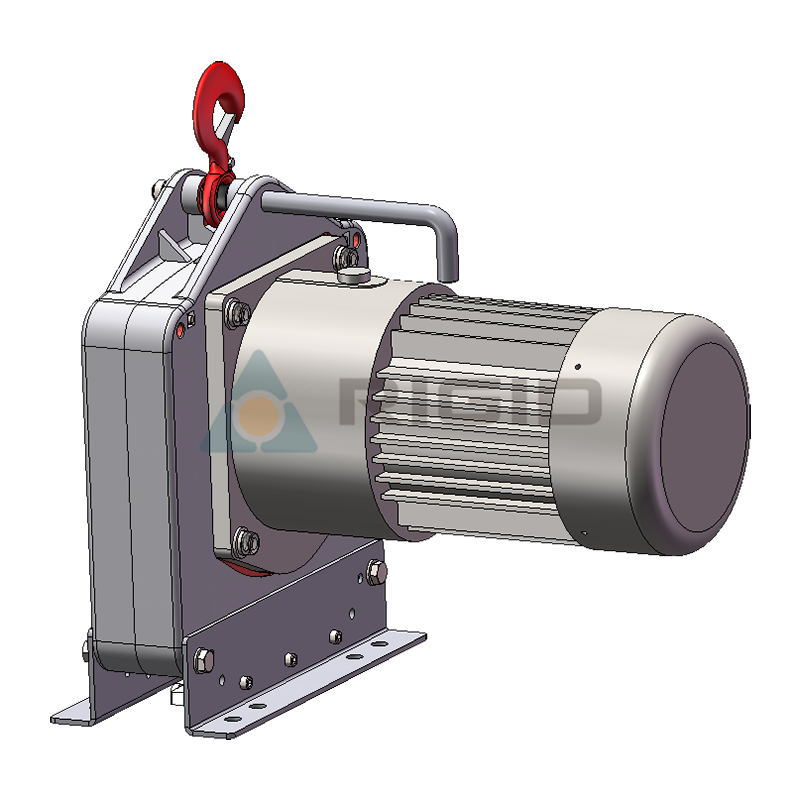
Comprehensive Technical Analysis Of Electric Lifts: Types, Applications, And Safe Operation Guidelines
1. Introduction
In modern production and life, vertical transportation of personnel, materials, and equipment is an indispensable link, directly affecting work efficiency, operational safety, and project progress. Traditional manual lifting and simple mechanical lifting methods have inherent drawbacks such as low efficiency, high labor intensity, poor stability, and high safety risks, which can no longer meet the needs of large-scale, high-frequency, and high-precision lifting operations. Electric lifts, with electrical energy as the core power source, integrate mechanical structure, electrical control, and safety protection systems, realizing stable, efficient, and safe vertical lifting and horizontal movement, and have become an irreplaceable key equipment in various fields.
With the rapid development of intelligent manufacturing, urbanization, and logistics upgrading, the demand for electric lifts is growing steadily, and their types and functions are constantly enriched and optimized. From small portable electric lifts for indoor maintenance to large-scale heavy-duty electric lifts for industrial hoisting, from passenger-carrying electric lifts in commercial buildings to material-handling electric lifts in warehouses, electric lifts have been deeply integrated into various industries. However, in practical applications, many problems still exist: improper selection of electric lift types leads to mismatching with application scenarios, affecting operation efficiency; lack of standardized safe operation awareness and irregular operation lead to safety accidents; inadequate maintenance and management result in shortened equipment service life and increased failure rates.
Against this background, conducting a comprehensive technical analysis of electric lifts, clarifying their types, application characteristics, and safe operation norms, is of great practical significance for promoting the standardized application of electric lifts and reducing safety risks. This paper takes the core demand of ""safe, efficient, and standardized operation of electric lifts"" as the starting point, systematically sorts out the type system and application scenarios of electric lifts, and formulates scientific and operable safe operation guidelines, providing strong support for the rational use and safe management of electric lifts in various industries.
2. Classification of Electric Lifts
Electric lifts can be classified from multiple dimensions according to their structural forms, load-bearing capacities, lifting heights, and functional purposes. Different types of electric lifts have distinct structural characteristics, performance indicators, and applicable scopes, which are closely related to their application scenarios and operational requirements. The following is a detailed classification and explanation of mainstream electric lift types, focusing on their core structural features and performance advantages:
2.1 Classification by Structural Form
The structural form of electric lifts determines their stability, lifting capacity, and operational flexibility. According to the structural form, electric lifts are mainly divided into scissor-type, telescopic boom-type, mast-type, and rail-type electric lifts, which are the most widely used types in various fields.
- Scissor-Type Electric Lifts: Also known as scissor lifts, they are composed of a scissor-type support frame, working platform, hydraulic drive system, and electrical control system. The lifting movement is realized through the expansion and contraction of the scissor arms driven by an electric motor and hydraulic pump. Scissor-type electric lifts have the advantages of stable structure, large working platform area, strong load-bearing capacity, and low center of gravity, making them suitable for low-altitude lifting operations of personnel and materials. They are further divided into mobile and fixed types: mobile scissor lifts are equipped with universal wheels for flexible movement, suitable for indoor and outdoor maintenance, decoration, and material handling; fixed scissor lifts are fixed at specific positions, suitable for fixed-point lifting operations such as warehouse stacking and workshop material transfer.
- Telescopic Boom-Type Electric Lifts: Commonly known as boom lifts, they consist of a telescopic boom, working platform, rotating mechanism, hydraulic system, and electrical control system. The lifting and luffing movements are realized through the telescoping of the boom and the rotation of the rotating mechanism, enabling multi-angle and long-distance high-altitude operations. They are divided into straight boom and articulated boom types: straight boom lifts have a single-section telescopic boom, with large lifting height and working radius, suitable for high-altitude operations in open areas such as bridge maintenance and power grid overhaul; articulated boom lifts have multi-section articulated booms, which can be folded and rotated, suitable for high-altitude operations in narrow spaces or complex terrain such as building facades and indoor high-rise maintenance.
- Mast-Type Electric Lifts: Composed of a mast support structure, working platform, lifting mechanism, and electrical control system, the mast is usually made of high-strength steel pipes to ensure structural stability. The lifting movement is realized through chain transmission or screw transmission driven by an electric motor. Mast-type electric lifts have the advantages of small volume, light weight, simple structure, and easy operation, suitable for indoor low-altitude lifting operations such as indoor decoration, equipment maintenance, and warehouse stacking. They are further divided into single-mast, double-mast, and multi-mast types, with multi-mast lifts having higher stability and load-bearing capacity.
- Rail-Type Electric Lifts: Also known as guide rail lifts, they are composed of guide rails, carriages, lifting mechanism, safety protection system, and electrical control system. The carriage moves along the guide rails, and the lifting movement is realized through wire rope traction or screw drive driven by an electric motor. Rail-type electric lifts have the advantages of stable operation, high lifting precision, large lifting height, and strong load-bearing capacity, suitable for fixed-point vertical transportation of personnel and materials in commercial buildings, industrial workshops, and logistics warehouses. They are divided into passenger, cargo, and passenger-cargo dual-purpose types, with passenger lifts focusing on comfort and safety, and cargo lifts focusing on load-bearing capacity and durability.
2.2 Classification by Load-Bearing Capacity
According to the load-bearing capacity, electric lifts can be divided into light-duty, medium-duty, and heavy-duty types, which are classified based on the maximum load they can carry, directly determining their application scope in different scenarios.
- Light-Duty Electric Lifts: Maximum load ≤ 500kg, mainly used for lifting small goods, tools, and a small number of personnel. They are small in size, light in weight, and flexible in movement, suitable for indoor maintenance, small-scale material handling, and other scenarios, such as small mast-type electric lifts and portable scissor lifts.
- Medium-Duty Electric Lifts: 500kg < Maximum load ≤ 2000kg, suitable for general material transportation and multi-person lifting operations. They have balanced performance in load-bearing capacity and flexibility, widely used in construction sites, workshops, and logistics warehouses, such as medium-sized scissor lifts and rail-type cargo lifts.
- Heavy-Duty Electric Lifts: Maximum load > 2000kg, mainly used for heavy-duty equipment hoisting and large-scale material transportation. They have strong structural stability and load-bearing capacity, suitable for industrial production, port logistics, and large-scale construction projects, such as heavy-duty rail-type lifts and large-scale scissor lifts.
2.3 Classification by Functional Purpose
According to the functional purpose, electric lifts can be divided into general-purpose and special-purpose electric lifts. General-purpose electric lifts are suitable for most common lifting scenarios, while special-purpose electric lifts are designed for specific working environments and functional requirements.
- General-Purpose Electric Lifts: The most widely used type, mainly used for ordinary lifting and transportation of personnel and materials, such as scissor-type, mast-type, and general rail-type electric lifts, which can meet the needs of most industrial, commercial, and construction scenarios.
- Special-Purpose Electric Lifts: Designed for specific special scenarios, including explosion-proof electric lifts (used in flammable and explosive environments such as chemical plants and oil depots), anti-corrosion electric lifts (used in coastal, chemical, and other corrosive environments), medical electric lifts (used in hospitals to transport patients and medical equipment), and high-temperature resistant electric lifts (used in high-temperature workshops). These lifts have special structural designs and material selections to adapt to specific working environments and safety requirements.
3. Applications of Electric Lifts in Various Fields
Electric lifts, with their diverse types and flexible performance, have been widely applied in various fields, playing an important role in improving work efficiency, reducing labor intensity, and ensuring operational safety. The following is a detailed introduction to the application of electric lifts in key fields, combining their type characteristics and functional advantages:
3.1 Construction Industry
The construction industry is one of the main application fields of electric lifts, which are widely used in high-altitude operations, material transportation, and equipment installation. In building construction, telescopic boom-type electric lifts are used for high-altitude decoration, wall painting, and curtain wall installation, with their large lifting height and working radius adapting to the complex terrain of construction sites; mobile scissor-type electric lifts are used for low-altitude operations such as indoor and outdoor decoration, equipment maintenance, and material transfer, with their stable structure and large working platform ensuring the safety and efficiency of construction personnel. In addition, rail-type construction hoists (a type of rail-type electric lift) are used for vertical transportation of construction personnel and materials in high-rise building construction, with high load-bearing capacity and stable operation, greatly improving construction efficiency.
3.2 Industrial Production
In industrial production workshops and factories,
electric lifts are mainly used for material transportation, equipment maintenance, and production line auxiliary operations. Fixed scissor-type electric lifts are installed in workshops to realize fixed-point lifting and transfer of materials, reducing manual handling and improving production efficiency; mast-type electric lifts are used for equipment maintenance and inspection in narrow spaces such as workshops and warehouses, with their small volume and flexible operation adapting to the compact layout of production lines. Heavy-duty rail-type electric lifts are used for hoisting and transferring large-scale production equipment, ensuring the safe and efficient operation of the production process. In addition, special-purpose electric lifts such as explosion-proof and anti-corrosion types are widely used in chemical, petroleum, and other industries to adapt to harsh production environments.
3.3 Commercial and Public Services
In commercial buildings, shopping malls, hotels, and other public places, electric lifts are mainly used for passenger transportation and small goods transfer. Rail-type passenger lifts are the core equipment for vertical transportation in commercial buildings, with good comfort, low noise, and high safety, ensuring the convenient travel of customers and employees; small mobile scissor-type electric lifts are used for indoor maintenance, cleaning, and goods transfer in shopping malls and hotels, with their flexible movement not affecting the normal operation of public places. In addition, electric lifts are also used in hospitals, schools, and other public institutions: medical electric lifts are used to transport patients, stretchers, and medical equipment, with stable operation and good comfort; small mast-type electric lifts are used for maintenance of teaching equipment and campus facilities.
3.4 Logistics and Warehousing
In the logistics and warehousing industry, electric lifts play a key role in material stacking, loading, and unloading, and vertical transportation. Fixed scissor-type electric lifts are used for stacking and transferring goods in warehouses, with their large load-bearing capacity and stable operation ensuring the efficient handling of goods; rail-type cargo lifts are used for vertical transportation of goods between different floors of warehouses, improving the space utilization rate of warehouses. In addition, mobile scissor-type electric lifts are used for loading and unloading goods in logistics yards and distribution centers, reducing manual labor intensity and improving loading and unloading efficiency. With the development of intelligent logistics, electric lifts are gradually integrated with automated logistics systems, realizing automatic material handling and improving the intelligence level of logistics operations.
4. Safe Operation Guidelines for Electric Lifts
The safe operation of electric lifts is directly related to the personal safety of operators, the safety of equipment and materials, and the normal progress of work. To ensure safe operation, operators must strictly abide by the following safe operation guidelines, covering pre-operation inspection, in-operation operation, post-operation maintenance, and emergency handling, and establish a standardized operation management system.
4.1 Pre-Operation Inspection Guidelines
Pre-operation inspection is the premise of safe operation, which can effectively identify potential equipment faults and safety hazards, and avoid accidents during operation. Operators must conduct a comprehensive inspection before starting the electric lift, and start the equipment only after confirming that all indicators are normal.
1. Power System Inspection: Check whether the power supply is stable, the power cord is intact and free of damage, and the plug and socket are firmly connected; check the battery power (for DC-powered lifts) or the operation status of the power distribution cabinet (for AC-powered lifts), and ensure that the power supply meets the equipment operation requirements.
2. Mechanical System Inspection: Check the integrity and tightness of the scissor arms, boom, mast, and other structural components, and check for deformation, cracks, or loose fasteners; check the lubrication status of the transmission mechanism (chain, screw, hydraulic cylinder), and add lubricating oil if necessary; check the condition of the wheels (for mobile lifts), ensure that the tires are intact, the pressure is normal, and the braking system is sensitive and reliable.
3. Safety Protection System Inspection: Check the integrity and sensitivity of safety protection devices, including safety railings, anti-slip floors, anti-fall devices (safety ropes, anchor points), emergency stop buttons, limit switches, and overload protection devices; ensure that all safety devices are in normal working condition and can be triggered in time in case of abnormalities.
4. Working Environment Inspection: Check the working environment around the lift, ensure that there are no obstacles, flammable and explosive materials, or other safety hazards; for outdoor operations, check the wind speed (wind speed should not exceed the equipment's rated wind speed), and avoid operation in severe weather such as strong wind, rain, and snow; for indoor operations, check the height of the space and ensure that there is no interference from overhead obstacles.
4.2 In-Operation Operation Guidelines
During the operation of the electric lift, operators must strictly abide by the operation specifications, focus on the operation status of the equipment, and avoid irregular operations that may lead to safety accidents.
1. Operator Qualification: Only trained and qualified operators can operate the electric lift; operators must be familiar with the equipment's operation manual, master the operation methods and safety precautions, and shall not operate the equipment without authorization or beyond their competence.
2. Load Control: Strictly abide by the equipment's rated load, and shall not overload operation; the load shall be evenly distributed on the working platform, and shall not be concentrated on one side to avoid equipment tilting; when carrying personnel, the number of personnel shall not exceed the rated number, and all personnel shall stand firmly on the anti-slip floor and wear safety belts.
3. Operation Specifications: Start the equipment according to the specified procedure, and check whether the lifting, lowering, and moving movements are smooth and free of abnormal noise; during lifting and lowering, the speed shall be uniform, and sudden acceleration, deceleration, or emergency stop shall be avoided; when the equipment is lifting, operators shall not extend their hands, feet, or other parts outside the working platform, and shall not stand under the working platform to avoid injury.
4. Operation Monitoring: During operation, closely monitor the operation status of the equipment, including the working status of the power system, mechanical system, and safety protection system; if abnormal phenomena such as abnormal noise, vibration, oil leakage, or power failure are found, stop the operation immediately, cut off the power supply, and conduct inspection and troubleshooting; it is strictly prohibited to continue operation with faults.
4.3 Post-Operation Maintenance Guidelines
Post-operation maintenance is an important link to extend the service life of the equipment, reduce failure rates, and ensure the safety of the next operation. Operators must conduct comprehensive maintenance and finishing work after the operation.
1. Equipment Shutdown: After the operation, lower the working platform to the lowest position, cut off the power supply, and turn off the equipment switch; for mobile lifts, park the equipment in a flat, safe, and ventilated area, and lock the braking device to prevent the equipment from moving accidentally.
2. Cleaning and Finishing: Clean the working platform, structural components, and transmission mechanism of the equipment, remove dust, dirt, and debris; wipe the hydraulic system and power system to avoid oil leakage and dust accumulation; sort out the power cord and safety devices to ensure the equipment is tidy and in order.
3. Inspection and Record: Conduct a simple inspection of the equipment again, check for damage, loose fasteners, or abnormal phenomena; record the operation status, operation time, and existing problems of the equipment in the operation log, so as to facilitate subsequent maintenance and tracking.
4. Regular Maintenance: In addition to daily post-operation maintenance, the equipment shall be regularly maintained according to the manufacturer's requirements, including regular inspection of components, replacement of vulnerable parts (hydraulic seals, chains, brake pads), and calibration of safety protection devices; establish a regular maintenance system to ensure the long-term stable operation of the equipment.
4.4 Emergency Handling Guidelines
In case of emergency during the operation of the electric lift, operators must remain calm, take correct emergency handling measures in time, and minimize the loss of personnel and property.
1. Power Failure Emergency: If a power failure occurs during operation, immediately press the emergency stop button, and use the manual lowering device (equipped with most electric lifts) to lower the working platform to the lowest position; evacuate the personnel on the platform safely, cut off the power supply, and contact the maintenance personnel to handle the power failure.
2. Overload or Tilting Emergency: If the equipment is overloaded or tilted, immediately stop the operation, prohibit any movement, and evacuate the personnel on the platform safely; unload the excess load or adjust the load distribution to make the equipment return to a stable state; check the equipment for deformation or damage before restarting the operation.
3. Mechanical Failure Emergency: If a mechanical failure (such as jamming of the lifting mechanism, breakage of the transmission chain) occurs, immediately stop the operation, cut off the power supply, and evacuate the personnel; do not disassemble or repair the equipment without authorization, and contact professional maintenance personnel to troubleshoot and repair.
4. Personnel Injury Emergency: If a personnel injury accident occurs, immediately stop the operation, rescue the injured person, and call the emergency number for medical treatment; protect the accident scene, record the accident situation, and report to the relevant management department.
5. Common Safety Hazards and Prevention Measures
In the process of using electric lifts, due to irregular operation, inadequate maintenance, or improper type selection, various safety hazards may occur, which may lead to safety accidents. The following are common safety hazards and corresponding prevention measures to help operators and managers effectively avoid risks.
- Safety Hazard 1: Overload Operation: Overload operation will lead to excessive load on the equipment, resulting in structural deformation, damage to the transmission mechanism, and even equipment tilting or falling. Prevention Measures: Strictly abide by the rated load of the equipment, install an overload protection device, and regularly calibrate the device; strengthen the training of operators to improve their awareness of overload prevention.
- Safety Hazard 2: Irregular Operation: Irregular operations such as sudden acceleration, deceleration, emergency stop, and extending hands and feet outside the platform may lead to personnel injury or equipment failure. Prevention Measures: Strengthen the training and assessment of operators, ensure that they master the standard operation methods; post operation specifications on the equipment, and supervise the operation process.
- Safety Hazard 3: Equipment Failure Due to Inadequate Maintenance: Inadequate daily maintenance and regular maintenance will lead to wear, aging, and damage of equipment components, resulting in equipment failure during operation. Prevention Measures: Establish a standardized maintenance system, conduct daily post-operation maintenance and regular maintenance; replace vulnerable parts in a timely manner, and ensure that all components are in normal working condition.
- Safety Hazard 4: Unfavorable Working Environment: Operating in harsh environments such as strong wind, rain, snow, high temperature, and corrosion may affect the stability and safety of the equipment. Prevention Measures: Check the working environment before operation, avoid operation in severe weather; select special-purpose electric lifts for harsh environments, and do a good job in anti-corrosion, anti-icing, and other protection measures.
- Safety Hazard 5: Operator Lack of Safety Awareness: Operators' lack of safety awareness, such as not wearing safety belts, operating without authorization, and ignoring safety warnings, is one of the main causes of safety accidents. Prevention Measures: Strengthen safety training and education, improve operators' safety awareness and emergency handling capabilities; establish a safety supervision mechanism, and impose penalties for irregular operations.
6. Conclusion
Electric lifts, as efficient, safe, and versatile vertical transportation and material handling equipment, have been widely applied in construction, industry, commerce, logistics, and other fields, playing an important role in promoting the improvement of work efficiency and the upgrading of production methods. This paper systematically classifies electric lifts from the perspectives of structural form, load-bearing capacity, and functional purpose, elaborates on the application characteristics and advantages of electric lifts in various fields, and formulates comprehensive and standardized safe operation guidelines covering pre-operation inspection, in-operation operation, post-operation maintenance, and emergency handling, which provides professional technical support for the rational use and safe management of electric lifts.
In practical applications, it is necessary to select the appropriate type of electric lift according to the specific application scenario and functional requirements, strictly abide by the safe operation guidelines, strengthen the daily maintenance and management of the equipment, and effectively avoid safety hazards. With the continuous advancement of intelligent, automated, and energy-saving technologies, electric lifts will develop towards more intelligent, efficient, and safe directions, and their application scope will be further expanded.
It is hoped that this paper can help relevant practitioners fully grasp the core knowledge of electric lifts, promote the standardized, safe, and efficient application of electric lift equipment, reduce safety accidents, and make greater contributions to the development of various industries.










 +86 51068080177


 Current location:Home
>News
>Industry news
Comprehensive Technical Analysis Of Electric Lifts: Types, Applications, And Safe Operation Guidelines
Current location:Home
>News
>Industry news
Comprehensive Technical Analysis Of Electric Lifts: Types, Applications, And Safe Operation Guidelines