Hoisting Pulleys: A Comprehensive Technical Analysis Of Principles, Types, And Applications
1. Introduction
In modern hoisting operations, the demand for lifting heavy loads, adjusting force directions, and improving operation efficiency is increasing, and hoisting pulleys, as a simple and efficient mechanical component, have become an essential part of hoisting systems. With a history of thousands of years, pulleys have evolved from simple wooden structures to high-strength, precision-engineered mechanical components, widely used in various fields such as construction, industry, logistics, and marine engineering. Unlike complex hoisting equipment such as cranes and winches, hoisting pulleys have the advantages of simple structure, low cost, easy installation and maintenance, and strong adaptability, which can be used independently or in combination with other hoisting equipment to form a complete hoisting system.
With the continuous development of hoisting technology and the increasing complexity of hoisting scenarios, the types and functions of hoisting pulleys are constantly enriched and optimized. From small single pulleys for light-load hoisting to large-scale pulley blocks for heavy-load hoisting, from fixed pulleys for changing force directions to movable pulleys for reducing traction force, hoisting pulleys have been deeply integrated into various hoisting operations. However, in practical applications, many problems still exist: inadequate understanding of the working principles leads to improper selection of pulley types; neglect of structural characteristics and load-bearing limits results in safety hazards; lack of standardized application and maintenance leads to reduced equipment service life and operational efficiency.
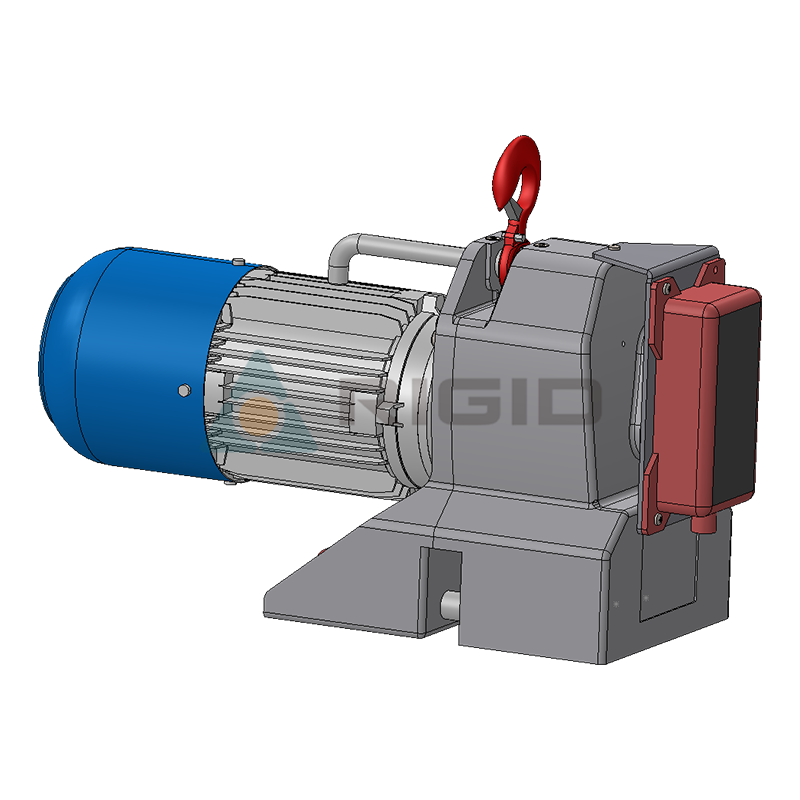
Against this background, conducting a comprehensive technical analysis of
hoisting pulleys, clarifying their working principles, types, and application characteristics, is of great practical significance for promoting the standardized application of hoisting pulleys and reducing hoisting safety risks. This paper takes the core demand of ""safe, efficient, and rational application of hoisting pulleys"" as the starting point, systematically sorts out the technical system of hoisting pulleys, and provides valuable technical guidance for the selection, application, and maintenance of hoisting pulleys in various engineering projects.
2. Working Principles of Hoisting Pulleys
The working principle of hoisting pulleys is based on the basic laws of mechanics, mainly relying on the rotation of the pulley around the axis to change the direction of the traction force or distribute the load, thereby achieving the purpose of reducing the traction force required for hoisting and improving hoisting efficiency. The core of the working principle lies in the analysis of forces and the calculation of mechanical advantage, which directly determines the performance and application effect of hoisting pulleys. The following is a detailed elaboration of the basic working principles of hoisting pulleys, including the working mechanism of single pulleys and pulley blocks, force analysis, and mechanical advantage calculation.
2.1 Basic Mechanical Principles
Hoisting pulleys belong to the category of simple machines, and their working principle is based on the principle of leverage and the equilibrium of forces. When a force is applied to the rope passing through the pulley, the pulley rotates around its fixed axis (fixed pulley) or moves with the load (movable pulley), converting the traction force into the lifting force of the load. The key to the pulley's work is that it can change the direction of the force without changing the magnitude of the force (fixed pulley) or reduce the magnitude of the traction force without changing the direction of the force (movable pulley), and the combination of multiple pulleys (pulley block) can achieve both effects.
In the ideal state (ignoring friction, rope weight, and pulley weight), the mechanical advantage of the pulley system is equal to the number of ropes bearing the load, which is the core basis for calculating the traction force required for hoisting. In actual working conditions, due to the influence of friction, rope weight, and pulley weight, the actual traction force will be slightly greater than the theoretical value, and the mechanical efficiency of the pulley system will be less than 100%.
2.2 Working Mechanism of Single Pulleys
A single pulley is the simplest form of hoisting pulley, which can be divided into fixed pulleys and movable pulleys according to whether the axis is fixed. The two types have different working mechanisms and application scenarios.
- Fixed Pulley: The axis of the fixed pulley is fixed and does not move with the load during hoisting. Its main function is to change the direction of the traction force, making the hoisting operation more convenient. For example, when hoisting a load upwards, the operator can pull the rope downwards, which is more labor-saving in terms of operation posture. In the ideal state, the traction force required for the fixed pulley is equal to the weight of the load (F = G), and its mechanical advantage is 1, which does not reduce the traction force but only changes the direction of the force. Fixed pulleys are often used in scenarios where the direction of the force needs to be changed, such as auxiliary hoisting in construction sites and indoor maintenance.
- Movable Pulley: The axis of the movable pulley moves with the load during hoisting, and its main function is to reduce the traction force required for hoisting. In the ideal state, the traction force required for the movable pulley is half of the weight of the load (F = G/2), and its mechanical advantage is 2, which can effectively reduce the labor intensity of the operator. However, the movable pulley cannot change the direction of the force, and the traction force needs to be applied upwards during hoisting, which is inconvenient in some scenarios. Movable pulleys are often used in combination with fixed pulleys to form a pulley block, which can both reduce traction force and change force direction.
2.3 Working Mechanism of Pulley Blocks
A pulley block is composed of two or more single pulleys (fixed pulleys and movable pulleys) connected in series by ropes, which combines the advantages of fixed pulleys and movable pulleys, realizing both reducing traction force and changing force direction. The number of pulleys in the pulley block determines its mechanical advantage: the more the number of movable pulleys, the greater the mechanical advantage, and the smaller the traction force required for hoisting.
In the pulley block, the fixed pulleys are used to change the direction of the traction force, and the movable pulleys are used to reduce the traction force. The number of ropes bearing the load (n) is the key factor affecting the mechanical advantage. In the ideal state, the traction force required for the pulley block is F = G/n, where G is the weight of the load, and n is the number of ropes bearing the load. In actual operation, due to the influence of friction, rope weight, and pulley weight, the actual traction force F = G/(n×η), where η is the mechanical efficiency of the pulley block (generally 0.8-0.95, depending on the type of pulley and the working environment).
The pulley block can be divided into equal-span pulley blocks and unequal-span pulley blocks according to the arrangement of the pulleys. Equal-span pulley blocks have uniform rope stress and stable operation, which are widely used in heavy-load hoisting scenarios; unequal-span pulley blocks are mainly used in special scenarios where the hoisting space is limited or the load needs to be adjusted in multiple directions.
2.4 Force Analysis and Mechanical Efficiency Calculation
Force analysis of hoisting pulleys is the basis for ensuring safe hoisting. For a single fixed pulley, the tension of the rope is equal to the weight of the load, and the axis of the pulley bears the combined force of the two ends of the rope (2F = 2G). For a single movable pulley, the tension of the rope is half of the weight of the load, and the axis of the pulley bears the combined force of the two ends of the rope (F + F = G).
For the pulley block, the force analysis is more complex. It is necessary to calculate the tension of each section of the rope, the force borne by the pulley axis, and the friction force between the rope and the pulley. The mechanical efficiency of the pulley block is an important indicator to measure its working performance, which is calculated as the ratio of the useful work done by the pulley block (hoisting the load) to the total work input (traction force doing work). The formula is η = (W_useful / W_total) × 100% = (G×h / F×s) × 100%, where h is the lifting height of the load, and s is the distance the traction rope is pulled.
The factors affecting the mechanical efficiency of the pulley block mainly include: friction between the rope and the pulley, weight of the rope, weight of the movable pulley, and the lubrication status of the pulley. Improving the lubrication effect, reducing the weight of the rope and movable pulley, and reducing the friction coefficient between the rope and the pulley can effectively improve the mechanical efficiency of the pulley block.
3. Classification of Hoisting Pulleys
Hoisting pulleys can be classified from multiple dimensions according to their structural forms, functional purposes, load-bearing capacities, and application scenarios. Different types of hoisting pulleys have distinct structural characteristics, performance indicators, and applicable scopes, which are closely related to their working principles and application effects. The following is a detailed classification and explanation of mainstream hoisting pulley types, focusing on their core structural features and functional advantages.
3.1 Classification by Structural Form
According to the structural form, hoisting pulleys can be divided into single pulleys, pulley blocks, and compound pulleys. This classification is based on the number of pulleys and their connection methods, which directly determines the mechanical advantage and application scope of the pulley.
- Single Pulleys: Composed of a single pulley and a rope, it is the simplest form of hoisting pulley. As mentioned earlier, it is divided into fixed pulleys and movable pulleys. Single pulleys have the advantages of simple structure, easy installation, and low cost, but their mechanical advantage is limited (fixed pulley: 1; movable pulley: 2). They are suitable for light-load hoisting and auxiliary hoisting scenarios, such as indoor maintenance, small-scale material handling, and temporary hoisting operations.
- Pulley Blocks: Composed of two or more single pulleys (fixed pulleys and movable pulleys) connected in series by ropes, it is the most widely used type of hoisting pulley. The number of pulleys in the pulley block can be adjusted according to the load requirements, and the mechanical advantage can be improved by increasing the number of movable pulleys. Pulley blocks are divided into fixed pulley blocks (all pulleys are fixed) and movable pulley blocks (including fixed and movable pulleys). Fixed pulley blocks only change the direction of the force, while movable pulley blocks can both reduce traction force and change force direction. They are suitable for medium and heavy-load hoisting scenarios, such as construction hoisting, logistics loading and unloading, and industrial equipment installation.
- Compound Pulleys: Composed of multiple pulley blocks connected in series or in parallel, it has a larger mechanical advantage and can be used for ultra-heavy-load hoisting. Compound pulleys integrate the advantages of multiple pulley blocks, which can further reduce the traction force required for hoisting and improve hoisting efficiency. However, their structure is complex, the installation and maintenance are difficult, and the cost is high. They are mainly used in ultra-heavy-load hoisting scenarios, such as marine engineering, large-scale equipment hoisting, and bridge construction.
3.2 Classification by Functional Purpose
According to the functional purpose, hoisting pulleys can be divided into general-purpose hoisting pulleys and special-purpose hoisting pulleys. General-purpose hoisting pulleys are suitable for most common hoisting scenarios, while special-purpose hoisting pulleys are designed for specific working environments and functional requirements.
- General-Purpose Hoisting Pulleys: The most widely used type, mainly used for ordinary hoisting and transportation of loads, such as single pulleys, ordinary pulley blocks, and fixed pulleys. They have balanced performance in mechanical advantage, structural stability, and cost, and can meet the needs of most industrial, construction, and logistics hoisting scenarios.
- Special-Purpose Hoisting Pulleys: Designed for specific special scenarios, including explosion-proof pulleys (used in flammable and explosive environments such as chemical plants and oil depots), anti-corrosion pulleys (used in coastal, chemical, and other corrosive environments), high-temperature resistant pulleys (used in high-temperature workshops and metallurgical industries), and anti-wear pulleys (used in scenarios with frequent rope friction). These pulleys have special structural designs and material selections to adapt to specific working environments and safety requirements.
3.3 Classification by Load-Bearing Capacity
According to the load-bearing capacity, hoisting pulleys can be divided into light-duty, medium-duty, heavy-duty, and ultra-heavy-duty pulleys, which are classified based on the maximum load they can bear, directly determining their application scope in different hoisting scenarios.
- Light-Duty Hoisting Pulleys: Maximum load ≤ 5t, mainly used for light-load hoisting operations, such as small single pulleys, small pulley blocks, and portable pulleys. They are small in size, light in weight, and flexible in use, suitable for indoor maintenance, small-scale material handling, and temporary hoisting operations.
- Medium-Duty Hoisting Pulleys: 5t < Maximum load ≤ 50t, suitable for general medium-load hoisting operations, such as medium-sized pulley blocks, fixed pulley blocks, and movable pulley blocks. They have balanced performance in load-bearing capacity, structural stability, and mechanical advantage, widely used in construction sites, workshops, and logistics warehouses.
- Heavy-Duty Hoisting Pulleys: 50t < Maximum load ≤ 200t, mainly used for heavy-load hoisting operations, such as large-scale pulley blocks, compound pulleys, and high-strength pulleys. They have strong structural stability and load-bearing capacity, suitable for industrial equipment installation, bridge construction, and large-scale logistics transportation.
- Ultra-Heavy-Duty Hoisting Pulleys: Maximum load > 200t, mainly used for ultra-heavy-load hoisting operations, such as large-scale compound pulleys, marine pulleys, and special high-strength pulleys. They are made of high-strength materials, with complex structural design and high safety requirements, mainly used in marine engineering, large-scale bridge construction, and ultra-heavy equipment hoisting.
3.4 Classification by Material
The material of hoisting pulleys directly affects their load-bearing capacity, durability, and adaptability to the working environment. According to the material, hoisting pulleys can be divided into steel pulleys, cast iron pulleys, aluminum alloy pulleys, and composite material pulleys.
- Steel Pulleys: Made of high-strength carbon steel or alloy steel, they have high strength, good wear resistance, and strong load-bearing capacity, suitable for heavy-duty and ultra-heavy-duty hoisting scenarios. Steel pulleys are widely used in construction, industrial production, and marine engineering, and can be subjected to high tension and friction.
- Cast Iron Pulleys: Made of cast iron, they have good rigidity and wear resistance, but their toughness is poor and they are prone to brittle fracture under impact. They are suitable for light-duty and medium-duty hoisting scenarios with small impact loads, such as indoor maintenance and small-scale material handling.
- Aluminum Alloy Pulleys: Made of high-strength aluminum alloy, they have the advantages of light weight, corrosion resistance, and good toughness, suitable for light-duty and medium-duty hoisting scenarios in corrosive environments, such as coastal areas and chemical plants. Aluminum alloy pulleys are also widely used in portable hoisting equipment due to their light weight.
- Composite Material Pulleys: Made of composite materials such as glass fiber reinforced plastic (FRP) and carbon fiber, they have the advantages of light weight, corrosion resistance, high strength, and low friction coefficient. They are suitable for special scenarios such as corrosive environments, high-temperature environments, and scenarios requiring light weight, such as aerospace, marine engineering, and special equipment hoisting.
4. Applications of Hoisting Pulleys in Various Fields
Hoisting pulleys, with their diverse types and flexible performance, have been widely applied in various fields, playing an important role in reducing traction force, improving hoisting efficiency, and ensuring hoisting safety. The following is a detailed introduction to the application of hoisting pulleys in key fields, combining their type characteristics and functional advantages, and illustrating their application effects with practical engineering cases.
4.1 Construction Engineering
The construction industry is one of the main application fields of hoisting pulleys, which are widely used in building construction, bridge construction, and foundation engineering. In high-rise building construction, pulley blocks are used for hoisting building materials (such as steel bars, concrete, and prefabricated components), with their large mechanical advantage reducing the traction force required for hoisting and improving construction efficiency. For example, in the construction of high-rise residential buildings, movable pulley blocks with 3-5 movable pulleys are often used to hoist prefabricated wall panels and steel beams, which can reduce the traction force by 1/3-1/5, greatly reducing the labor intensity of operators.
In bridge construction, compound pulleys and large-scale pulley blocks are used for hoisting bridge girders, piers, and other large components. For example, in the construction of a cross-river bridge, an ultra-heavy-duty compound pulley system with a load-bearing capacity of 150t is used to hoist precast bridge girders, which can stably hoist the bridge girders to the designated position, ensuring the safety and accuracy of the hoisting operation. In addition, fixed pulleys are used in construction sites to change the direction of the traction force, making the hoisting operation more convenient and flexible.
4.2 Industrial Production
In industrial production workshops and factories, hoisting pulleys are mainly used for equipment installation, material transportation, and production line auxiliary operations. In heavy industry (such as steel, machinery, and chemical industry), heavy-duty pulley blocks and compound pulleys are used for hoisting large-scale production equipment (such as generators, gearboxes, and pressure vessels), ensuring the safe and efficient installation of equipment. For example, in a steel plant, a heavy-duty pulley block with a load-bearing capacity of 100t is used to hoist a large-scale steel rolling mill, which can stably hoist the equipment to the installation position, reducing the risk of equipment damage during hoisting.
In light industry (such as electronics, textiles, and food), light-duty and medium-duty pulleys are used for material transportation and production line auxiliary operations. For example, in a textile factory, small movable pulleys are used to hoist textile raw materials and finished products, with their simple structure and flexible operation adapting to the compact layout of the production line. In addition, special-purpose pulleys such as explosion-proof pulleys and anti-corrosion pulleys are widely used in chemical plants and oil refineries to adapt to harsh production environments.
4.3 Logistics and Transportation
In the logistics and transportation industry, hoisting pulleys are widely used in warehouses, ports, and logistics yards for loading, unloading, and stacking of goods. In warehouses, light-duty and medium-duty pulley blocks are used for stacking and transferring goods, with their flexible operation improving the efficiency of goods handling. For example, in a logistics warehouse, a movable pulley block is used to hoist and transfer large packages, which can reduce the traction force required for handling and improve the stacking efficiency of goods.
In ports and docks, heavy-duty and ultra-heavy-duty pulley blocks and compound pulleys are used for loading and unloading large-scale goods (such as containers, machinery, and bulk cargo). For example, in a container terminal, a large-scale compound pulley system is used to hoist containers from ships to trucks or warehouses, with its large load-bearing capacity and high efficiency ensuring the smooth progress of port operations. In addition, pulleys are also used in railway and highway transportation to hoist and load large-scale equipment and goods.
4.4 Marine Engineering
Marine engineering is a special field for the application of hoisting pulleys, which are widely used in shipbuilding, offshore oil exploration, and marine rescue. In shipbuilding, heavy-duty pulley blocks and compound pulleys are used for hoisting ship components (such as hull sections, engines, and propellers), ensuring the safe and accurate assembly of ships. For example, in a shipyard, an ultra-heavy-duty compound pulley system with a load-bearing capacity of 200t is used to hoist a large hull section, which can stably hoist the section to the assembly position, improving the efficiency of shipbuilding.
In offshore oil exploration, anti-corrosion pulleys and marine-grade pulley blocks are used for hoisting drilling equipment, oil pipelines, and other components. These pulleys are made of corrosion-resistant materials (such as stainless steel and composite materials) to resist the corrosion of seawater and marine organisms, ensuring long-term stable operation in the marine environment. In marine rescue, portable pulleys and small pulley blocks are used to hoist rescued personnel and supplies, with their light weight and flexible operation adapting to the complex marine rescue environment.
4.5 Other Fields
In addition to the above fields, hoisting pulleys are also widely used in aerospace, mining, and agricultural machinery. In aerospace, high-precision composite material pulleys are used for hoisting and assembling aerospace components (such as aircraft engines and satellite components), with their high strength, light weight, and high precision ensuring the safety and reliability of aerospace equipment. In mining, heavy-duty pulleys are used for hoisting coal, ore, and mining equipment, with their strong load-bearing capacity and wear resistance adapting to the harsh mining environment. In agricultural machinery, light-duty pulleys are used for hoisting agricultural materials and equipment, improving the efficiency of agricultural operations.
5. Key Technical Requirements and Safety Precautions
To ensure the safe and efficient operation of hoisting pulleys, it is necessary to comply with strict technical requirements in terms of structural design, material selection, installation, and operation, and take corresponding safety precautions to avoid safety hazards. The following are the key technical requirements and safety precautions for hoisting pulleys.
5.1 Key Technical Requirements
1. Load-Bearing Capacity Requirements: The load-bearing capacity of hoisting pulleys must meet the actual hoisting load requirements, and a safety margin of 1.2-1.5 times must be reserved to avoid overload operation. The structural design of the pulley must be based on the load-bearing capacity, ensuring that the pulley body, shaft, and rope groove can withstand the maximum load without structural damage or deformation.
2. Material Selection Requirements: The material of the pulley must be selected according to the working environment and load requirements. For heavy-duty and ultra-heavy-duty hoisting, high-strength steel or alloy steel should be selected; for corrosive environments, anti-corrosion materials (such as stainless steel and composite materials) should be selected; for light-load hoisting, aluminum alloy or cast iron can be selected. The material must meet the relevant national standards and have good strength, toughness, and wear resistance.
3. Structural Design Requirements: The structural design of the pulley must be reasonable, ensuring that the rope groove is smooth and has a reasonable radius (generally 1.05-1.1 times the radius of the rope) to avoid excessive wear of the rope. The pulley shaft must have sufficient strength and rigidity, and the bearing must be selected according to the load and rotation speed, ensuring smooth rotation and low friction. The connection between the pulley and the hoisting equipment must be firm and reliable, using high-strength fasteners and anti-loosening devices.
4. Mechanical Efficiency Requirements: The mechanical efficiency of the pulley system must meet the actual operation requirements, generally not less than 80%. Measures such as improving lubrication, reducing friction, and reducing the weight of the rope and movable pulley should be taken to improve the mechanical efficiency of the pulley system.
5.2 Safety Precautions
1. Pre-Operation Inspection: Before using the hoisting pulley, a comprehensive inspection must be conducted, including checking the integrity of the pulley body, the wear of the rope groove, the flexibility of the bearing, the firmness of the connection, and the condition of the rope. If any damage, wear, or looseness is found, the operation must be stopped immediately, and maintenance or replacement must be carried out.
2. Overload Prevention: Strictly abide by the rated load of the pulley, and shall not overload operation. A load limiter should be installed if necessary to automatically alarm or cut off the power supply when overloaded. Before hoisting, the weight of the load must be accurately calculated to ensure that it does not exceed the rated load of the pulley.
3. Proper Installation and Fixation: The pulley must be installed and fixed firmly, ensuring that the axis is level and stable, and there is no deviation or loosening during operation. For fixed pulleys, the fixed point must have sufficient load-bearing capacity; for movable pulleys, the connection with the load must be firm and reliable.
4. Regular Maintenance and Lubrication: Regular maintenance and lubrication must be carried out on the pulley, including cleaning the pulley body and rope groove, adding lubricating oil to the bearing, and checking the wear of the rope. The maintenance cycle should be determined according to the working environment and usage frequency, generally once a month for light-duty use and once a week for heavy-duty use.
5. Operator Training: Only trained and qualified operators can operate the hoisting pulley. Operators must be familiar with the working principle, operation method, and safety precautions of the pulley, and shall not operate the equipment without authorization or beyond their competence. During operation, operators must focus on the operation status of the pulley and the load, and stop the operation immediately if any abnormality is found.
6. Development Trends of Hoisting Pulley Technology
With the continuous advancement of mechanical manufacturing technology, material science, and intelligent technology, hoisting pulley technology is developing in the direction of high strength, high efficiency, corrosion resistance, and intelligence. The main development trends are as follows:
- High-Strength and Lightweight Development: With the development of new high-strength materials (such as high-strength alloy steel, carbon fiber composites), the load-bearing capacity of hoisting pulleys will be further improved, and the weight will be further reduced. This can not only improve the load-bearing capacity and efficiency of the pulley but also reduce the additional load on the hoisting equipment, adapting to the development trend of large-scale and lightweight hoisting equipment.
- Corrosion-Resistant and Wear-Resistant Upgrading: In response to the harsh working environment (such as marine, chemical, and mining), the corrosion resistance and wear resistance of hoisting pulleys will be further improved. New anti-corrosion materials and surface treatment technologies (such as galvanizing, chrome plating, and ceramic coating) will be widely used to extend the service life of pulleys and reduce maintenance costs.
- Intelligent and Digital Development: The integration of hoisting pulleys with intelligent technologies such as the Internet of Things (IoT), sensors, and big data will become the mainstream. Intelligent pulleys will be equipped with sensors to realize real-time monitoring of the pulley's operating status (such as load, temperature, and wear), fault early warning, and remote diagnosis. Through big data analysis, the maintenance plan can be optimized, and the operation efficiency and safety of the pulley can be improved.
- Integration with Hoisting Systems: Hoisting pulleys will be more closely integrated with hoisting equipment (such as cranes, winches, and hoists) to form a complete intelligent hoisting system. The pulley system will be linked with the hoisting equipment's control system to realize automatic adjustment of the traction force, automatic positioning of the load, and intelligent scheduling of the hoisting operation, improving the overall efficiency and safety of the hoisting system.
- Specialization and Customization: According to the specific needs of different industries and hoisting scenarios, specialized and customized hoisting pulleys will be developed. For example, for the aerospace industry, high-precision, lightweight pulleys will be developed; for the marine industry, corrosion-resistant, high-load pulleys will be developed; for the mining industry, wear-resistant, anti-impact pulleys will be developed.
7. Conclusion
Hoisting pulleys, as a fundamental component in hoisting systems, play a crucial role in reducing traction force, changing force direction, and improving hoisting efficiency, and have been widely applied in construction, industry, logistics, marine, and other fields. This paper systematically elaborates on the working principles of hoisting pulleys, including the working mechanism of single pulleys and pulley blocks, force analysis, and mechanical efficiency calculation; classifies hoisting pulleys from multiple dimensions such as structural form, functional purpose, load-bearing capacity, and material, and details the structural characteristics and applicable scopes of each type; explores the practical applications of hoisting pulleys in key fields, and puts forward key technical requirements and safety precautions to ensure the safe and efficient operation of hoisting pulleys.
With the continuous advancement of technology, hoisting pulleys will develop towards high strength, high efficiency, corrosion resistance, and intelligence, and their application scope will be further expanded. In practical applications, it is necessary to select the appropriate type of hoisting pulley according to the specific hoisting scenario and load requirements, strictly abide by the technical requirements and safety precautions, strengthen the daily maintenance and management of the pulley, and effectively avoid safety hazards.
It is hoped that this paper can help relevant practitioners fully grasp the core knowledge of hoisting pulleys, promote the standardized, safe, and efficient application of hoisting pulley systems, reduce hoisting safety accidents, and make greater contributions to the development of the hoisting industry and various related fields.










 +86 51068080177




 Current location:Home
>News
>Industry news
Hoisting Pulleys: A Comprehensive Technical Analysis Of Principles, Types, And Applications
Current location:Home
>News
>Industry news
Hoisting Pulleys: A Comprehensive Technical Analysis Of Principles, Types, And Applications