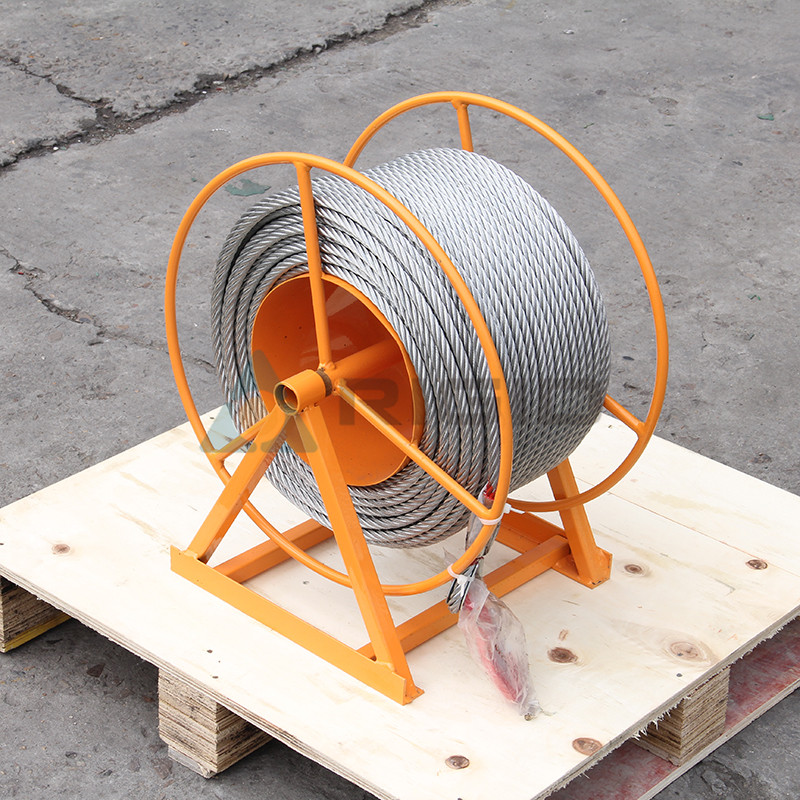
Steel Wire Ropes: A Comprehensive Technical Analysis Of Structure, Selection, And Safe Usage Guidelines
1. Introduction
In modern industrial production and engineering operations, the demand for reliable load-bearing, traction, and transmission components is increasing, and steel wire ropes, as a typical flexible load-bearing structure, have become an indispensable key component in various mechanical systems. With a long history of application, steel wire ropes have evolved from simple single-strand structures to complex multi-strand, multi-wire composite structures, and their performance has been continuously optimized to meet the requirements of high load, high efficiency, and harsh working environments. Unlike rigid load-bearing components such as steel bars and shafts, steel wire ropes have the advantages of good flexibility, strong adaptability, and ability to absorb impact loads, which can be used in complex spatial layouts and dynamic working conditions.
With the rapid development of industries such as construction, mining, and marine engineering, the application scenarios of steel wire ropes have become more diverse and complex, and higher requirements have been put forward for their performance and safety. However, in practical applications, many problems still exist: inadequate understanding of the structural characteristics of steel wire ropes leads to improper type selection; neglect of working environment and load limits results in premature wear, fatigue, or even breakage of steel wire ropes; lack of standardized safe usage and maintenance leads to reduced service life and potential safety hazards. These problems not only affect the normal progress of operations but also may cause serious safety accidents, resulting in significant losses of personnel and property.
Against this background, conducting a comprehensive technical analysis of steel wire ropes, clarifying their structural characteristics, selection principles, and safe usage norms, is of great practical significance for promoting the standardized application of steel wire ropes and reducing safety risks. This paper takes the core demand of ""safe, efficient, and rational application of steel wire ropes"" as the starting point, systematically sorts out the technical system of steel wire ropes, and provides valuable technical guidance for the selection, use, and maintenance of steel wire ropes in various engineering projects.
2. Structure of Steel Wire Ropes
The structure of steel wire ropes is a key factor determining their performance, load-bearing capacity, flexibility, and service life. A standard steel wire rope is a composite structure composed of three basic components: wires, strands, and cores. Each component has a specific function and structural characteristics, and their combination form directly affects the overall performance of the steel wire rope. The following is a detailed elaboration of the structural components, structural types, and performance characteristics of steel wire ropes.
2.1 Basic Structural Components
Steel wire ropes are composed of three core components: wires, strands, and cores. These components are closely combined through twisting, forming a stable load-bearing structure that can transmit traction force and bear complex loads such as tension, bending, and torsion.
- Wires: Wires are the basic load-bearing units of steel wire ropes, usually made of high-carbon steel, alloy steel, or stainless steel through drawing, heat treatment, and other processes. The diameter of the wire generally ranges from 0.15mm to 6.0mm, and its strength, toughness, and wear resistance directly determine the overall performance of the steel wire rope. According to the surface treatment method, wires can be divided into galvanized wires (hot-dip galvanized and electro-galvanized), non-galvanized wires, and stainless steel wires. Galvanized wires have good corrosion resistance, suitable for outdoor, marine, and corrosive environments; non-galvanized wires have high strength and are suitable for indoor and dry environments; stainless steel wires have excellent corrosion resistance and high temperature resistance, suitable for special harsh environments.
- Strands: Strands are composed of multiple wires twisted together in a certain direction and pitch. The number of wires in each strand, the twisting direction, and the pitch directly affect the flexibility and load-bearing capacity of the strand. Common strand structures include single-layer twisted strands, double-layer twisted strands, and multi-layer twisted strands. Single-layer twisted strands are composed of a central wire and several wires twisted around it, with simple structure and good flexibility; double-layer twisted strands are composed of an inner layer of wires and an outer layer of wires twisted in opposite directions, with higher strength and wear resistance; multi-layer twisted strands are composed of multiple layers of wires twisted in turn, with high load-bearing capacity and good stability, suitable for heavy-load scenarios.
- Cores: The core is the central component of the steel wire rope, which plays a role in supporting the strands, maintaining the shape of the steel wire rope, and absorbing impact loads. According to the material, the core can be divided into fiber cores (natural fiber cores and synthetic fiber cores) and steel cores (independent wire rope cores and strand cores). Fiber cores have good flexibility and shock absorption, suitable for scenarios requiring high flexibility; steel cores have high strength, wear resistance, and rigidity, suitable for heavy-load, high-temperature, and high-wear scenarios. The selection of the core material is closely related to the application scenario and load requirements of the steel wire rope.
2.2 Structural Types and Classification
Steel wire ropes can be classified into different structural types according to the twisting method, number of strands, number of wires per strand, and core type. Different structural types have distinct performance characteristics and applicable scopes. The following is a detailed classification and explanation of mainstream steel wire rope structural types.
- Classification by Twisting Method: According to the twisting direction of strands and wires, steel wire ropes can be divided into right-hand twisted and left-hand twisted ropes. Right-hand twisted ropes are twisted clockwise, which is the most commonly used type; left-hand twisted ropes are twisted counterclockwise, suitable for special scenarios where the direction of rotation needs to be adjusted. In addition, according to the relationship between the twisting direction of strands and wires, steel wire ropes can be divided into ordinary twisted ropes (strands and wires are twisted in the same direction) and cross-twisted ropes (strands and wires are twisted in opposite directions). Cross-twisted ropes have better stability and wear resistance, and are not easy to loose, suitable for heavy-load and high-speed operation scenarios.
- Classification by Number of Strands and Wires: The number of strands and wires per strand is an important indicator of the structural type of steel wire ropes. Common types include 6×19S+FC (6 strands, 19 wires per strand, fiber core), 6×37S+FC (6 strands, 37 wires per strand, fiber core), 6×19W+IWR (6 strands, 19 wires per strand, independent wire rope core), and 8×19S+FC (8 strands, 19 wires per strand, fiber core). 6×19S+FC steel wire ropes have high strength and good wear resistance, suitable for general hoisting and traction scenarios; 6×37S+FC steel wire ropes have better flexibility, suitable for scenarios requiring frequent bending; 6×19W+IWR steel wire ropes have high strength and rigidity, suitable for heavy-load and high-temperature scenarios.
- Classification by Core Type: As mentioned earlier, according to the core material, steel wire ropes can be divided into fiber core (FC) and steel core (IWR/IWS) steel wire ropes. Fiber core steel wire ropes have good flexibility, shock absorption, and lubrication retention, suitable for hoisting, traction, and other scenarios requiring high flexibility; steel core steel wire ropes have high strength, wear resistance, and resistance to extrusion, suitable for heavy-load, high-temperature, and high-wear scenarios such as mining, bridge construction, and marine hoisting.
- Special Structural Steel Wire Ropes: In addition to the above common structural types, there are also special structural steel wire ropes designed for specific scenarios, including compacted steel wire ropes, sealed steel wire ropes, and galvanized steel wire ropes. Compacted steel wire ropes are formed by compacting strands, with high density, high strength, and good wear resistance, suitable for high-load and high-speed operation; sealed steel wire ropes have a sealed structure, good corrosion resistance, and are suitable for marine and corrosive environments; galvanized steel wire ropes have a galvanized layer on the surface, which can effectively prevent corrosion, suitable for outdoor and marine scenarios.
2.3 Performance Characteristics of Different Structural Types
Different structural types of steel wire ropes have distinct performance characteristics, which directly determine their application scope. The following is a comparison of the key performance characteristics of common structural types:
- Fiber Core (FC) Steel Wire Ropes: Good flexibility, strong shock absorption, good lubrication retention, low weight, but low strength and poor wear resistance compared with steel core ropes. Suitable for light to medium load, frequent bending, and indoor dry environments, such as indoor hoisting, crane traction, and material transportation.
- Steel Core (IWR/IWS) Steel Wire Ropes: High strength, good wear resistance, strong resistance to extrusion and fatigue, high rigidity, but poor flexibility and shock absorption compared with fiber core ropes. Suitable for heavy load, high temperature, high wear, and harsh environments, such as mining, bridge construction, marine hoisting, and high-speed traction.
- 6×19 Series Steel Wire Ropes: High strength, good wear resistance, simple structure, but poor flexibility. Suitable for general hoisting, traction, and load-bearing scenarios with less bending, such as fixed hoisting equipment, port loading and unloading, and building material hoisting.
- 6×37 Series Steel Wire Ropes: Good flexibility, strong bending resistance, but lower strength and wear resistance than 6×19 series. Suitable for scenarios requiring frequent bending, such as crane hooks, hoisting ropes for mobile cranes, and material transportation in narrow spaces.
- Compacted Steel Wire Ropes: High density, high strength, good wear resistance, smooth surface, and low friction coefficient. Suitable for high-load, high-speed, and high-wear scenarios, such as elevator ropes, high-speed traction systems, and precision hoisting equipment.
3. Selection of Steel Wire Ropes
The rational selection of steel wire ropes is the premise of ensuring safe and efficient operation. The selection of steel wire ropes must be based on the actual application scenario, load requirements, working environment, and operation mode, comprehensively considering the structural type, material, strength level, and other factors, to ensure that the selected steel wire rope matches the actual needs. The following is a detailed elaboration of the selection principles, selection steps, and key considerations of steel wire ropes.
3.1 Selection Principles
The selection of steel wire ropes must follow the following core principles to ensure the safety, reliability, and economy of the steel wire rope in practical application:
1. Safety First Principle: The selected steel wire rope must have sufficient load-bearing capacity and safety margin to withstand the maximum working load and impact load. The safety margin of steel wire ropes shall comply with relevant national standards and industry specifications, generally not less than 5 times the maximum working load. For special scenarios such as heavy load, high speed, and harsh environment, the safety margin shall be appropriately increased.
2. Matching Principle: The structural type, material, and performance of the steel wire rope must match the application scenario, load requirements, and working environment. For example, in corrosive environments, galvanized or stainless steel wire ropes should be selected; in heavy-load scenarios, steel core steel wire ropes should be selected; in scenarios requiring frequent bending, flexible fiber core steel wire ropes should be selected.
3. Economy Principle: On the premise of meeting safety and performance requirements, the selection of steel wire ropes should consider the cost, service life, and maintenance cost, to achieve the optimal balance between performance and economy. It is not advisable to blindly pursue high-performance steel wire ropes, nor to select low-quality steel wire ropes to save costs.
4. Standardization Principle: The selected steel wire ropes must meet relevant national standards and industry specifications, with complete quality certificates and inspection reports, to ensure the quality and performance of the steel wire ropes. It is strictly prohibited to use unqualified steel wire ropes that do not meet the standards.
3.2 Selection Steps
The selection of steel wire ropes is a systematic process, which generally includes the following steps to ensure the rationality and accuracy of the selection:
1. Determine the Working Load: First, accurately calculate the maximum working load of the steel wire rope, including the static load, dynamic load, and impact load. The maximum working load shall be determined according to the actual operation scenario, such as the weight of the hoisted object, the traction force required for transportation, and the impact generated during operation.
2. Determine the Safety Margin: According to the national standards and industry specifications, combined with the working environment and operation mode, determine the safety margin of the steel wire rope. For general hoisting scenarios, the safety margin is 5-6 times; for heavy-load, high-speed, and impact scenarios, the safety margin is 6-8 times; for special harsh scenarios, the safety margin is not less than 8 times.
3. Select the Structural Type: According to the working load, flexibility requirements, bending frequency, and working environment, select the appropriate structural type of steel wire rope. For example, heavy-load scenarios select steel core steel wire ropes; frequent bending scenarios select 6×37 series fiber core steel wire ropes; corrosive environments select galvanized steel wire ropes.
4. Select the Material and Surface Treatment: According to the working environment, select the appropriate material and surface treatment method of the steel wire rope. For dry indoor environments, non-galvanized high-carbon steel wire ropes can be selected; for outdoor, marine, and corrosive environments, galvanized or stainless steel wire ropes can be selected; for high-temperature environments, high-temperature resistant alloy steel wire ropes can be selected.
5. Verify the Performance Parameters: Verify the key performance parameters of the selected steel wire rope, including breaking strength, fatigue life, wear resistance, and corrosion resistance, to ensure that they meet the actual operation requirements. If the performance parameters do not meet the requirements, adjust the selection scheme until the requirements are met.
3.3 Key Considerations
In the process of selecting steel wire ropes, in addition to following the selection principles and steps, the following key factors must be considered to avoid improper selection:
- Working Environment: The working environment is one of the most important factors affecting the selection of steel wire ropes. Factors such as temperature, humidity, corrosion, dust, and radiation in the working environment directly determine the material, surface treatment, and structural type of the steel wire rope. For example, in high-temperature environments, steel wire ropes with high-temperature resistance should be selected; in corrosive environments, anti-corrosion steel wire ropes should be selected.
- Operation Mode: The operation mode of the steel wire rope, such as fixed hoisting, mobile traction, high-speed operation, and frequent bending, also affects the selection. For example, fixed hoisting scenarios can select steel wire ropes with high strength and poor flexibility; mobile traction and frequent bending scenarios must select steel wire ropes with good flexibility and bending resistance.
- Load Characteristics: The load characteristics, such as static load, dynamic load, impact load, and alternating load, determine the strength level and safety margin of the steel wire rope. For dynamic load and impact load scenarios, steel wire ropes with high fatigue resistance and impact resistance should be selected, and the safety margin should be appropriately increased.
- Compatibility with Equipment: The selected steel wire rope must be compatible with the hoisting, traction, or transmission equipment, including the diameter, length, and connection method of the steel wire rope, to ensure that the steel wire rope can be smoothly installed and operated on the equipment.
4. Safe Usage Guidelines for Steel Wire Ropes
The safe usage of steel
wire ropes is directly related to the personal safety of operators, the safety of equipment and materials, and the normal progress of operations. To ensure safe usage, operators must strictly abide by the following safe usage guidelines, covering pre-use inspection, in-use operation, daily maintenance, and scrap standards, and establish a standardized usage and management system.
4.1 Pre-Use Inspection Guidelines
Pre-use inspection is the premise of safe usage, which can effectively identify potential faults and safety hazards of steel wire ropes, and avoid accidents during operation. Operators must conduct a comprehensive inspection before using the steel wire rope, and use the steel wire rope only after confirming that all indicators are normal.
1. Appearance Inspection: Check the surface of the steel wire rope for wear, corrosion, broken wires, deformation, loose strands, and other defects. The number of broken wires per unit length shall not exceed the limit specified in the standard; the wear amount of the wire diameter shall not exceed 10% of the original diameter; there shall be no obvious corrosion, deformation, or loose strands.
2. Strength and Tension Inspection: Check the breaking strength and tension of the steel wire rope to ensure that it meets the working load requirements and has sufficient safety margin. For steel wire ropes that have been used for a long time, a tension test should be carried out regularly to verify their load-bearing capacity.
3. Lubrication Inspection: Check the lubrication status of the steel wire rope. The surface of the steel wire rope should be evenly coated with lubricating oil, which can reduce friction, prevent corrosion, and extend the service life. If the lubrication is insufficient or the lubricating oil is deteriorated, lubrication should be carried out in time.
4. Connection Part Inspection: Check the connection parts of the steel wire rope, such as wire rope clamps, sleeves, and hooks, to ensure that they are firmly connected, without loosening, deformation, or damage. The number and installation method of wire rope clamps shall comply with the standard requirements.
5. Environmental Inspection: Check the working environment around the steel wire rope, ensure that there are no obstacles, sharp edges, or corrosive substances that may damage the steel wire rope; avoid using the steel wire rope in harsh environments such as strong wind, heavy rain, high temperature, and strong corrosion without protection.
4.2 In-Use Operation Guidelines
During the use of steel wire ropes, operators must strictly abide by the operation specifications, focus on the operation status of the steel wire rope, and avoid irregular operations that may lead to safety accidents.
1. Operator Qualification: Only trained and qualified operators can operate the steel wire rope. Operators must be familiar with the performance, usage method, and safety precautions of the steel wire rope, and shall not operate the steel wire rope without authorization or beyond their competence.
2. Load Control: Strictly abide by the rated load of the steel wire rope, and shall not overload operation; avoid sudden impact loads, such as sudden lifting, lowering, or stopping, which may cause damage to the steel wire rope. When hoisting irregular objects, the load shall be evenly distributed to avoid local stress concentration.
3. Operation Specifications: When using the steel wire rope, the speed shall be uniform, and sudden acceleration, deceleration, or emergency stop shall be avoided; avoid the steel wire rope being bent at a small radius, which may cause fatigue damage to the steel wire rope; avoid the steel wire rope coming into contact with sharp edges, obstacles, or corrosive substances, which may cause wear, scratch, or corrosion.
4. Operation Monitoring: During operation, closely monitor the operation status of the steel wire rope, including the surface condition, tension, and vibration of the steel wire rope. If abnormal phenomena such as broken wires, wear, corrosion, deformation, or abnormal vibration are found, stop the operation immediately, cut off the power supply, and conduct inspection and troubleshooting. It is strictly prohibited to continue using the steel wire rope with faults.
4.3 Daily Maintenance Guidelines
Daily maintenance is an important link to extend the service life of steel wire ropes, reduce failure rates, and ensure safe usage. Operators must conduct comprehensive maintenance and finishing work after using the steel wire rope.
1. Cleaning: After use, clean the surface of the steel wire rope, remove dust, dirt, corrosion products, and other debris, to avoid the debris scratching the surface of the steel wire rope and accelerating wear and corrosion. For steel wire ropes used in corrosive environments, they should be cleaned with neutral detergent and dried in time.
2. Lubrication: Regularly lubricate the steel wire rope. The lubricating oil should be selected according to the working environment and usage frequency, and evenly coated on the surface of the steel wire rope, including the gaps between strands and wires. The lubrication cycle should be determined according to the working environment: once a week for harsh environments, once a month for general environments.
3. Storage: When the steel wire rope is not in use, it should be stored in a dry, ventilated, and corrosion-free warehouse, avoiding direct sunlight, rain, and moisture. The steel wire rope should be coiled neatly, placed on a special bracket, and shall not be placed on the ground or mixed with corrosive substances. For long-term storage, the steel wire rope should be regularly inspected and lubricated.
4. Regular Inspection: In addition to daily pre-use inspection, the steel wire rope should be regularly inspected according to the usage frequency and working environment. For frequently used steel wire ropes, a comprehensive inspection should be carried out once a month; for steel wire ropes used in harsh environments, a comprehensive inspection should be carried out once a week. The inspection results should be recorded in detail for future reference.
4.4 Scrap Standards
When the steel wire rope has serious defects and cannot meet the safe usage requirements, it must be scrapped in time to avoid safety accidents. The scrap standards of steel wire ropes shall comply with relevant national standards and industry specifications, and the following situations shall be scrapped immediately:
1. Broken Wires Exceed the Limit: The number of broken wires per unit length exceeds the limit specified in the standard. For example, for 6×19 series steel wire ropes, the number of broken wires in any 6d length (d is the diameter of the steel wire rope) shall not exceed 9; for 6×37 series steel wire ropes, the number of broken wires in any 6d length shall not exceed 12.
2. Severe Wear: The wear amount of the wire diameter exceeds 10% of the original diameter, or the cross-sectional area of the steel wire rope is reduced by more than 10%.
3. Severe Corrosion: The surface of the steel wire rope has obvious corrosion, pitting, or rust, which leads to a significant decrease in strength and fatigue resistance.
4. Deformation: The steel wire rope has obvious deformation, such as kinking, bending, or flattening, which cannot be restored to its original shape, and may cause stress concentration and breakage.
5. Damage to the Core: The core of the steel wire rope is damaged, exposed, or broken, which cannot play a supporting role, leading to unstable load-bearing of the steel wire rope.
6. Exceeding the Service Life: The service life of the steel wire rope exceeds the specified service life, or the number of fatigue cycles reaches the limit, even if there are no obvious defects, it should be scrapped in time.
5. Common Safety Hazards and Prevention Measures
In the process of using steel wire ropes, due to improper selection, irregular operation, inadequate maintenance, or neglect of safety precautions, various safety hazards may occur, which may lead to safety accidents. The following are common safety hazards and corresponding prevention measures to help operators and managers effectively avoid risks.
- Safety Hazard 1: Overload Operation: Overload operation will lead to excessive stress on the steel wire rope, resulting in premature fatigue, wear, or even breakage, which is one of the main causes of safety accidents. Prevention Measures: Strictly abide by the rated load of the steel wire rope, install a load limiter to automatically alarm or cut off the power supply when overloaded; accurately calculate the working load before use, and ensure that the safety margin meets the requirements.
- Safety Hazard 2: Irregular Operation: Irregular operations such as sudden impact, small-radius bending, and contact with sharp edges may cause damage to the steel wire rope, leading to breakage. Prevention Measures: Strengthen the training and assessment of operators, ensure that they master the standard operation methods; post operation specifications on the equipment, and supervise the operation process; avoid the steel wire rope coming into contact with sharp edges and obstacles.
- Safety Hazard 3: Inadequate Maintenance: Inadequate daily maintenance and lubrication will lead to accelerated wear, corrosion, and fatigue of the steel wire rope, reducing its service life and safety. Prevention Measures: Establish a standardized maintenance system, conduct daily cleaning, lubrication, and inspection; regularly replace the lubricating oil, and timely repair or replace the damaged steel wire rope.
- Safety Hazard 4: Improper Selection: Improper selection of steel wire rope type, material, or strength level leads to mismatching with the application scenario, resulting in premature damage or failure. Prevention Measures: Strictly follow the selection principles and steps, comprehensively consider the working environment, load requirements, and operation mode, and select the appropriate steel wire rope; verify the performance parameters of the steel wire rope before use.
- Safety Hazard 5: Neglect of Scrap Standards: Continuing to use steel wire ropes that meet the scrap standards will lead to breakage and safety accidents. Prevention Measures: Familiarize with the scrap standards of steel wire ropes, conduct regular inspections, and scrap the steel wire ropes that meet the scrap conditions in time; establish a scrap management system, and record the scrap situation in detail.
6. Development Trends of Steel Wire Rope Technology
With the continuous advancement of material science, mechanical manufacturing technology, and intelligent technology, steel wire rope technology is developing in the direction of high strength, high efficiency, corrosion resistance, and intelligence. The main development trends are as follows:
- High-Strength and Lightweight Development: With the development of new high-strength materials (such as high-strength alloy steel, carbon fiber composites), the strength of steel wire ropes will be further improved, and the weight will be further reduced. This can not only improve the load-bearing capacity and efficiency of the steel wire rope but also reduce the additional load on the hoisting and traction equipment, adapting to the development trend of large-scale and lightweight equipment.
- Corrosion-Resistant and Wear-Resistant Upgrading: In response to the harsh working environment (such as marine, chemical, and mining), the corrosion resistance and wear resistance of steel wire ropes will be further improved. New anti-corrosion materials, surface treatment technologies (such as galvanizing, chrome plating, and ceramic coating), and structural designs will be widely used to extend the service life of steel wire ropes and reduce maintenance costs.
- Intelligent and Digital Development: The integration of steel wire ropes with intelligent technologies such as the Internet of Things (IoT), sensors, and big data will become the mainstream. Intelligent steel wire ropes will be equipped with sensors to realize real-time monitoring of the operating status (such as load, wear, corrosion, and fatigue), fault early warning, and remote diagnosis. Through big data analysis, the maintenance plan can be optimized, and the operation efficiency and safety of the steel wire rope can be improved.
- Specialization and Customization: According to the specific needs of different industries and application scenarios, specialized and customized steel wire ropes will be developed. For example, for the aerospace industry, high-precision, lightweight steel wire ropes will be developed; for the marine industry, corrosion-resistant, high-load steel wire ropes will be developed; for the mining industry, wear-resistant, anti-impact steel wire ropes will be developed.
- Environmental Protection and Energy Conservation: With the increasing emphasis on environmental protection, the production and use of steel wire ropes will tend to be environmentally friendly and energy-saving. New environmentally friendly materials and production processes will be adopted to reduce environmental pollution; the service life of steel wire ropes will be extended to reduce resource waste.
7. Conclusion
Steel wire ropes, as a core load-bearing component in hoisting, traction, and transmission systems, play a crucial role in ensuring the safe and efficient operation of various industrial and engineering projects, and have been widely applied in construction, industry, mining, marine, and other fields. This paper systematically elaborates on the structural components and types of steel wire ropes, analyzes the performance characteristics of different structural types; puts forward scientific selection principles, steps, and key considerations, guiding the rational selection of steel wire ropes; and formulates comprehensive and standardized safe usage guidelines, covering pre-use inspection, in-use operation, daily maintenance, and scrap standards, providing professional technical support for the safe and efficient application of steel wire ropes.
With the continuous advancement of technology, steel wire ropes will develop towards high strength, high efficiency, corrosion resistance, and intelligence, and their application scope will be further expanded. In practical applications, it is necessary to select the appropriate type of steel wire rope according to the specific application scenario and load requirements, strictly abide by the safe usage guidelines, strengthen the daily maintenance and management of the steel wire rope, and effectively avoid safety hazards.
It is hoped that this paper can help relevant practitioners fully grasp the core knowledge of steel wire ropes, promote the standardized, safe, and efficient application of steel wire rope systems, reduce safety accidents, and make greater contributions to the development of various related industries.










 +86 51068080177


 Current location:Home
>News
>Industry news
Steel Wire Ropes: A Comprehensive Technical Analysis Of Structure, Selection, And Safe Usage Guidelines
Current location:Home
>News
>Industry news
Steel Wire Ropes: A Comprehensive Technical Analysis Of Structure, Selection, And Safe Usage Guidelines