Scaffoldless Elevator Car Installation — Site Survey And Risk Assessment
What Is Scaffoldless Elevator Car Installation?
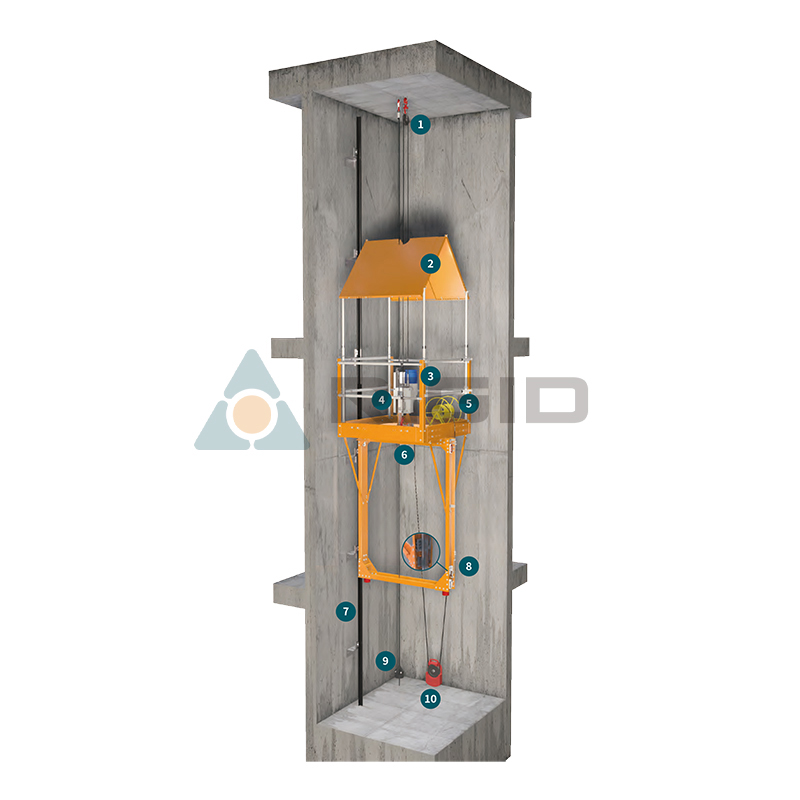
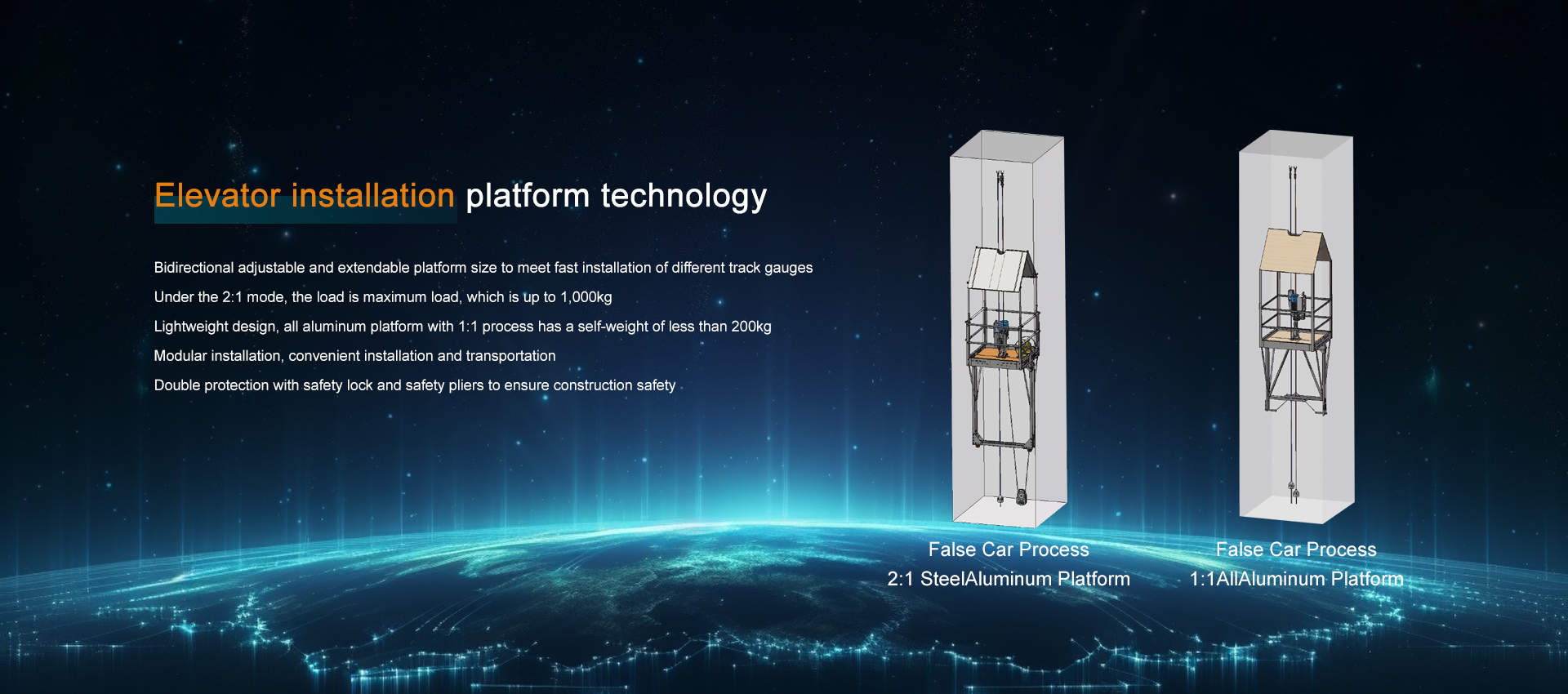
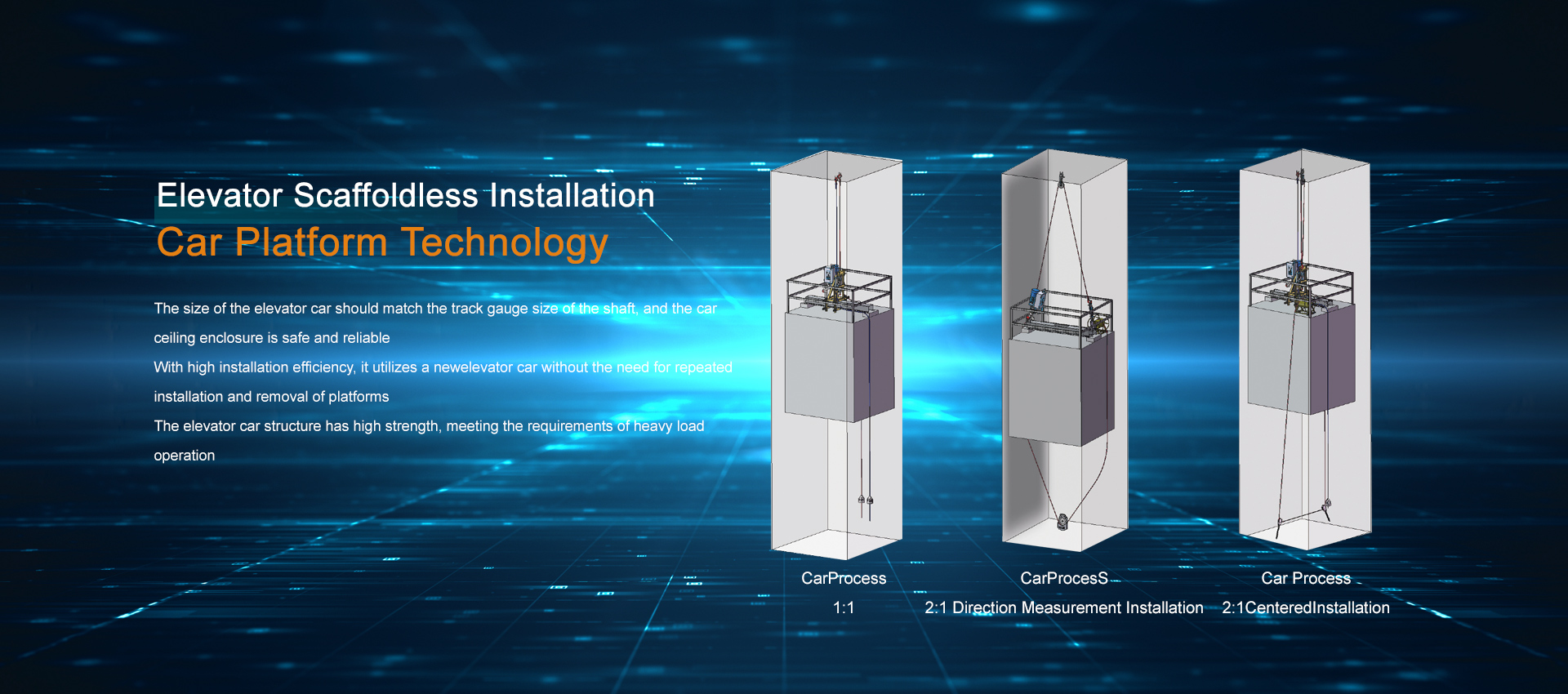
Scaffoldless elevator car installation is a method of erecting the elevator in which a climbing platform — typically a false-car — replaces the traditional scaffold as the working surface for crew, tools, and components during shaft work. The platform climbs the guide rail as the rail is erected, providing a stable, enclosed work area at every floor level.
The traditional alternative — scaffolding — requires the scaffold to be erected floor by floor before the elevator work begins and dismantled after the elevator is commissioned. Scaffolding is labour-intensive, weather-sensitive, and a significant contributor to construction falls in the elevator trade. Scaffoldless installation reduces the labour cost, shortens the construction programme, and improves safety by replacing the temporary scaffold with a purpose-engineered climbing platform.
Wuxi Rigid Machinery's Scaffoldless
Elevator Car Installation Technology covers the equipment, the methodology, the training, and the documentation that turn scaffoldless installation into a repeatable, auditable workflow.
Why Is a Site Survey Required Before Equipment Selection?
The site survey is the basis for equipment selection, risk assessment, and method statement; without it, the equipment arrives on site and does not fit, or fits but creates an uncontrolled risk. The survey is the project's first chance to convert drawings into physical reality.
The survey covers:
Shaft geometry (width, depth, plumb, headroom, pit depth).
Rail size and profile at every rail joint.
Permanent fixtures (door frames, cable trays, sprinklers, pipework).
Power supply availability and voltage.
Surrounding structure (hoistway openings, adjacent walls, weather exposure).
Access for delivery and crane lift.
The survey's output is a written report with photographs, measurements, and any deviations from the design drawings. The Wuxi Rigid project team reviews the report before committing to the equipment delivery date.
What Is the Risk Assessment?
The risk assessment is a written, structured analysis of the foreseeable hazards of the scaffoldless installation work and the controls that reduce each hazard to an acceptable level. It is the legal proof that the work was planned, not improvised.
The risk assessment follows the standard hierarchy of controls:
Eliminate. Remove the hazard if possible.
Substitute. Replace the hazard with a less hazardous option.
Engineer controls. Use engineering to isolate people from the hazard.
Administrative controls. Use procedures, training, and supervision.
PPE. Use personal protective equipment as the last line of defence.
|
Hazard |
Example |
Control |
|
Fall from height |
Crew on the climbing platform |
Guard rails, harness anchor, Safety Lock |
|
Falling object |
Tool dropped from platform |
Tool lanyards, debris net, toe boards |
|
Hoist failure |
Brake or motor failure |
Dual brakes, overspeed safety lock, monthly inspection |
|
Electrocution |
Contact with live conductors |
Lockout/tagout, RCD protection, cable routing |
|
Entrapment |
Crew trapped on platform |
Emergency rescue plan, Reversing Counterweight where applicable |
|
Weather |
High wind, lightning, ice |
Wind speed limit, lightning protocol, cold-weather plan |
The risk assessment is signed by the project's responsible person and shared with the crew before work begins.
What Are the Key Survey Measurements?
The survey records the measurements that determine whether the equipment fits and whether the work can be done safely. The most critical measurements are:
|
Measurement |
Why it matters |
Tolerance |
|
Shaft width (clear between walls) |
Determines the maximum platform width |
±10 mm |
|
Shaft depth (front-to-back) |
Determines the maximum platform length |
±10 mm |
|
Plumb of shaft walls |
Affects the platform's travel clearance |
±20 mm over full height |
|
Pit depth |
Determines whether the platform can land at the lowest floor |
±50 mm |
|
Headroom above top floor |
Determines whether the platform can travel to the top |
±50 mm |
|
Rail size and profile at every joint |
Determines the adapter plate selection |
Profile per Wuxi Rigid catalogue |
|
Position of permanent fixtures |
Determines clearance for the platform |
As-built survey |
|
Door openings |
Determines platform access |
Width and height to ±10 mm |
The Wuxi Rigid site survey template records each measurement on a structured form, with photographs keyed to the location.
How Is the Risk Assessment Reviewed and Updated?
The risk assessment is a living document; it is reviewed at every stage of the project and updated whenever a new hazard is identified. Five review points are standard:
Before equipment delivery. Verify that the survey and the risk assessment match the equipment specifications.
At commissioning. Confirm that the installation matches the survey and that the controls are in place.
At each major stage. Re-evaluate when the platform moves to a new configuration or the shaft geometry changes.
After any incident or near miss. Update the assessment with the new hazard and the corrective control.
At handover. Confirm that the platform is removed and the permanent elevator is operational.
Each review is documented and signed by the responsible person.
What Roles Are Required for Scaffoldless Installation?
The scaffoldless installation crew is built from four roles: the responsible person, the platform operator, the rigger, and the crew members on the platform. Each role has a defined competency and authority.
|
Role |
Responsibility |
Competency |
|
Responsible person |
Overall site safety, risk assessment ownership |
Project manager or designated competent person |
|
Platform operator |
Platform controls, daily inspection, communication |
Wuxi Rigid operator training or equivalent |
|
Rigger |
Crane lifts, sling work, anchor installation |
Certified rigger |
|
Crew member |
Platform work under the operator's direction |
Site induction, fall protection training |
A two-person platform (operator plus one crew) is the minimum for personnel lifts; larger platforms can carry four to six crew members.
What Equipment Is Required?
The scaffoldless installation requires the false-car platform, the adapter plates, the overspeed safety lock, the rail lifting hoist, and the supporting steel transportation box for logistics. The Wuxi Rigid catalogue covers each component.
|
Equipment |
Function |
Selection criteria |
|
False-car platform |
Climbing work surface |
Capacity, shaft geometry, crew size |
|
Adapter plates |
Rail-to-platform interface |
Rail profile at the project |
|
Overspeed safety lock |
Overspeed protection |
Capacity match, calibration |
|
Rail lifting hoist |
Lift rail sections to the platform |
Capacity, lift height |
|
Diverter pulley |
Rope routing |
Rope diameter, wrap angle |
|
Wire rope |
Hoist suspension |
Diameter, construction, length |
|
Steel transportation box |
Logistics |
Equipment match |
|
Communication system |
Crew-to-ground communication |
Radio or intercom, intrinsically safe if required |
Each equipment selection references the survey and the risk assessment.
What Is the Typical Workflow?
The scaffoldless installation workflow proceeds through nine stages, each with a documented output. The Wuxi Rigid Scaffoldless Elevator Car Installation Technology programme defines each stage in detail.
Site survey. Record shaft geometry, rail profile, fixtures, and access.
Risk assessment. Identify hazards and controls; sign off.
Method statement. Define the sequence of work, the equipment, and the crew.
Equipment delivery. Ship the platform, adapter plates, and accessories in the steel transportation box.
Platform installation. Bolt the adapter plates to the rail; install the platform; verify fit.
Commissioning. Test brakes, overspeed safety lock, and limits under no load, then under incremental load.
Installation work. Crew lifts rail sections, machinery, and components using the platform and the rail lifting hoist.
Inspection. Verify the work at each floor level; sign off.
Handover. Remove the platform, complete the documentation, hand over to the elevator commissioning team.
Each stage has a checklist and a sign-off record.
How Is Crew Training Documented?
Every crew member on the platform must have a current training record for the platform model and the relevant standard. Training records are kept on the site file and updated annually or after any incident.
Training covers:
Platform operation (controls, limits, emergency stop).
Pre-use inspection (visual, brake test, function test).
Fall protection (harness, anchor, rescue).
Communication (radio protocol, hand signals).
Emergency procedures (rescue plan, Safety Lock manual operation).
The Wuxi Rigid operator training programme covers each topic with a written exam and a practical assessment.
What Are the Common Survey Errors?
Five survey errors recur and lead to equipment that does not fit or to work that cannot be done safely.
Measuring between finished wall surfaces instead of structural surfaces. The false-car platform travels against the structural walls, not the finished cladding. The survey must record the structural dimension.
Missing permanent fixtures. Cable trays, sprinklers, and pipework are often added after the elevator drawings are issued. The survey must record every fixture, even if it is shown on a separate drawing.
Ignoring rail joint variations. Different floors may use different rail sizes. The survey must record the rail profile at every joint.
Assuming the drawings are correct. As-built shafts often deviate from the design drawings. The survey must record the as-built dimension, not the design dimension.
Skipping the pit and headroom check. The pit depth and the headroom are the limiting dimensions for the platform's travel range. A 50 mm error can make the platform unusable.
Each error is preventable by using the Wuxi Rigid survey template and by reviewing the survey with the project's structural engineer before ordering equipment.
How Is the Risk Assessment Linked to the Method Statement?
The risk assessment identifies the controls; the method statement describes how each control is implemented in the work sequence. The two documents are linked: every control in the risk assessment appears as a step in the method statement.
|
Risk assessment control |
Method statement implementation |
|
Fall protection |
Step 4: install harness anchor before crew enters platform |
|
Brake test |
Step 6: complete daily brake test before platform use |
|
Overspeed safety lock |
Step 5: verify calibration and trip test before personnel lift |
|
Communication |
Step 2: test radio before platform moves |
|
Emergency rescue |
Step 9: rehearse rescue plan with crew |
The cross-reference ensures that no control is documented in the risk assessment but missed in the work sequence.
What Documentation Is Required at Handover?
The handover pack includes the survey report, the risk assessment, the method statement, the inspection log, the commissioning record, and the operator training records. The pack is the legal proof that the scaffoldless installation was planned, executed, and verified to the standard.
|
Document |
Owner |
Retention |
|
Site survey report |
Wuxi Rigid / site team |
Project file + 5 years |
|
Risk assessment |
Responsible person |
Project file + 5 years |
|
Method statement |
Responsible person |
Project file + 5 years |
|
Inspection log |
Platform operator |
Project file + 5 years |
|
Commissioning record |
Wuxi Rigid commissioning engineer |
Project file + life of equipment |
|
Operator training records |
Training provider |
Personnel file + 3 years |
The Wuxi Rigid Scaffoldless Elevator Car Installation Technology documentation template provides the structure for each document.
Frequently Asked Questions
Q: How long does the site survey take?
A: A typical scaffoldless installation site survey takes 2–4 hours on site, plus 2–4 hours to write the report. Complex shafts with multiple rail profiles or unusual geometries may take longer. The survey should be scheduled before the equipment order so any deviations are captured in the equipment selection.
Q: Who can perform the site survey?
A: The site survey should be performed by a competent person with experience in scaffoldless elevator installation. Wuxi Rigid offers a survey service using its own engineers, or the customer's engineer can be trained to use the Wuxi Rigid survey template. The survey is signed by the responsible person.
Q: What is the difference between a risk assessment and a method statement?
A: The risk assessment identifies the hazards and the controls. The method statement describes the work sequence and how each control is implemented. The two documents are linked: every control in the risk assessment must appear as a step in the method statement.
Q: Can the platform be used in high winds?
A: Most standards specify a maximum wind speed for platform use, typically 12–17 m/s (27–38 mph). Wuxi Rigid's platform documentation specifies the wind speed limit for each model. Above the limit, the platform is parked and the crew exits.
Q: What is the minimum crew size for scaffoldless installation?
A: A two-person crew (one operator plus one crew member) is the minimum for personnel lifts. Most installations use a three- or four-person crew to lift rail sections efficiently.
Q: Can the false-car platform be used as a permanent elevator car during construction?
A: No. The false-car platform is a temporary installation tool, not a permanent elevator car. The permanent car is installed after the scaffoldless work is complete, and the false-car is removed.
Q: What happens if the survey reveals a shaft that does not fit any standard platform?
A: Wuxi Rigid offers custom platform designs for non-standard shafts. The custom design typically adds 6–10 weeks to the delivery time and requires the survey data to be confirmed before the design begins.
Q: How is the crew rescued if the platform fails?
A: The emergency rescue plan covers the procedure for lowering the platform manually, for evacuating the crew with a secondary device, and for summoning the local fire service. The plan is rehearsed with the crew before the first lift.
Q: Are scaffoldless installations accepted by all elevator standards?
A: Most standards accept scaffoldless installations as long as the platform meets the personnel-lift requirements (dual brakes, overspeed safety lock, guard rails, communication). Wuxi Rigid's platform documentation references the relevant clauses of EN 1808, ANSI A10.28, and GB 19154.
Conclusion
Scaffoldless elevator car installation is faster, safer, and more predictable than scaffold-based installation — but only when the site survey is thorough and the risk assessment is a working document. Wuxi Rigid Machinery's Scaffoldless Elevator Car Installation Technology ties the survey, the risk assessment, the equipment selection, and the commissioning into a single auditable workflow. Pair the technology with the False Car platform, the adapter plates matched to the rail, and the Safety Lock integration for the personnel-lift standard in force at the project location.










 +86 51068080177


 Current location:Home
>News
>Industry news
Scaffoldless Elevator Car Installation — Site Survey And Risk Assessment
Current location:Home
>News
>Industry news
Scaffoldless Elevator Car Installation — Site Survey And Risk Assessment