Elevator Climber: Capacity, Speed And How To Select One
An
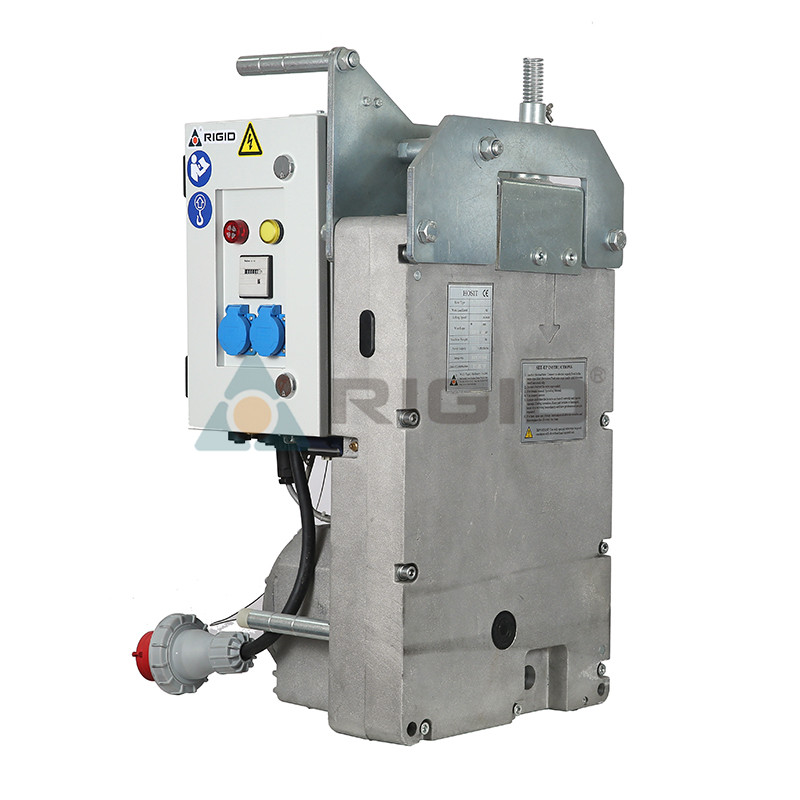
elevator climber is the machine that lifts the working platform in a lift shaft. It is not a crane and it is not a temporary goods lift. It is a compact rope-climbing unit that grips a suspended steel wire rope and walks itself — and whatever is attached to it — up and down the shaft.
Electric Traction Hoist Machine for Elevator Installation
Because it replaces scaffolding, the choice of climber sets the pace of the whole installation programme. Pick one that is too small and every rail lift becomes a two-trip job. Pick one without the right safety package and it cannot be used for personnel at all.
This guide covers how the machine works, how to read a model matrix, and what to check before ordering. Technical data comes from RIGID CO., LTD. (Wuxi Rigid Machinery), which has built rope climbing equipment in Wuxi, Jiangsu, China for over twenty years.
What an Elevator Climber Actually Does
Rope-Climbing, Not Drum-Winding
A conventional winch spools rope onto a drum. The drum has a finite capacity, so the rope length — and therefore the working height — is fixed by the drum size. A climber works differently: the rope passes through the machine and is never stored. The drive sheave grips the rope between pressure rollers and pulls the unit along it.
The practical consequence is that rope length stops being a design limit. RIGID climbers are built to run on unlimited rope lengths, which is why the same 58kg unit can work a six-storey shaft or a sixty-storey one. The rope is not connected to the machine, so the unit stays compact and can be carried up a ladder by one person.
What the Machine Sits On
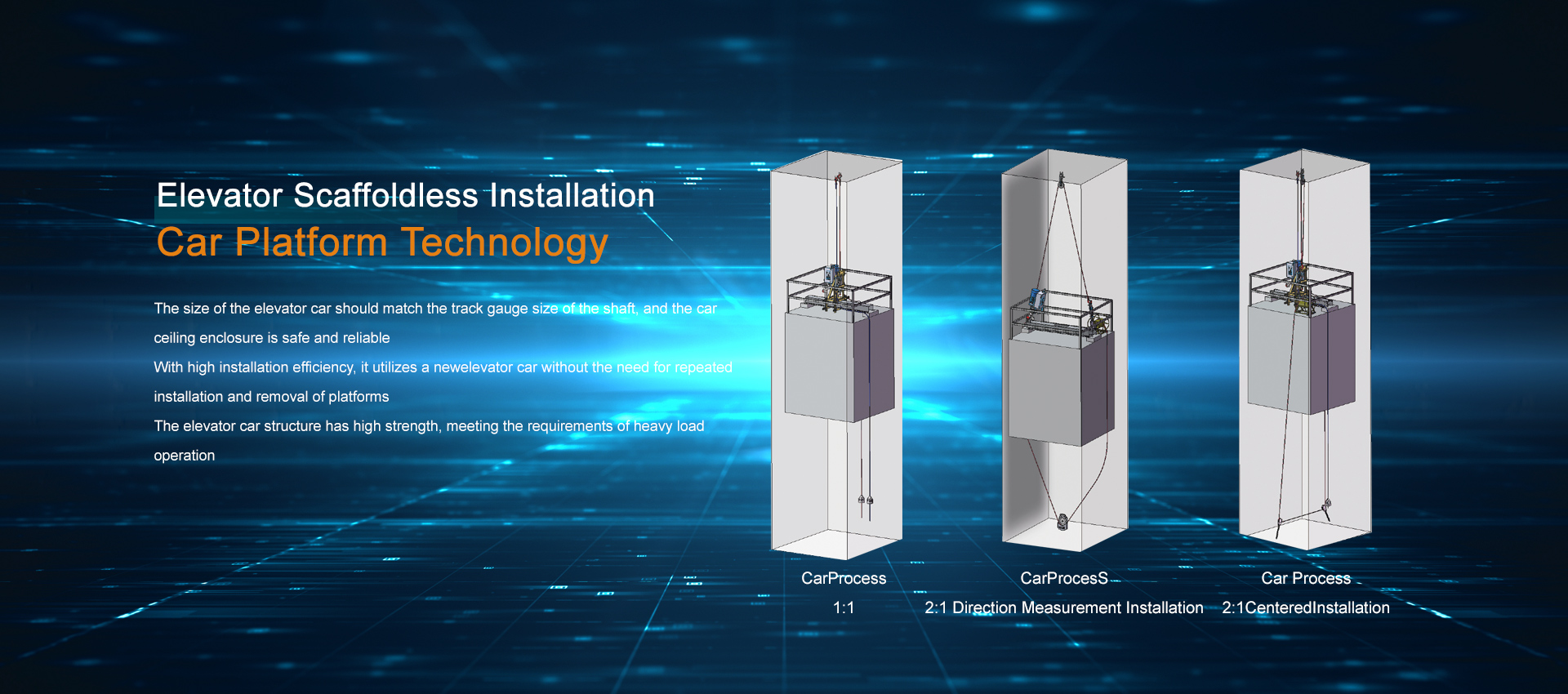
The climber mounts either directly to a false car platform through an adapter, or to a suspension arrangement on the car top. In both cases the load path runs: platform → adapter → central load pin → climber body → drive sheave → wire rope → suspension point. Every link in that chain has to be rated for the working load, not just the climber.
Capacity and Speed: The Two Numbers That Decide the Model
Capacity tells you what the machine can hold. Speed tells you how long each trip takes. Both matter, and they trade against each other.
RIGID builds two families. The
500–1000kg range runs at 9 or 18 m/min and weighs 58–75kg, which makes it a one-person lift onto the platform. The
2000kg range runs at 6 or 12 m/min and weighs 106–120kg, for heavy rail sets and multi-person platforms.
Reading the Model Matrix
|
Model |
Capacity |
Speed |
Weight |
Supply |
|
LTD50-8P9 |
500kg |
9 m/min |
58kg |
400V/3ph/50Hz |
|
LTD63-8P18 |
630kg |
18 m/min |
64kg |
400V/3ph/50Hz |
|
LTD80-9P9VF |
800kg |
5/9 m/min |
62kg |
230V/1ph/50Hz |
|
LTD100-10P9 |
1000kg |
9 m/min |
68kg |
400V/3ph/50Hz |
|
LTD100-10P18 |
1000kg |
18 m/min |
72kg |
400V/3ph/50Hz |
|
LTD200-14P6 |
2000kg |
6 m/min |
106kg |
400V/3ph/50Hz |
|
LTD200-14P12 |
2000kg |
12 m/min |
113kg |
400V/3ph/50Hz |
Two-speed models (shown as 5/9, 9/18 or 6/12) let the operator run fast on the empty return and slow when carrying a rail or a person. On a tall shaft that pattern saves more time than a higher single speed does.
What Makes a Climber Usable for People
A climber that lifts material and a climber that lifts people are not the same product, even when the capacity figures match. Personnel lifting requires an overspeed safety lock in the load path, and that lock has to be matched to the rope diameter and the rated load.
RIGID supplies fall arresters — overspeed or anti-tipping — for passenger lift applications, and the fall arrest device is included in the scope of supply for man-riding winches. Adapters for mounting and dismounting buckles, rope protection and overload protection devices for endless hoists are also available.
If a supplier quotes you a climber for personnel work without discussing the safety lock, the quote is incomplete.
Build Details That Decide Service Life
Drive Sheave and Pressure Rollers
The sheave and the pressure rollers on RIGID units are nitrided steel at roughly 70 HRC surface hardness. That hardness is what keeps the rope grip consistent after hundreds of hours. A soft sheave wears, the groove profile changes, and grip falls off gradually — which shows up as slipping under load rather than as an obvious failure.
Housing, Oil and Temperature
The housing is die-cast aluminium, machined precisely, which keeps dead weight low without losing rigidity. The gearbox runs on fully synthetic oil rated from -40°C to 70°C. That range matters on winter façade work in northern Europe as much as it does on a hot roof in summer.
Power, Control and Site Realities
Site power is rarely what the drawing says.
RIGID builds units for 400V three-phase as standard, with 230V single-phase variants where only a temporary supply is available. Control voltage is 24V on mobile units and 42V on stationary installations.
Several features exist purely because of how sites actually run:
• Phase sequence protection, so a reversed supply does not run the motor backwards
• Thermal overload protection on the hoist motor
• IP55 motor protection against dust and water jets
• External handle switch with emergency stop
• An anti-derailment switch interface, so the platform locks out if it lifts off the rail
• Optional cordless control, and an optional centre control box to run more than one hoist together
Selecting a Climber for a Specific Shaft
Work through four questions in order. What is the heaviest single lift — a rail set, a platform with two people, or both? What rope length does the shaft height require? What power is actually available at the landing? And is the platform certified for personnel, which forces the safety lock choice?
RIGID has led and participated in drafting GB 40160-2021 and GB 19155-2017, and the product range carries TUV and SGS certification. Units are exported to nearly 70 countries, with service centres and agencies in the main markets.
Send shaft height, heaviest lift and available power to the RIGID team at +86 510 6808 0177 for a model recommendation.










 +86 51068080177
 Current location: