Safety Lock: How An Overspeed Lock Stops A Falling Platform
A
safety lock on a suspended platform is the component that converts a failure into an incident rather than an accident. It does nothing at all for months, then does everything in about 200 millimetres.
Because it is invisible in normal operation, it is also the component most often specified by habit rather than by calculation. The result is a lock that is the right shape and the wrong rating.
This article covers the mechanics, the selection variables and the inspection regime, using the OSL series built by RIGID CO., LTD. (Wuxi Rigid Machinery) in Wuxi, Jiangsu, China.
The Trigger Mechanism
Centrifugal, Not Electronic
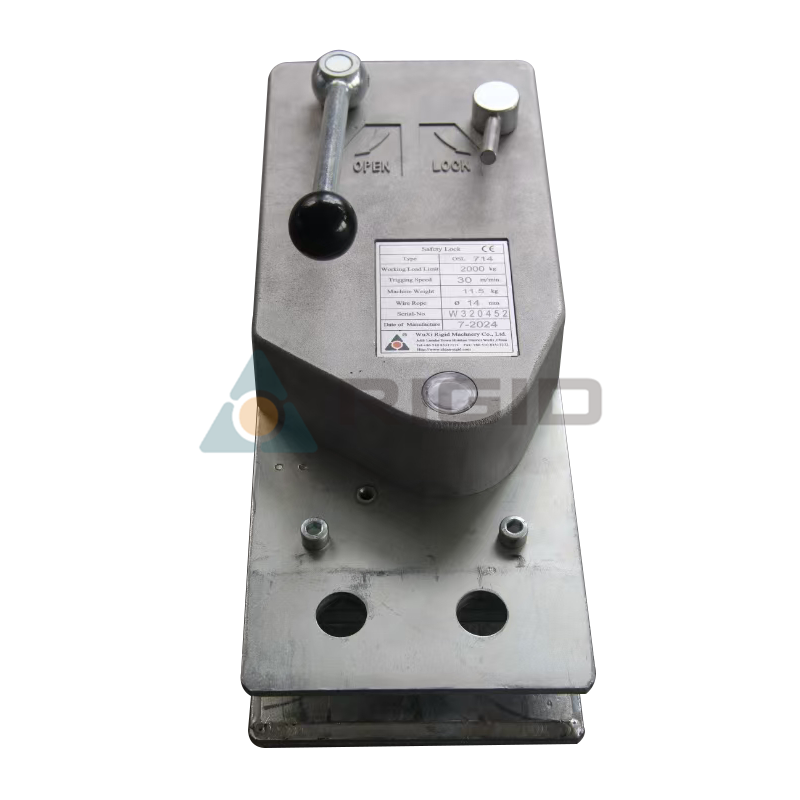
Overspeed Safety Lock(OSL ) Automatic Braking Protection Device
An overspeed
safety lock contains a centrifugal governor and a clamping jaw. The governor tracks the speed at which the wire rope passes through the lock.
Below the set speed, spring force holds the flyweights in. Above it, centrifugal force overcomes the spring, the flyweights fling outward, and the movement releases the jaw. The jaw is hardened steel and grips the rope over a short distance — on the OSL30 series, the locking distance is 200mm or less.
Nothing in that sequence needs power, a sensor or a controller. That is the point: the lock works when the electrical system has already failed, which is the case it exists for.
The Manual Trigger
Every OSL unit also carries a manual trigger handle. Pulling it locks the rope on demand. That is used for maintenance and for testing, and it lets a fitter stop a platform deliberately when something looks wrong before the speed threshold is reached.
The Electrical Interlock
On RIGID units an electrical switch can be wired so that when the lock triggers, the climber is switched off automatically. Without that interlock, a triggered lock leaves the hoist still pulling against a locked rope.
Selection: Three Numbers, One Geometry
Three values decide the model: rated load, rope diameter and locking speed.
|
Model |
Rated load |
Rope diameter |
Locking speed |
Weight |
|
OSL308 |
630kg |
8.3mm |
30/42 m/min |
4.5kg |
|
OSL308A |
630kg |
8.3mm |
30/42 m/min |
5.0kg |
|
OSL309 |
800kg |
9.1mm |
30/42 m/min |
4.5kg |
|
OSL309A |
800kg |
9.1mm |
30/42 m/min |
5.0kg |
|
OSL510 |
1000kg |
10.2mm |
30/42 m/min |
7.5kg |
|
OSL512 |
1600kg |
11.5mm |
30/42 m/min |
7.5kg |
|
OSL714 |
2000kg |
14.0mm |
30/42 m/min |
12kg |
The "A" suffix denotes a version supplied with a bracket, which matters when the lock has to be mounted to a platform frame rather than to an adapter.
Rated Load
The lock's rated load must be at least the rated load of the platform it protects — not the load it usually carries. A platform rated 1000kg needs a 1000kg lock even if the working load is 600kg, because the rating is the number the certification refers to.
Rope Diameter
The jaw is machined for one rope diameter. A 10.2mm jaw on an 11.5mm rope will not close correctly, and a 11.5mm jaw on a 10.2mm rope may not develop enough grip. Rope and lock are bought as a pair.
This is where most specification errors happen: the platform is ordered with Ф10.2 rope, then a lock is sourced separately against a price list without checking the diameter column.
Locking Speed
All the models in the table lock at 30 or 42 m/min. That is well above normal working speed — 9 or 18 m/min on the hoists these locks protect — so the lock does not trigger during normal travel, and well below free fall.
The OSL30 series specification also states a starting speed range of 15–30 m/min, a permitted impact of at least 30kN and a locking distance of 200mm or less. Those three values together describe how hard the lock grabs and how far the platform travels before it stops.
Standards
The OSL30 and OSL50 series are designed against EN 1808, the European standard for suspended access equipment. In China the governing standards are GB 19155-2017 for temporarily installed suspended access equipment, and GB 40160-2021 for lifting appliances used in elevator installation — both of which RIGID participated in drafting.
For a project in Europe, ask for the EN 1808 test evidence. For a project in China, the GB compliance statement. For a project elsewhere, state the destination market at enquiry stage, because the certification route follows the market rather than the product.
Where Locks Are Used
The category covers more than elevator shafts. Suspended working platforms on building façades, curtain wall installation, exterior decoration and bridge maintenance all rely on the same mechanism. The common factor is a platform hanging from a rope, with a person on it.
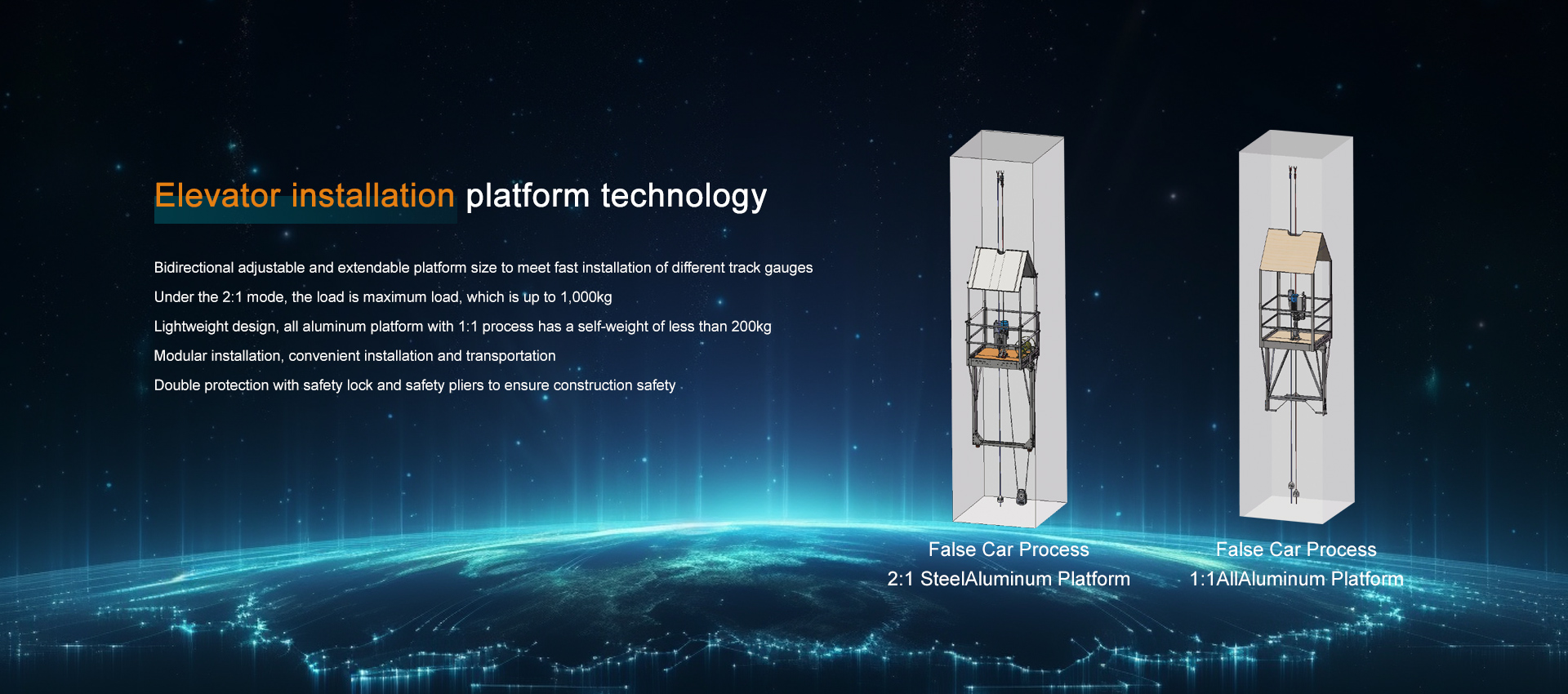
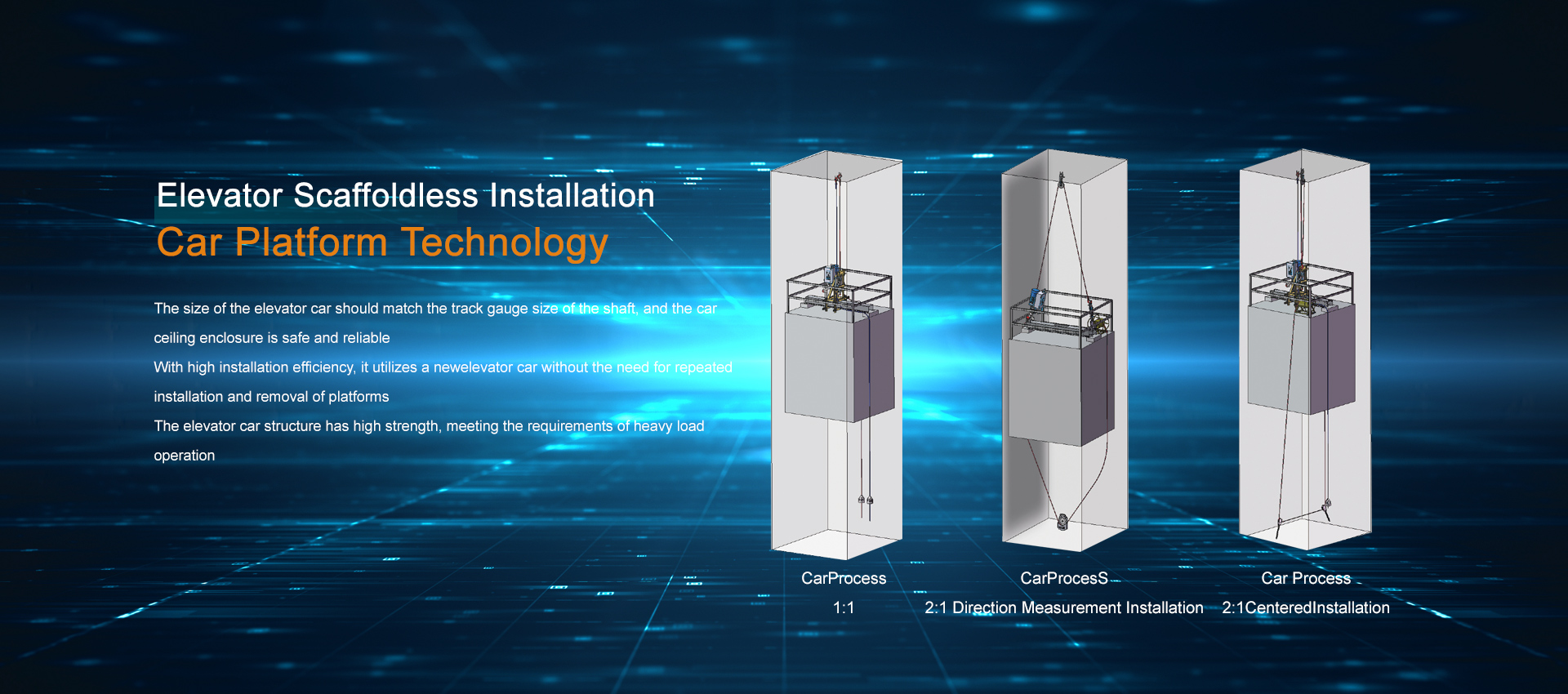
On a false car the lock sits in the platform's safety rope path and is mounted to the climber through an adapter. On a car-top platform the arrangement is similar. On a rail-mounted material machine it may not be present at all, because nobody rides it.
Inspection and the Low-Temperature Variant
Three checks carry most of the risk:
Before each use. Rope condition through the lock, jaw free movement, manual trigger operation, and a lift-and-release test.
Periodically. Jaw wear, spring condition and the electrical interlock function. The jaw is the part that does the work, and it is the part that wears.
After a trigger. A lock that has fired has gripped a rope under load. Jaw and rope section both need inspection, and in most jurisdictions the lock is withdrawn from service until that inspection is done.
For cold-climate work, RIGID offers a low-temperature variant rated for ambient temperatures down to -40°C, which is the same figure the company's hoist gearboxes are rated for on synthetic oil.
Specifying a Safety Lock
State four things: platform rated load, rope diameter, required locking speed and destination market. RIGID builds the OSL30, OSL50 and OSL70 families covering 630kg to 2000kg on rope from 8.3mm to 14.0mm, and supplies the adapters that mount them to its climbers.
Reach the RIGID team at +86 510 6808 0177 to confirm a lock and rope pairing before ordering.










 +86 51068080177


 Current location:Home
>News
>Industry news
Safety Lock: How An Overspeed Lock Stops A Falling Platform