Through-Wire Winches: Why The Drum Disappears
Through-wire winches are named for what they do not have: a rope drum. The rope passes through the machine, gripped between a drive sheave and pressure rollers, and is never stored.
That single design change removes the constraint that shapes every conventional winch specification. Once the drum is gone, rope length is no longer a machine limit — it is only a rope purchase.
This article explains the mechanism, what it changes on site, and where the design demands more care rather than less. Reference equipment comes from RIGID CO., LTD. (Wuxi Rigid Machinery) in Wuxi, Jiangsu, China, which has built rope climbing equipment for over twenty years.
The Mechanism
Grip Instead of Wrap
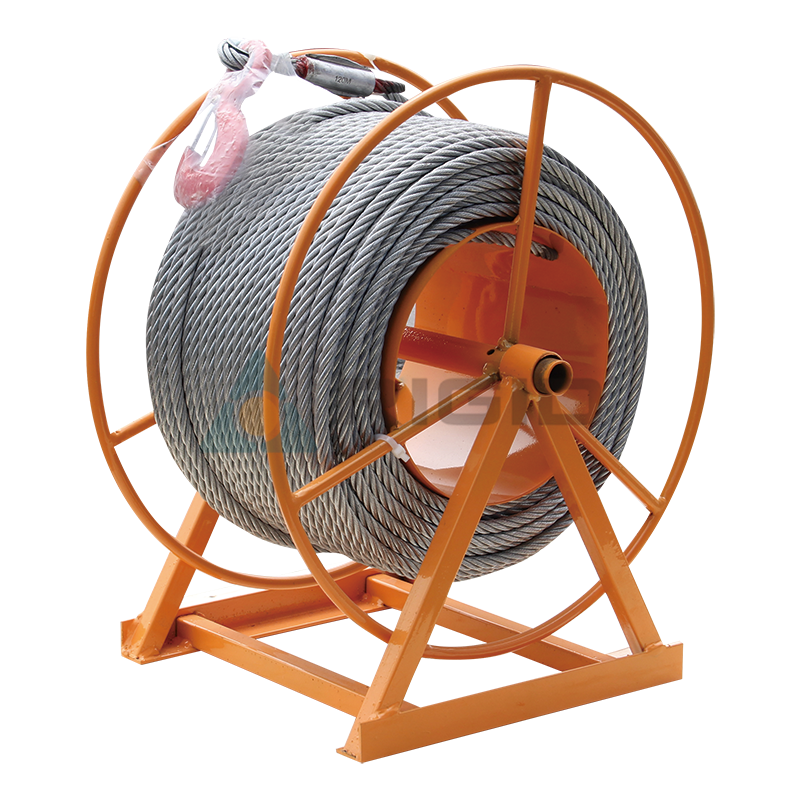
Elevator Wire Rope Steel Core Winch Cable
A drum winch develops pull by
wrapping rope around a powered drum. Capacity depends on drum diameter, drum length and the number of wraps, and the rope is bent repeatedly as it spools.
A through-wire machine develops pull by clamping. The rope runs between a hardened drive sheave and pressure rollers, and friction plus groove profile produce the traction. RIGID machines the sheave and pressure rollers from nitrided steel at roughly 70 HRC surface hardness, which is what keeps the grip consistent as the rope wears.
Because the rope is not bent around a drum, it is not repeatedly flexed either. The rope sees one bend path, in one plane, every cycle.
The Rope Is Not Connected
In a drum winch the rope end is fixed to the drum. In a through-wire machine the rope is a continuous length that passes through, and both ends hang free — one to the load, one to the return.
That is why the category is also called endless rope hoists. The rope can be longer than the machine, longer than the building, and the machine does not care.
What It Changes on Site
Height
The most obvious consequence: a 58kg unit rated 500kg can work a shaft of any height. There is no re-reeving at mid-height, no rope change when the job runs taller than expected, and no second machine for the upper floors.
Weight and Handling
Without a drum and a spooling mechanism, the machine is compact. The 500–1000kg family weighs 58 to 75kg, which one person can carry up a ladder and mount on a platform. A drum winch of equivalent capacity is a two-person lift at best.
Rope Management Becomes the Job
This is the trade. A drum winch stores its own rope. A through-wire machine does not, so somebody has to manage the free end.
In practice that means a rope winding device, a reversing counterweight, or a tension weight, depending on the arrangement. RIGID supplies all three as accessories because the requirement varies with the rig.
|
Arrangement |
Rope management |
Typical use |
|
Vertical lift, free end below |
Rope winding device or rope bag |
False car platform |
|
2:1 reeving |
Diverter counterweight |
Steel false car, heavy platform |
|
Long free end, changing direction |
Reversing counterweight |
Shaft work with offset anchor |
|
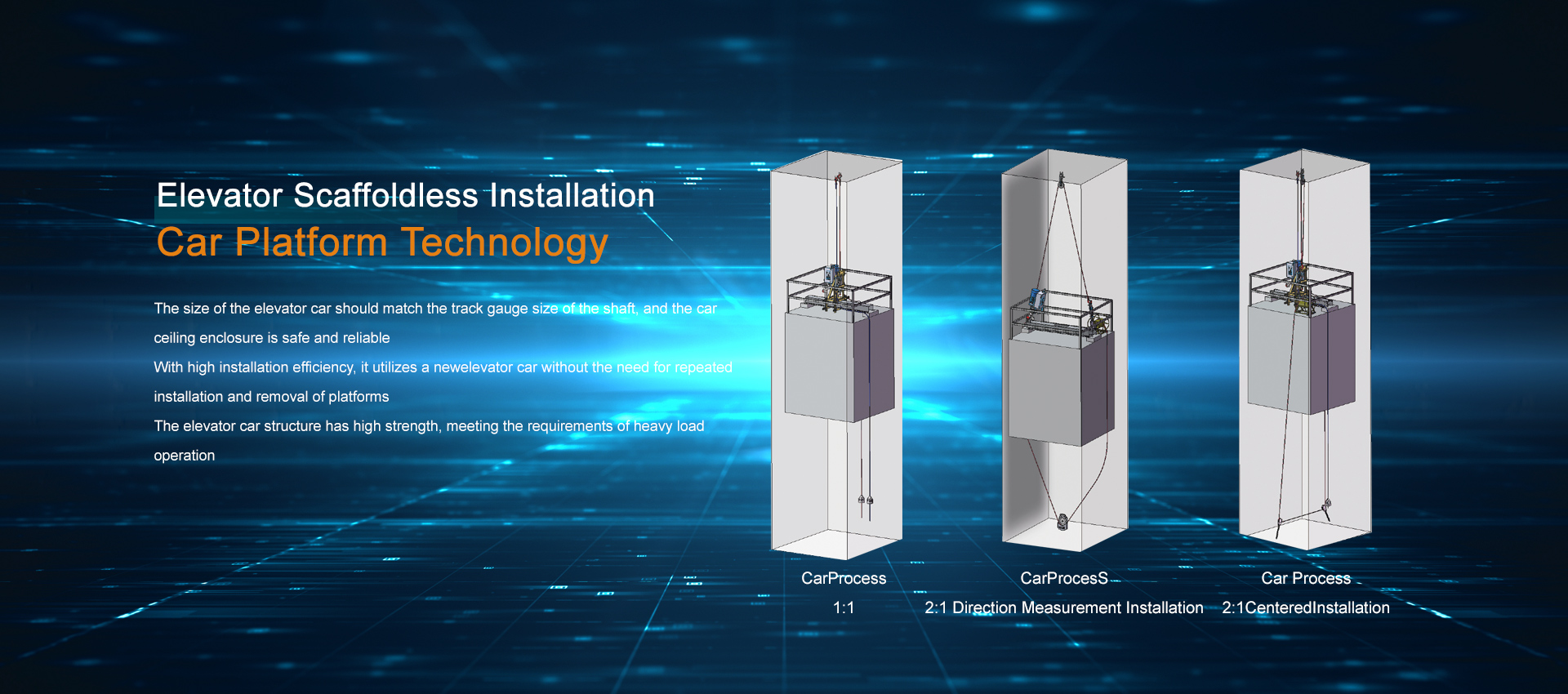
Car-top mounting |
Adapter plus tension weight |
Scaffoldless car installation |
Rope Length Is a Purchase Decision
If height no longer limits the machine, the rope becomes the variable. RIGID supplies steel wire rope from 6.5mm to 14.0mm, spooled by a meter-guide sheave machine so the delivered length is accurate rather than nominal.
For 2:1 rigging the rope has to be at least twice the shaft height, because the rope runs down to the diverter pulley and back up. That is a rope cost, not a machine limit, and it is worth stating in the enquiry.
Where the Design Demands Care
Rope Diameter Must Match the Groove
The sheave groove, the pressure rollers and the safety lock jaw are all sized for one diameter. A through-wire machine cannot be re-reeved with a different rope to gain capacity — the grip geometry is fixed.
This is the single most common specification error in the category, and it is why the rope and the machine should be ordered together.
Rope Condition Is the Grip
On a drum winch, worn rope still spools. On a through-wire machine, worn rope slips. Flattened or corroded rope reduces the friction the machine depends on, and the symptom is gradual: the platform hesitates under load before it fails to lift.
RIGID's own guidance on rope is direct: lubricant applied at manufacture is consumed in service, contaminants adhere to the surface, abrasion between rope and sheave follows, and corrosion follows that. Cleaning and re-lubricating on a regular schedule is part of the machine's duty cycle, not an optional extra.
Fleet Angle
The rope should enter and leave the machine in line with the groove. A side angle loads the sheave flange and wears the rope unevenly. On shaft work the anchor position and the platform position together set that angle, and it is worth checking before the first lift rather than after the first month.
Through-Wire vs Drum: A Direct Comparison
|
Property |
Through-wire winch |
Drum winch |
|
Rope storage |
None — rope passes through |
Spooled on drum |
|
Height limit |
Set by rope length only |
Set by drum capacity |
|
Machine weight |
Low, one-person portable |
Higher, drum plus frame |
|
Rope path |
Single bend, one plane |
Repeated spooling flex |
|
Rope management |
External — winder or counterweight |
Internal |
|
Rope change to alter capacity |
Not possible |
Possible within drum limits |
|
Typical use |
Shaft work, suspended platforms |
General lifting, fixed height |
Neither is better in the abstract, and through-wire winches are not the answer to every lift. A fixed-height lifting job with a known rope length is well served by a drum. A shaft that runs from basement to roof, worked from a platform that moves, is not.
Standards and Certification
Through-wire machines used for personnel fall under the same framework as any other suspended access equipment: EN 1808 in Europe, GB 19155-2017 and GB 40160-2021 in China. RIGID participated in drafting both Chinese standards and holds TUV and SGS CE certification across the range.
Units are exported to nearly 70 countries, with service centres and agencies in the main regions — which matters for a machine whose wearing parts are the sheave and rollers rather than a replaceable drum.
Specifying a Through-Wire Machine
Four inputs settle a through-wire winch: rated load, rope diameter, shaft height and whether personnel will ride it. The last one decides the safety lock, and the lock decides the rope.
RIGID builds through-wire machines from 500kg to 2000kg at 6, 9, 12 and 18 m/min, with 400V three-phase as standard and 230V single-phase variants for sites without three-phase supply. Contact +86 510 6808 0177 with your shaft height and heaviest lift.










 +86 51068080177
 Current location: