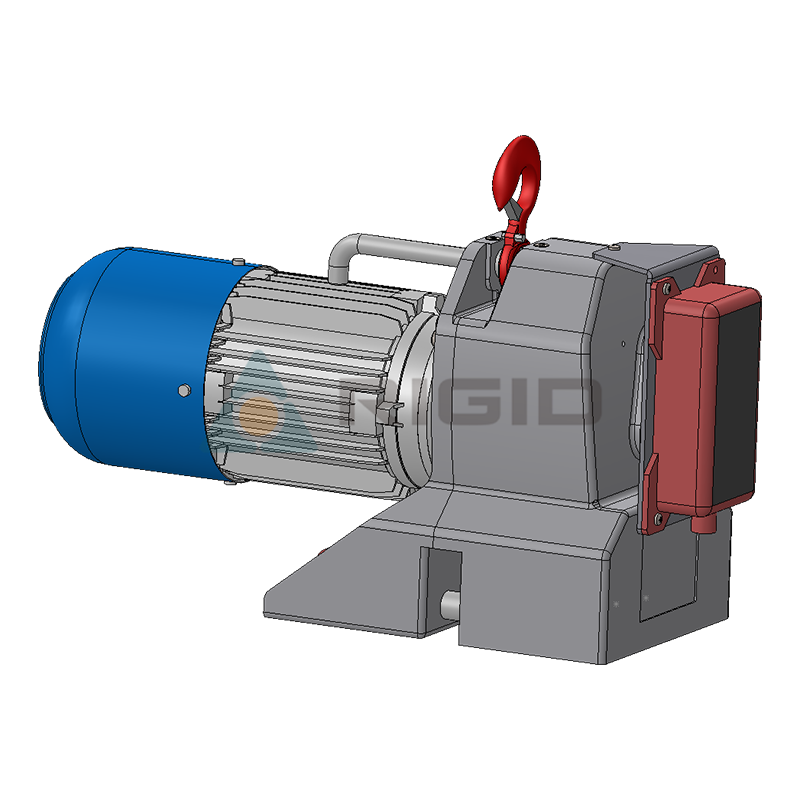
Material Hoist: Efficient Vertical Conveying Solutions And Technical Selection Guide
Material hoists are core equipment for vertical or steep-incline material conveying in industrial and construction fields, efficiently handling bulk materials (such as granules, powders, lumps) or piece goods through potential energy conversion. Their working principle relies on the coordinated cyclic operation of traction components and bearing components, widely used in construction, mining, warehousing and logistics, chemical production and other scenarios.
I. Core Types and Working Principles
1. Bucket Elevator
It uses buckets fixed on traction elements (endless chain, plate chain or rubber belt) to scoop up materials at the bottom, lift them to the top, and discharge through centrifugal force, gravity or a mixed method. Suitable for granular and powdery materials like grain, cement, and ore, with temperature resistance varying significantly by material: ordinary rubber belts withstand 60°C, heat-resistant rubber belts reach 120°C, and chain structures can bear high temperatures up to 250°C.
2. Plate Chain Elevator
Equipped with parallel plate chains and continuous material plate structures, it is specially designed for bulky, high-temperature or highly abrasive materials (such as coke and clinker), featuring high load capacity but relatively low operating speed.
3. Screw Elevator
It relies on the rotation of screw blades to push powdery or small granular materials for short-distance lifting, with a compact structure but limited conveying capacity.
II. Evolution of Intelligent Technology
Modern material hoists integrate Internet of Things and artificial intelligence technologies to achieve suspended frictionless conveying, dynamic load regulation (weight accuracy ±0.5%), and predictive maintenance. By optimizing operating strategies through real-time sensing data, energy consumption is reduced by over 35% compared to traditional equipment, significantly minimizing mechanical wear, making it suitable for high-demand scenarios such as electronic manufacturing and precision handling.
III. Performance Parameters and Scene Adaptation
- Load Capacity and Height: General-purpose equipment has a load capacity of 300–5000 kg, a lifting height of up to 100 meters, and an operating speed of 5.5–8 meters per minute.
- Mobile Models: Suitable for warehouses and docks, with a workbench surface usually of 800×580 mm and a lifting range of 4.5–8 meters.
- Special Environments: High-humidity environments (humidity ≥90%) require configuration of nano hydrophobic coatings, active dehumidification systems, and dynamic frequency adjustment technology, using capacitive sensors to monitor water film thickness and trigger protection mechanisms.
IV. Safety and Maintenance Specifications
Equipment requires regular inspection of bearings, hydraulic brake units (pressure control ±0.2MPa), and mechanical limit devices. Predictive maintenance systems integrate various sensors for vibration, temperature, oil, etc., achieving life prediction (error <7%) and fault early warning through time-series models, effectively reducing the risk of sudden shutdowns.
V. Selection Recommendations
The selection of material hoists needs to comprehensively consider material characteristics, working conditions, and intelligent requirements:
- For granular and powdery materials, bucket elevators are preferred;
- For high-temperature and bulky materials, plate chain structures are suitable;
- For high-precision scenarios, intelligent suspended models are recommended;
- For high-humidity environments, enhanced protection configurations are necessary.
As a technically mature and continuously innovative key equipment, reasonable selection and maintenance of
material hoists can significantly optimize conveying efficiency and operational reliability, providing a solid guarantee for industrial vertical conveying.








 +86 51068080177


 Current location:Home
>Technology
Material Hoist: Efficient Vertical Conveying Solutions And Technical Selection Guide
Current location:Home
>Technology
Material Hoist: Efficient Vertical Conveying Solutions And Technical Selection Guide