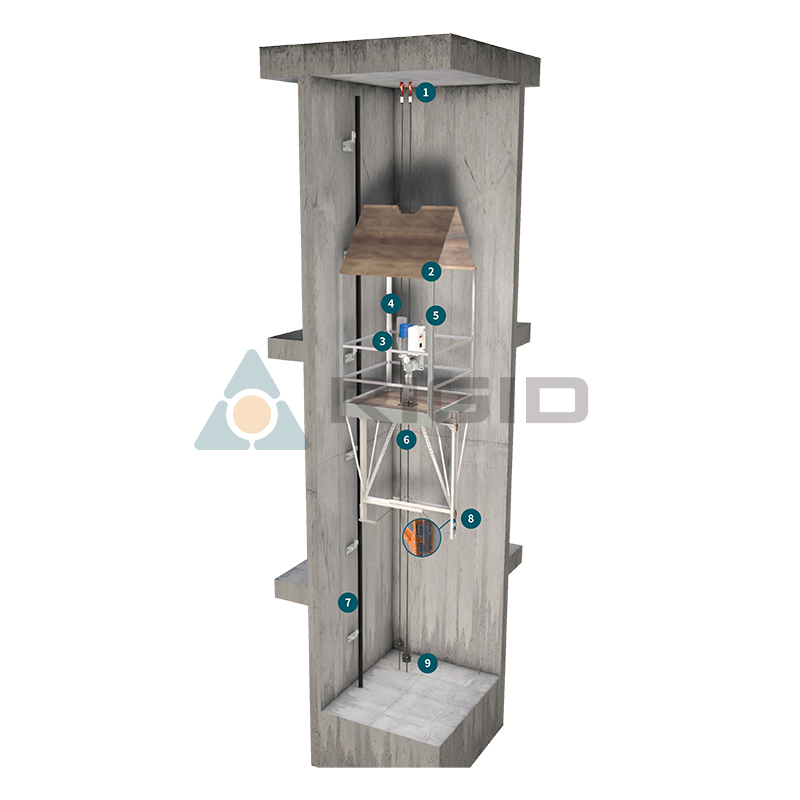
An elevator is a mechanical device used for vertically transporting people or goods, widely applied in construction, industry, commerce, and household sectors. Its core function is to achieve smooth lifting through hydraulic, traction, or chain drives to meet transportation needs in different scenarios. The following provides a detailed explanation from the aspects of types, working principles, and safety precautions.
I. Main Types
Elevators can be divided into various types based on their uses:
1. Passenger Elevators: Commonly found in residential buildings, office buildings, etc., they prioritize safety and comfort, featuring car design, traction systems, and multi-layer door control mechanisms.
2. Freight Elevators: Specifically designed for transporting goods, they have strong load-bearing capacity and robust structures, suitable for factories, warehouses, and similar settings.
3. Hydraulic Lifting Platforms: Driven by hydraulic systems, they offer high load capacity and flexible installation, including fixed types (e.g., warehouse loading and unloading) and mobile types (e.g., aerial work platforms).
4. Construction Hoists: Used in high-rise building construction, they are attached to the exterior of buildings and climb as the project progresses, enduring harsh environments.
5. Home Elevators: Compact in design, suitable for villas or duplex residences, providing various drive methods such as traction and hydraulic.
6. Special-Purpose Equipment: Such as
car elevators, dumbwaiters (for restaurants), and disabled lifting platforms (accessibility facilities).
II. Working Principles
The core power systems of elevators are divided into hydraulic and traction types:
- Hydraulic System: The hydraulic pump delivers oil pressure to the cylinder to push the piston upward; during descent, the oil return speed is controlled through valves to ensure stable operation. This system has strong load capacity and is suitable for low-to-medium-rise scenarios.
- Traction System: Relies on an electric motor to drive steel ropes and pull the car, with counterweights balancing the weight, offering high energy efficiency and relatively fast speed, commonly seen in high-rise building elevators.
Both systems are equipped with safety devices (such as speed governors and emergency brake valves) to prevent accidental falls or overloading.
III. Safe Usage Guidelines
1. Daily Operation:
- Ensure the equipment is stationary and the door is fully open before entering or exiting.
- Overloading is strictly prohibited; adjust the load immediately upon hearing the alarm.
- Avoid using hands or objects to block door closure to prevent pinching injuries.
2. Emergency Handling:
- In case of equipment failure, use the emergency call button for help; never force open the door.
- Do not use elevators during fires or earthquakes; evacuate via stairs instead.
3. Maintenance Requirements:
- Regularly inspect for hydraulic oil leaks, steel rope wear, and safety valve functionality.
- Professional institutions should conduct at least one comprehensive maintenance annually.
IV. Selection Recommendations
Choose the type based on scenario requirements:
- For high-rise buildings, traction elevators are preferred;
- For heavy cargo transportation, hydraulic lifting platforms are necessary;
- For household environments, consider home elevators with low space occupancy.
Pay attention to equipment compliance, which must meet special equipment safety standards.
As a core vertical transportation device, elevator technology and safety specifications continue to evolve. Users should rationally select and use elevators in a standardized manner based on actual needs.








 +86 51068080177



 Current location:Home
>Technology
Comprehensive Analysis Of Elevators: Types, Principles, And Safety Guidelines
Current location:Home
>Technology
Comprehensive Analysis Of Elevators: Types, Principles, And Safety Guidelines