Comprehensive Analysis Of Electric Cranes: Working Principles, Types, And Application Guide
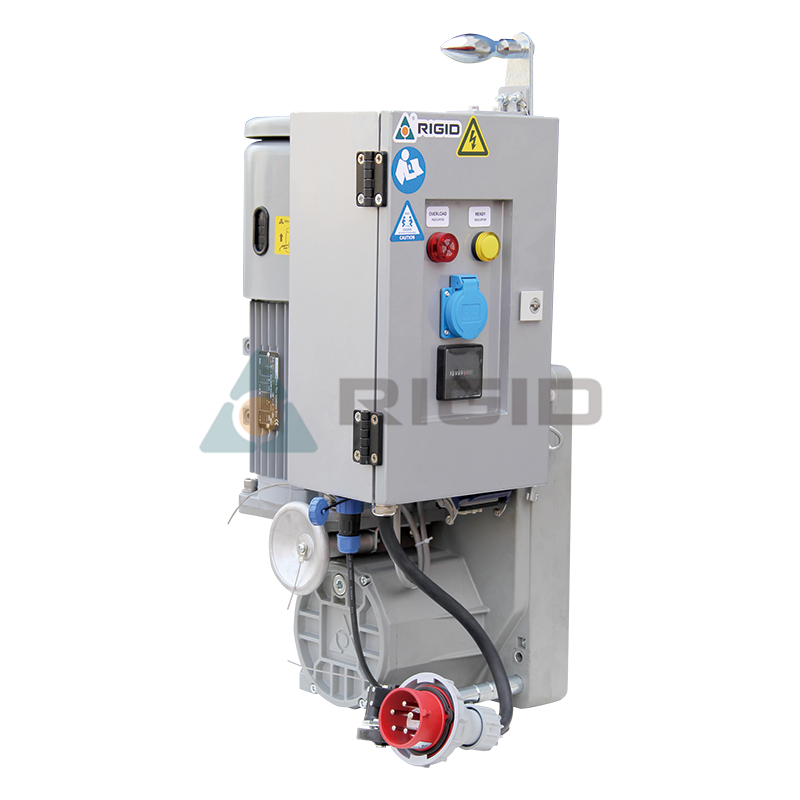
As a core equipment for modern industrial material handling, electric cranes are driven by electricity and efficiently perform operations such as picking, lifting, horizontally moving, and lowering items through cyclic and intermittent working methods. Their core driving component adopts a special conical rotor motor, which can generate axial thrust when energized, causing the friction plates to disengage for motor operation; after power failure, spring reset enables rapid braking to ensure operational safety.
I. Main Types and Characteristics
Electric cranes can be divided into various types based on structure and application scenarios:
1. Single-beam and Double-beam Cranes: Suitable for general industrial workshops, with simple structure and low cost.
2. Suspended Cranes: Ideal for workshops with limited space, can be directly installed on roof structures to save floor space.
3. Jib Cranes: Offer flexible coverage range, capable of 180°-360° rotation for precise material positioning.
4. Gantry Cranes: Commonly used in outdoor yards or large workshops, featuring large span and strong load-bearing capacity.
5. Lightweight Electric Hoist Cranes: Designed for small-range vertical lifting needs, with compact structure and flexible movement, suitable for warehouses or small workshops.
II. Technological Development Trends
Electric cranes are evolving towards lightweight, modular, and intelligent directions:
- Lightweight Design: Utilizing materials such as aluminum alloys to reduce equipment weight, lowering energy consumption and maintenance costs.
- Modular Structure: Enhancing deployment flexibility, facilitating quick adjustment or expansion of functions according to needs.
- Intelligent Upgrades: Installing camera-assisted observation mechanisms to expand operational视野 and improve operational safety; integrating intelligent control systems such as overload protection and emergency braking.
III. Application Fields
Electric cranes are applied in multiple industries:
1. Automobile Manufacturing: Improve assembly efficiency and reduce noise pollution.
2. Electronics and New Energy: High positioning accuracy reduces product loss, suitable for handling precision components.
3. Pharmaceutical Warehousing: Meet clean environment requirements and achieve efficient material circulation.
4. Chemical and Metallurgical Industries: Provide customized designs such as explosion-proof and corrosion-resistant features to adapt to harsh working conditions like high temperatures and corrosion.
5. Construction and Logistics: Used in open spaces such as ports and yards for loading, unloading, and transferring large goods.
IV. Purchase Recommendations
The following factors should be considered when selecting an electric crane:
- Lifting Capacity and Span: Determine the equipment specifications based on actual operational needs, for example, a 10-ton crane requires matching span and track design.
- Working Environment: Temperature range (e.g., -25℃ to 40℃), explosion-proof requirements, or corrosion resistance should match the working conditions.
- Safety and Compliance: Ensure the equipment meets industry safety standards and is equipped with basic functions such as braking protection and signal communication.








 +86 51068080177




 Current location:Home
>Technology
Comprehensive Analysis Of Electric Cranes: Working Principles, Types, And Application Guide
Current location:Home
>Technology
Comprehensive Analysis Of Electric Cranes: Working Principles, Types, And Application Guide