Selecting a heavy duty electric winch is a critical engineering decision that directly impacts operational safety, efficiency, and reliability across industrial, off-highway, marine, and construction applications. Unlike manual winches, electric winches leverage motor-driven power transmission to handle high-load pulling/lifting tasks—from vehicle recovery and equipment positioning to material handling in harsh environments. This guide systematically outlines technical considerations, key specifications, selection criteria, and best practices for choosing a heavy duty electric winch, aligned with industry standards (SAE J706, ISO 8644, OSHA 1910.184) to ensure compliance and optimal performance.
1. Technical Fundamentals of Heavy Duty Electric Winches
A
heavy duty electric winch is a power transmission system consisting of core components engineered to deliver controlled load movement. Key technical definitions and operating principles include:
- Function: Converts electrical energy into mechanical force via a motor, gear train, and cable drum, enabling linear pulling or vertical lifting of loads ≥5,000 lbs (2,268 kg) for industrial applications.
- Core Components & Technical Specifications:
| Component | Technical Details & Industry Standards |
|----------------------|------------------------------------------------------------------------------------------------------------|
| Motor | DC permanent magnet (12V/24V) or AC induction (380V 3-phase) motors; power range 1.5–20 kW. DC motors for mobile applications (off-roading, marine), AC motors for industrial fixed installations. Efficiency ≥85% (SAE J706). |
| Gear Train | Planetary gear systems (most common) or worm gear systems. Planetary gears offer high torque density (100–1,000 N·m) and efficiency ≥90%; worm gears provide self-locking capability for static load holding. Gear ratio 150:1–1,000:1 (higher ratios for heavy loads). |
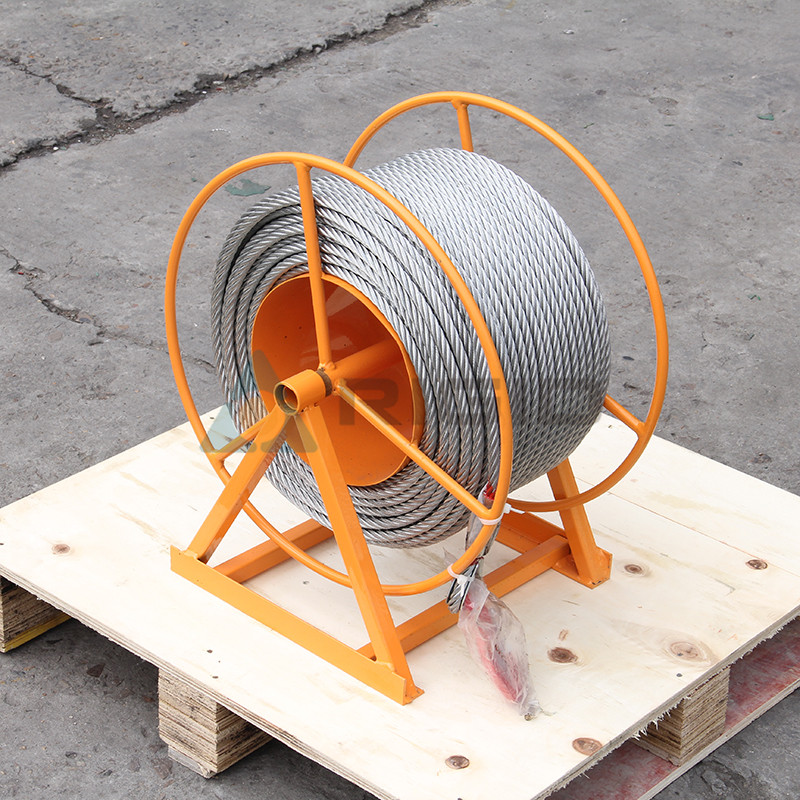
| Cable Drum | High-strength steel or aluminum alloy construction; diameter 100–300 mm, length 500–3,000 mm. Drum flanges ≥1.5× cable diameter to prevent cable slippage (ISO 8644). |
| Cable | Steel wire rope (6×19 or 6×37 construction, breaking strength 10–50 tons) or synthetic rope (UHMWPE, breaking strength 8–40 tons). Steel cables offer abrasion resistance; synthetic cables are lightweight (70% lighter than steel) and float in water. |
| Brake System | Automatic load-holding brakes (mechanical disc or drum brakes) with fail-safe design. Must hold 150% of rated load without slippage (SAE J706). Some models integrate dynamic braking for speed control during descent. |
| Control System | Wired (2–5 m cable) or wireless (radio frequency, 50–100 m range) remote controls. Advanced systems feature proportional speed control (0.5–5 m/min) and overload protection. |
2. Classification of Heavy Duty Electric Winches
Winches are categorized by application, load capacity, and installation type to ensure compatibility with specific use cases:
2.1 By Load Capacity (Industrial Standards)
- Medium Heavy Duty: 5,000–10,000 lbs (2.26–4.54 tons) – Off-road vehicle recovery, light construction.
- Heavy Duty: 10,000–20,000 lbs (4.54–9.07 tons) – Commercial towing, marine vessel mooring, construction equipment positioning.
- Ultra Heavy Duty: ≥20,000 lbs (9.07 tons) – Industrial material handling, bridge construction, heavy machinery recovery.
2.2 By Installation & Application
- Vehicle-Mounted Winches: Designed for trucks, excavators, or off-road vehicles; 12V/24V DC power, compact design, and integrated mounting brackets (SAE J1899).
- Fixed-Mounted Winches: Installed in factories, warehouses, or construction sites; 380V AC power, high load capacity, and compatibility with overhead rails.
- Portable Winches: Lightweight (≤50 kg) with rechargeable batteries or AC power; suitable for remote locations, emergency rescue, or temporary projects.
- Marine Winches: Corrosion-resistant (IP67 rating) with stainless steel components; used for boat lifting, anchor handling, or dock operations (ISO 15083).
2.3 By Control Type
- Variable Speed Winches: Proportional control for precise load positioning (e.g., delicate equipment lifting), speed range 0.5–3 m/min (load-dependent).
- Two-Speed Winches: High speed (3–5 m/min) for light loads/empty cable, low speed (0.5–1 m/min) for heavy loads; balances efficiency and control.
- Smart Winches: Integrate IoT sensors for load monitoring, temperature tracking, and remote diagnostics; comply with Industry 4.0 standards for industrial automation.
3. Key Selection Criteria for Heavy Duty Electric Winches
3.1 Load Capacity & Safety Factor
- Rated Load Capacity: Choose a winch with a rated capacity ≥1.5× the maximum expected load (industry safety standard). For example, a 10-ton load requires a winch rated at 15 tons to account for dynamic loads (e.g., shock loads during recovery).
- Dynamic Load Consideration: Factor in acceleration, incline angle, and friction (e.g., pulling a vehicle up a 30° slope increases effective load by ~50%). Use the formula: Effective Load = Static Load × (sinθ + μ×cosθ), where θ = incline angle, μ = friction coefficient.
3.2 Motor Power & Voltage
- Motor Power: Directly correlates with load capacity and cable speed. For heavy duty applications:
- 12V DC (1.5–5 kW): Suitable for light industrial or off-road use (≤10,000 lbs).
- 24V DC (5–10 kW): Commercial vehicles, marine applications (10,000–20,000 lbs).
- 380V AC (10–20 kW): Industrial fixed installations (≥20,000 lbs).
- Efficiency: Opt for motors with efficiency ≥85% (SAE J706) to minimize power consumption and heat generation.
3.3 Cable Type & Length
| Cable Type | Technical Advantages | Limitations | Ideal Applications |
|-----------------------|---------------------------------------------------|---------------------------------------------------|---------------------------------------------------|
| Steel Wire Rope | High abrasion resistance, breaking strength 10–50 tons, temperature resistance (-40°C to 200°C). | Heavy (increases drum load), prone to kinking, dangerous recoil if snapped. | Construction, heavy machinery recovery, high-temperature environments. |
| Synthetic UHMWPE Rope | Lightweight (70% lighter than steel), no recoil risk, floatable, corrosion-resistant. | Lower abrasion resistance, sensitive to UV radiation (requires protective sleeve). | Marine, off-road recovery, delicate load handling. |
- Cable Length: Select length based on application (e.g., 50–100 ft for vehicle recovery, 200–300 ft for marine mooring). Ensure drum capacity allows full cable spooling without overlapping (ISO 8644).
3.4 Gear Train & Cable Speed
- Gear Train Type: Planetary gears are preferred for heavy duty use due to high torque density and efficiency; worm gears are suitable for static load holding (e.g., lifting applications) but have lower efficiency (60–70%).
- Cable Speed: Balance speed and control:
- Loaded speed: 0.5–1 m/min for heavy loads (≥15 tons) – prioritizes control.
- Unloaded speed: 3–5 m/min for quick cable deployment – enhances efficiency.
3.5 Brake System Reliability
- Fail-Safe Design: Must engage automatically when the motor stops or power is lost. Mechanical disc brakes are preferred for heavy duty applications (hold 150% of rated load) over drum brakes, offering better heat dissipation.
- Dynamic Braking: Optional feature for controlled descent of heavy loads, reducing brake wear and preventing load free-fall.
3.6 Environmental & Durability Ratings
- IP Rating: Minimum IP65 for dust/water resistance; IP67 for marine or wet environments.
- Corrosion Protection: Zinc plating or powder coating for steel components; stainless steel for marine applications.
- Temperature Range: -40°C to 60°C for extreme environment compatibility (e.g., arctic construction, desert off-roading).
4. Leading Brands & Technical Differentiators
- Warn Industries: Industrial-grade winches (e.g., Warn 9.5 XP, 12.0 XP) compliant with SAE J706; feature series-wound motors, planetary gears, and stainless steel components. Ideal for construction and heavy off-road use.
- Superwinch: Offers ultra heavy duty models (e.g., Superwinch Tiger Shark 17500) with 17,500 lbs capacity, wireless proportional control, and synthetic rope options. Suitable for marine and commercial towing.
- Harbor Freight Tools: Economical options (e.g., Badland ZXR) with 12V DC motors, steel cable, and basic controls. Best for light industrial or DIY projects with occasional heavy load needs.
- PACCAR Winches: Industrial AC-powered models (380V) with load capacity up to 50 tons; integrated load monitoring and safety interlocks. Used in heavy machinery manufacturing and bridge construction.
5. Installation & Maintenance Best Practices
5.1 Installation Compliance
- Follow manufacturer guidelines and SAE J1899 (vehicle-mounted winches) or OSHA 1910.184 (industrial installations).
- Ensure mounting surface can withstand 3× the winch’s rated load (e.g., steel frames for vehicles, concrete foundations for fixed winches).
- Use proper hardware (grade 8 bolts) and torque specifications to prevent loosening under vibration.
5.2 Routine Maintenance (Per ISO 8644)
- Cable Inspection: Check for fraying, kinking, or broken strands (replace if ≥5% of strands are broken in any 6-inch section).
- Lubrication: Grease gear train every 50 operating hours; use high-temperature grease for industrial applications.
- Brake Testing: Verify load-holding capability every 100 hours or after heavy use.
- Electrical Connections: Inspect terminals for corrosion; tighten loose connections to prevent voltage drop.
6. Safety Compliance & Operational Guidelines
- Training: Operators must complete OSHA 1910.184 training on winch safety, including load calculation, cable handling, and emergency procedures.
- Safety Equipment: Use cable dampeners (to prevent recoil if cable snaps), gloves, and eye protection. Avoid standing in the cable’s "danger zone" (1.5× cable length from drum).
- Prohibited Practices: Never exceed rated load, side-pull (causes cable damage), or operate with a damaged brake/cable.
- Inspections: Daily pre-operation checks (cable condition, brake function, electrical connections) and annual certification by a qualified technician.








 +86 51068080177
  Current location: