A wire rope hoist is a critical material handling device engineered for the controlled lifting, lowering, and horizontal positioning of heavy loads across industrial, construction, marine, and logistics sectors. Characterized by a high-strength wire rope (typically 6×19 or 6×37 strand construction) wound around a precision-machined drum, it leverages mechanical power transmission (motor-driven or manual) to deliver exceptional load-bearing capacity, positional accuracy, and durability—compliant with international standards such as ISO 4309 (wire rope), ASME B30.16 (hoists), and EN 13157 (lifting equipment). This article systematically elaborates on the technical applications, classification, core advantages, selection criteria, and safety protocols of wire rope hoists, providing a professional reference for industrial engineers, facility managers, and material handling specialists.
1. Technical Definition & Core Components
A
wire rope hoist operates on the principle of converting rotational force (from a motor or manual crank) into linear motion via a gear train and drum assembly. Key technical components and their specifications include:
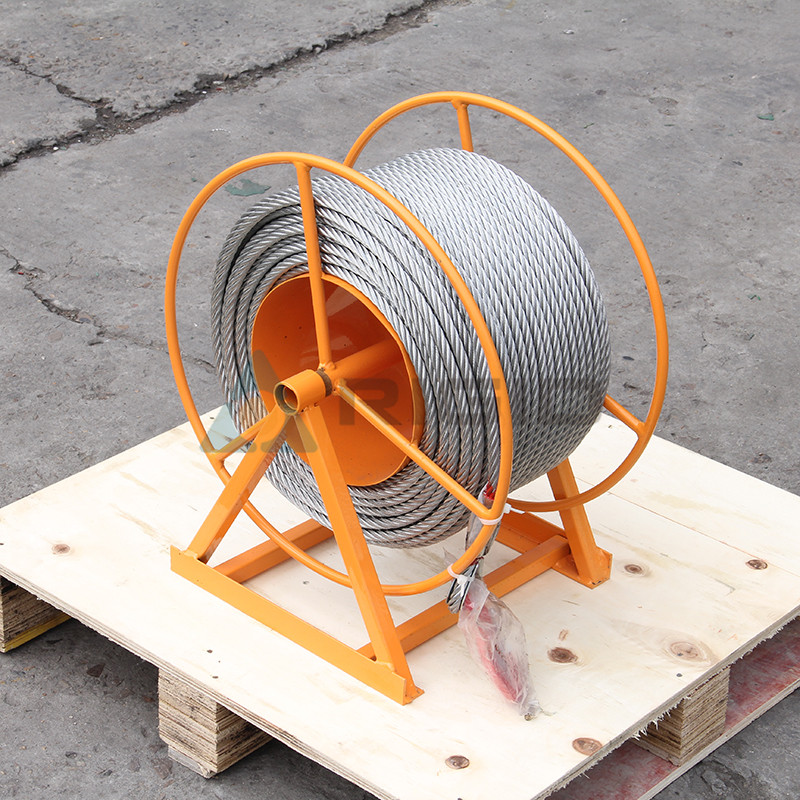
- Wire Rope: High-tensile steel (minimum breaking strength 1500 MPa) or galvanized steel for corrosion resistance; synthetic core (fiber) or steel core for flexibility/strength balance. Complies with ISO 4309 for fatigue resistance (≥10⁶ cycles).
- Drum: Carbon steel (CK45) or alloy steel (42CrMo4) construction, with grooved design to prevent rope slippage. Drum diameter ≥18× wire rope diameter (ASME B30.16) to minimize rope bending fatigue.
- Gear Train: Planetary gear system (efficiency ≥90%) for high torque density or worm gear system (self-locking) for static load holding. Gear ratio 40:1–1000:1, tailored to load capacity and lifting speed.
- Drive System: Electric (AC 380V/DC 24V), manual (hand chain), or pneumatic (compressed air, 0.6–0.8 MPa) power sources. Electric motors feature IP54+ protection class for industrial environments.
- Brake System: Fail-safe mechanical disc brake or drum brake, capable of holding 150% of rated load (EN 13157). Dynamic braking optional for controlled descent of heavy loads.
- Control System: Wired (2–5 m cable) or wireless (RF, 50–100 m range) remote control, with proportional speed adjustment (0.5–5 m/min) for precision positioning.
2. Classification of Wire Rope Hoists (By Application & Power)
2.1 By Power Source
| Type | Technical Specifications | Typical Applications |
|-------------------------|------------------------------------------------------------------------------------------------|---------------------------------------------------|
| Electric Wire Rope Hoist | Motor power 0.5–20 kW, rated load 0.5–50 tons, lifting speed 0.3–10 m/min. AC models for fixed installations; DC models (12V/24V) for mobile use. | Manufacturing plants, warehouses, automated production lines. |
| Manual Wire Rope Hoist | Hand chain drive, gear ratio 40:1–60:1, rated load 0.5–10 tons. No power dependency, compact design. | Small workshops, remote construction sites, emergency backup. |
| Pneumatic (Air) Wire Rope Hoist | Compressed air-driven (0.6–0.8 MPa), explosion-proof (ATEX-certified), rated load 1–30 tons. Suitable for hazardous environments (flammable dust/gas). | Oil refineries, chemical plants, mining operations. |
| Trolley-Mounted Wire Rope Hoist | Integral trolley (manual/electric) for horizontal movement along I-beams (track width 100–600 mm). Lifting + traversing functionality. | Overhead cranes, assembly lines, warehouse material handling. |
2.2 By Load Capacity (Industrial Standards)
- Light Duty: 0.5–2 tons – Small-part assembly, retail warehousing.
- Medium Duty: 2–10 tons – Manufacturing, light construction, logistics.
- Heavy Duty: 10–50 tons – Steel mills, construction, marine cargo handling.
- Ultra-Heavy Duty: ≥50 tons – Bridge construction, heavy machinery manufacturing, offshore platforms.
3. Core Industrial Applications & Technical Requirements
3.1 Manufacturing & Warehousing
- Material Handling: Lifting and positioning raw materials (steel coils, aluminum ingots), work-in-progress components, and finished goods (machinery, equipment). Electric trolley-mounted hoists integrate with automated storage and retrieval systems (AS/RS) for high-throughput warehouses.
- Production Line Assembly: Precision lifting of heavy parts (e.g., engine blocks, industrial gearboxes) during assembly, with positional accuracy ±5 mm to ensure component alignment.
- Loading/Unloading: Efficiently loading/unloading trucks, containers, and railcars, reducing manual labor and minimizing load damage.
3.2 Construction & Infrastructure
- Structural Installation: Lifting steel beams (10–50 tons), precast concrete panels, and reinforcement bars to heights up to 300 m (high-rise buildings). Heavy duty electric hoists with high-lift capacity (50–100 m) and wind load compensation systems are used in bridge construction.
- Machinery Deployment: Positioning construction equipment (excavators, generators) on job sites, often in confined spaces where precision and load stability are critical.
- Demolition Work: Controlled lowering of debris and structural components, leveraging fail-safe brakes to prevent accidental drops.
3.3 Marine & Offshore
- Shipyard Operations: Lifting ship hull sections, engines, and cargo (containers, bulk goods) with corrosion-resistant (IP67-rated) wire rope hoists. Pneumatic models are preferred for offshore platforms to avoid electrical hazards.
- Port Logistics: Loading/unloading containers (20–40 ft) and bulk cargo (grain, coal) using ultra-heavy duty hoists (≥50 tons) integrated with gantry cranes.
- Offshore Energy: Servicing wind turbines and oil rigs with explosion-proof pneumatic hoists, capable of operating in extreme temperatures (-40°C to 60°C) and high-humidity environments.
3.4 Industrial Maintenance & Repair
- Machinery Overhaul: Lifting heavy machine components (e.g., turbine rotors, pump casings) for maintenance, with manual or electric hoists providing precise control to avoid damage to sensitive parts.
- Plant Shutdowns: Rapid removal and replacement of large equipment (heat exchangers, reactors) in refineries and chemical plants, using heavy duty hoists with high load capacity and fast lifting speeds.
3.5 Mining & Resources
- Underground Mining: Explosion-proof pneumatic hoists for lifting ore, equipment, and personnel in underground tunnels, compliant with ATEX Zone 1/2 standards for flammable gas environments.
- Surface Mining: Handling large rock fragments and mining equipment (loaders, trucks) with ultra-heavy duty hoists, featuring abrasion-resistant wire ropes and dust-proof enclosures.
4. Key Technical Advantages
4.1 Exceptional Load-Bearing Capacity
Wire rope hoists handle loads from 0.5 tons to 100+ tons, with a safety factor of 5:1 (ISO 4309) to account for dynamic loads (shock, vibration) and rope wear. Ultra-heavy duty models are used for critical applications such as bridge construction and offshore platform maintenance.
4.2 Precision & Control
- Positional Accuracy: ±5 mm for medium duty models, ±2 mm for precision industrial applications (e.g., manufacturing assembly), ensuring precise load placement and reducing material damage.
- Speed Control: Proportional speed adjustment (0.3–10 m/min) allows operators to balance efficiency (fast lifting for light loads) and control (slow lowering for heavy/delicate loads).
4.3 Durability & Environmental Adaptability
- Robust Construction: High-strength steel frames, corrosion-resistant coatings (zinc plating, powder coating), and sealed gearboxes extend service life to 10,000+ operating hours.
- Extreme Environment Compatibility: IP54–IP67 protection ratings for dust/water resistance; explosion-proof (ATEX) and high-temperature (up to 200°C) variants for hazardous or harsh conditions.
4.4 Versatility & Integration
- Power Source Flexibility: Electric (fixed installations), manual (remote sites), or pneumatic (hazardous environments) options to suit diverse operational needs.
- System Integration: Compatible with overhead cranes, gantry cranes, and automated systems (AS/RS), enabling seamless integration into existing material handling workflows.
5. Technical Selection Criteria
5.1 Load Capacity & Safety Factor
- Select a hoist with rated load ≥1.2× the maximum expected static load (accounting for dynamic factors such as acceleration and incline).
- Ensure compliance with safety factor requirements (≥5:1 for wire rope, ISO 4309) to mitigate risk of rope failure.
5.2 Lift Height & Speed
- Lift height: Match to application (e.g., 10–20 m for warehouses, 50–100 m for high-rise construction).
- Lifting speed: Balance efficiency and control (0.3–1 m/min for heavy loads, 5–10 m/min for light loads).
5.3 Power Source & Environmental Conditions
- Electric: Ideal for fixed installations with stable power supply (380V AC); DC models for mobile use.
- Manual: Best for low-frequency, small-load applications or power-free environments.
- Pneumatic: Explosion-proof, suitable for hazardous (ATEX Zone 1/2) or wet environments (marine, mining).
5.4 Durability & Maintenance Requirements
- Wire rope type: Steel core for high strength, fiber core for flexibility; galvanized or stainless steel for corrosion resistance.
- Protection class: IP54+ for dust/water resistance; IP67 for marine/offshore use.
- Maintenance interval: Choose models with sealed components to extend service intervals (500–1000 operating hours).
5.5 Safety Features
- Fail-safe brake system (holds 150% of rated load).
- Overload protection (mechanical or electronic) to prevent exceeding rated capacity.
- Emergency stop button and limit switches (upper/lower) to prevent over-travel.
6. Safety Compliance & Operational Protocols
6.1 Regulatory Compliance
- Adhere to ASME B30.16 (hoists), ISO 4309 (wire rope), EN 13157 (lifting equipment), and OSHA 1910.184 (material handling) standards.
- Explosion-proof models must comply with ATEX (Europe) or NEC (North America) for hazardous environments.
6.2 Routine Inspections & Maintenance
- Daily Checks: Inspect wire rope for fraying, kinking, or broken strands (replace if ≥5% of strands are damaged in any 6-inch section); verify brake function and control responsiveness.
- Periodic Maintenance: Lubricate gear trains every 500 operating hours; test overload protection and brake systems annually; replace wire rope every 1–3 years (depending on usage).
- Certification: Annual inspection by a qualified technician, with documentation of compliance (ISO 9001).
6.3 Operator Training & Best Practices
- Operators must complete OSHA 1910.184 training and demonstrate proficiency in load calculation, equipment operation, and emergency procedures.
- Prohibited practices: Exceeding rated load, side-loading (causes rope damage), operating with damaged components, or standing in the load’s "danger zone" (1.5× rope length from drum).
- Safety equipment: Use rope dampeners to prevent recoil if the wire rope snaps; operators must wear PPE (hard hats, gloves, safety glasses).








 +86 51068080177
  Current location: