







 +86 51068080177
  Current location:
Copyright ©2024 Wuxi Rigid Machinery Co., Ltd. All rights reserved Web Design by Wangke


2026-03-23
In the dynamic landscape of industrial material handling, electric chain hoists have evolved from basic lifting tools to sophisticated, data-driven systems that redefine efficiency, safety, and adaptability. As global industries prioritize productivity, regulatory compliance, and sustainability, technological advancements in electric chain hoist design—from precision engineering to smart integration—have become pivotal to operational excellence. This article systematically elaborates on the cutting-edge innovations shaping modern electric chain hoists, integrating technical specifications, industry standards (ISO 4309, ASME B30.16, EN 13157), and real-world industrial applications to provide a professional reference for engineers, facility managers, and procurement specialists. 1. Next-Generation Safety Systems: Redundancy & Compliance Safety remains the cornerstone of electric chain hoist innovation, with modern designs incorporating redundant, standards-aligned mechanisms to mitigate industrial risks: - Dual-Redundant Braking Systems: Advanced models feature mechanical fail-safe disc brakes (compliant with EN 13157) paired with electronic dynamic brakes, capable of holding 150% of rated ...
Read More +
2026-03-20
In modern industrial operations, where operational efficiency, safety compliance, and adaptability are critical to productivity, Tirak traction hoists have emerged as indispensable lifting solutions. Engineered as specialized electric traction hoists, they leverage a rope-pulling mechanism (distinct from traditional drum-winding designs) to deliver continuous, long-distance lifting capabilities—aligning with global standards such as EN 13157 (European) and ASME B30.16 (North American) for industrial lifting equipment. This article systematically details the technical characteristics, industry-specific applications, core advantages, and safety protocols of Tirak traction hoists, providing a professional reference for industrial engineers, facility managers, and project supervisors. 1. Technical Definition & Core Technical Characteristics A Tirak traction hoist is an electric-powered lifting device that transmits force through friction between a traction sheave and high-tensile steel wire rope, enabling vertical/horizontal load movement without rope storage limitations. Key technical specifications include: - Load Capacity: 0.5–10 tons (standard models), with specialized variants up to 15 to...
Read More +
2026-03-16
An Easy Climber Elevator is a specialized residential vertical transportation system engineered to enhance accessibility, safety, and convenience in multi-level homes. Unlike commercial elevators or bulky traditional residential lifts, it is specifically designed for residential environments—prioritizing compact footprints, minimal structural intrusion, and user-centric operation while complying with global residential elevator standards (ISO 9386, ASME A17.1/CSA B44 Residential Elevator Code, EN 81-20). This article systematically details its technical definition, core features, operational mechanics, installation/maintenance protocols, comparative advantages, and selection criteria, providing a professional reference for homeowners, accessibility consultants, and construction professionals. 1. Technical Definition & Core Specifications An Easy Climber Elevator is a low-speed (≤0.3 m/s, per EN 81-20) residential lifting system designed to transport passengers, mobility aids (wheelchairs, walkers), and light cargo between 2–5 floors. Key technical specifications include: - Dimensional Footprint: Compact design with cabin dimensions 800×1000 mm to 1200×1400 mm (width×de...
Read More +
2026-03-13
A wire rope hoist is a critical material handling device engineered for the controlled lifting, lowering, and horizontal positioning of heavy loads across industrial, construction, marine, and logistics sectors. Characterized by a high-strength wire rope (typically 6×19 or 6×37 strand construction) wound around a precision-machined drum, it leverages mechanical power transmission (motor-driven or manual) to deliver exceptional load-bearing capacity, positional accuracy, and durability—compliant with international standards such as ISO 4309 (wire rope), ASME B30.16 (hoists), and EN 13157 (lifting equipment). This article systematically elaborates on the technical applications, classification, core advantages, selection criteria, and safety protocols of wire rope hoists, providing a professional reference for industrial engineers, facility managers, and material handling specialists. 1. Technical Definition & Core Components A wire rope hoist operates on the principle of converting rotational force (from a motor or manual crank) into linear motion via a gear train and drum assembly. Key technical components and their specifications include: - Wire Rope: High-tensile steel (minimum brea...
Read More +
2026-03-09
Selecting a heavy duty electric winch is a critical engineering decision that directly impacts operational safety, efficiency, and reliability across industrial, off-highway, marine, and construction applications. Unlike manual winches, electric winches leverage motor-driven power transmission to handle high-load pulling/lifting tasks—from vehicle recovery and equipment positioning to material handling in harsh environments. This guide systematically outlines technical considerations, key specifications, selection criteria, and best practices for choosing a heavy duty electric winch, aligned with industry standards (SAE J706, ISO 8644, OSHA 1910.184) to ensure compliance and optimal performance. 1. Technical Fundamentals of Heavy Duty Electric Winches A heavy duty electric winch is a power transmission system consisting of core components engineered to deliver controlled load movement. Key technical definitions and operating principles include: - Function: Converts electrical energy into mechanical force via a motor, gear train, and cable drum, enabling linear pulling or vertical lifting of loads ≥5,000 lbs (2,268 kg) for industrial applications. - Core Components & Technical Specificatio...
Read More +
2026-03-06
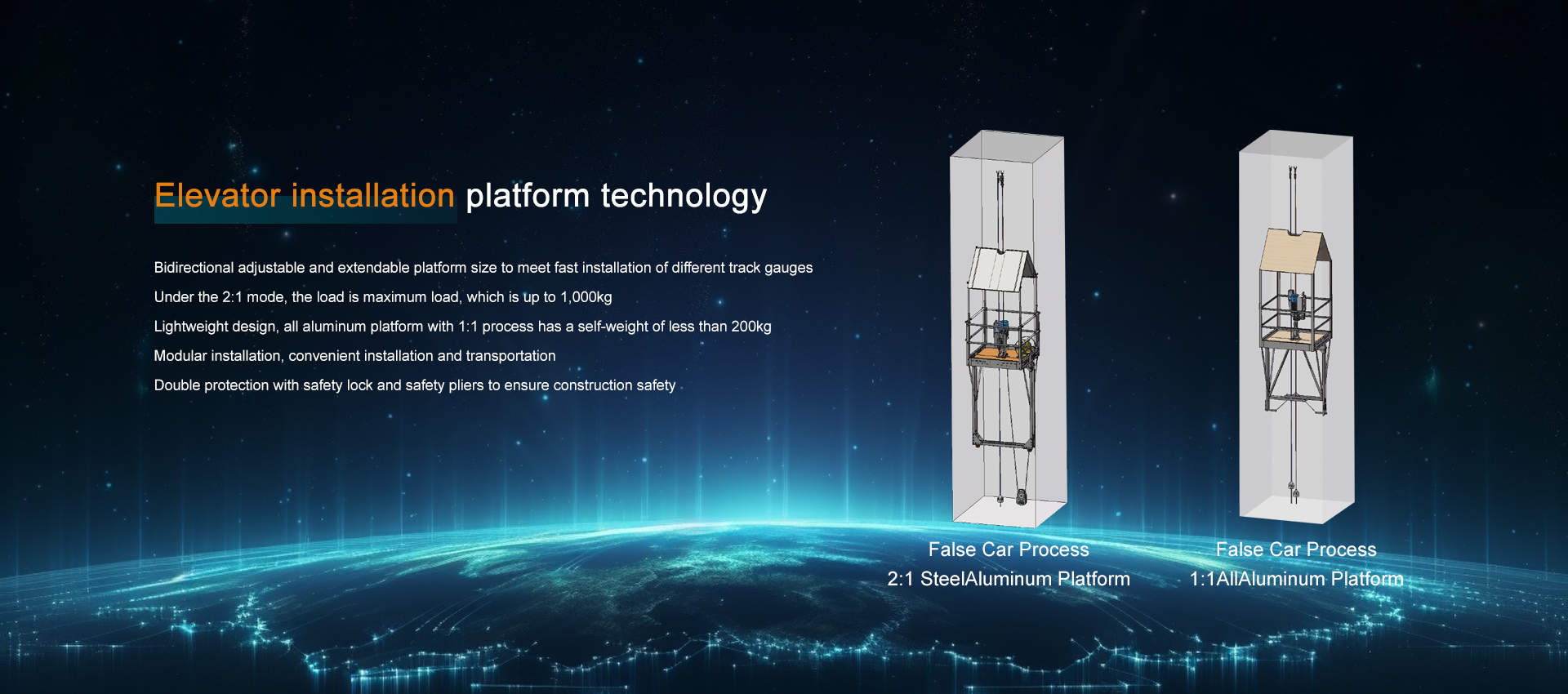
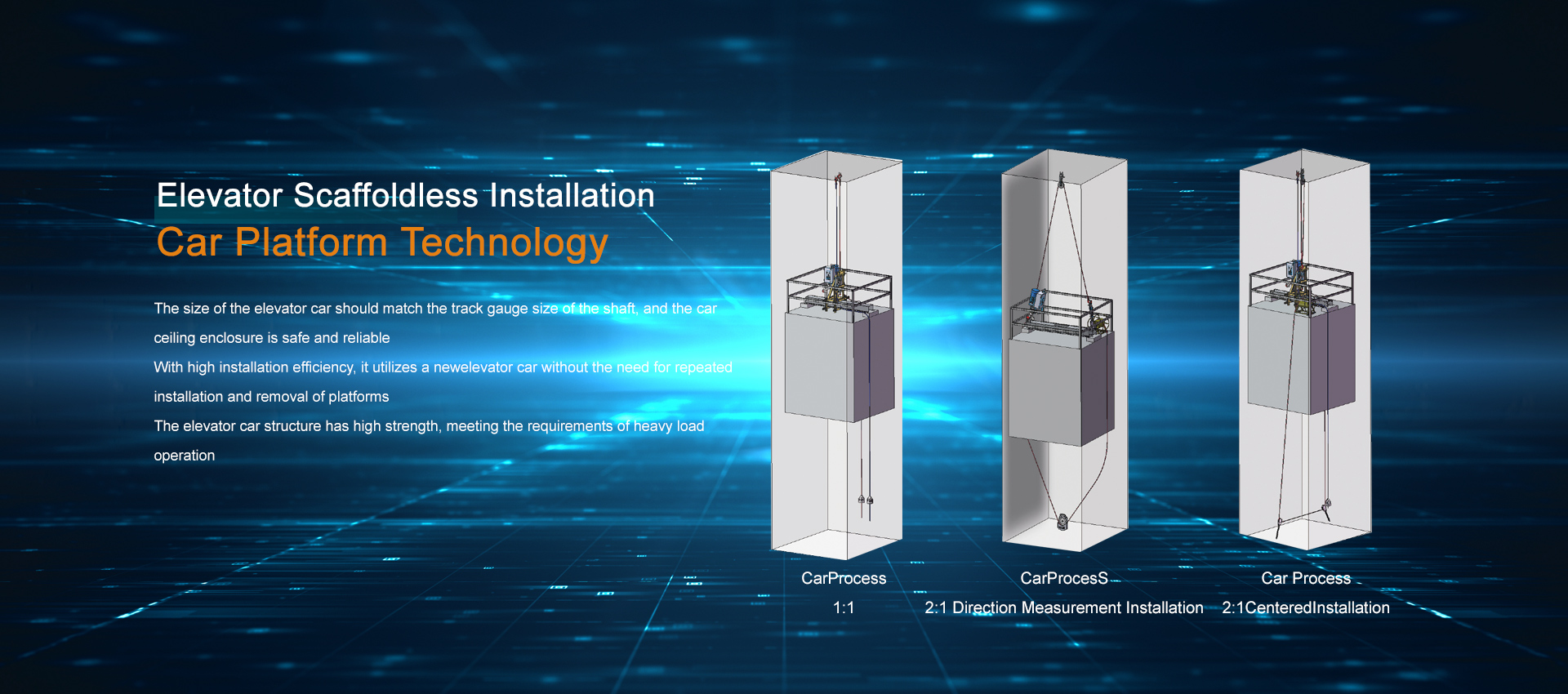
Adjustable powered elevator lifts—commonly referred to as false car platforms or scaffoldless elevator installation systems—have transformed elevator installation, maintenance, and modernization workflows. Designed to replace traditional scaffolding with a modular, powered platform solution, these systems align with global safety standards (OSHA 1926, EN 81-20, ISO 45001) and address the core challenges of elevator shaft operations: safety, efficiency, and adaptability. This article systematically elaborates on the technical advantages, operational benefits, and industry impact of adjustable powered elevator lifts, providing engineering and project management insights for elevator contractors and building stakeholders. 1. Technical Definition & Core Components Adjustable powered elevator lifts are temporary, motorized platforms engineered to fit within elevator shafts, enabling technicians to access vertical work zones without structural scaffolding. Key technical features include: - Modular Platform Design: Lightweight yet robust aluminum alloy frames with 500–1,000 kg load capacity, compatible with shaft widths 1.2–3.0 m and depths 1.0–2.5 m. - Precision Vertical Ad...
Read More +
2026-03-02
Elevators are critical vertical transportation systems in modern buildings, and their safety performance is governed by stringent international standards and technical regulations. To mitigate potential hazards such as overspeed, free fall, door entrapment, and overload, elevators integrate a comprehensive suite of safety and protective devices—designed to prevent accidents, halt abnormal operations, and ensure passenger security in emergencies. This article systematically elaborates on the core safety mechanisms, auxiliary protective features, escalator-specific safety devices, and high-rise elevator safety systems, aligned with global standards including ASME A17.1/CSA B44, EN 81-20/50, and ISO 22559. 1. Foundational Safety Standards for Elevators Safety devices in elevators are engineered to comply with mandatory international standards, ensuring uniform performance and reliability across regions: - ASME A17.1/CSA B44: The primary safety code for North America, specifying design, construction, installation, and maintenance requirements for elevators and escalators—including load capacity limits, emergency response protocols, and component durability. - EN 81-20 (Europe): Governs the saf...
Read More +